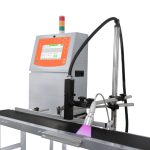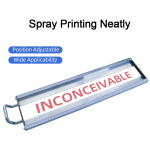
A new wave of UV inkjet printers is solving one of industrial marking’s toughest problems: printing durable, high-resolution, often full-color variable data on non-porous and curved surfaces. With LED-UV ink that cures in milliseconds, these systems deliver scannable codes and brand-grade graphics on glass, anodized metal, coated cartons, and PET — without pre-treatment.
What Makes UV Inkjet Different
Traditional solvent inks need absorption; UV ink cures by light, so it adheres to almost anything. The LED-UV lamp freezes the droplet the instant it lands, enabling:
- Micron-level resolution for tiny serials and micro-QR.
- Instant cure — no smear, no drying tunnel, no VOC.
- Color + code in one pass — serial plus promotional graphic together.
Where It Changes the Game
- Cosmetics & personal care — expiry and batch on glass bottles and tubes.
- Beverage & spirits — direct-to-bottle dating without labels.
- Electronics — permanent, fade-proof component marking.
- Premium packaging — variable personalization at scale.
Expert Perspective
” UV lets brands drop a label and print straight on the product — cheaper per unit at volume, and far harder to counterfeit,” says a SHICAI UV product manager. ” The curing speed is the real breakthrough; it finally matches fast lines.”
Adoption Considerations
UV systems carry a higher entry price and need lamp maintenance, but for high-margin, high-volume decoration they outperform labels on cost and security. Energy-efficient LED-UV also cuts power draw versus older mercury lamps.
FAQ
Q: Is UV ink safe for food-contact packaging? A: Use food-compliant UV formulations and verify migration testing for your substrate.
Q: Does UV print survive outdoor UV exposure? A: Yes, cured UV ink is itself UV-stable and resists fading far better than many solvent inks.
Q: Can UV print on curved bottles? A: Yes, with rotary fixtures or variable-drop heads handling the curvature.