Last Updated: 2026-09-06
A coder without a way to move product past it is just a printer on a shelf. A coding conveyor is the short belt section that carries items through the print zone at a controlled speed, and it decides whether your codes land in the same place every time. Here is when you need one.
The Short Answer
A coding conveyor is a dedicated belt or chain section, usually one to two meters long, that transports products past a mounted printhead at a steady, controllable speed. It exists to solve one problem: the coder needs the product to move predictably. On a main production line you can mount the head directly over the existing conveyor; when products arrive off-line, in batches, or from another process, a coding conveyor gives you that controlled movement in a standalone station.
| Your situation | Conveyor need |
|---|---|
| Products already on a production line | Mount the head to the line |
| Off-line or batch coding | Dedicated coding conveyor |
| Flat items from a stack | Paging machine plus conveyor |
| Very large or heavy items | Handheld coder instead |
Sizing comes down to belt width against your widest product, belt speed against the coder’s rated speed, and frame length against the number of heads you may add later.
What to Know in Practice
Speed control matters more than speed itself. A conveyor that runs at a fixed, known speed lets the coder fire on a simple timer; a variable-speed line needs an encoder so the trigger follows the belt. Decide which you have before specifying controls.
Plan the physical layout for maintenance access. The head, the sensor, and the guard all need reach for cleaning and adjustment, and a conveyor bolted tight against a wall turns a two-minute nozzle clean into a ten-minute job.
About SHICAI
SHICAI builds industrial coding and marking equipment across inkjet and laser lines, for production and warehouse use. Machines ship with genuine components and tested consumables, and service and spares are arranged for export markets. The technical team answers directly rather than through a reseller chain.
Related Questions
- Can a coding conveyor be added to an existing line?
- Often yes, as a standalone station beside the line for off-line coding, or as an inline section if you can break into the existing flow. Both are common retrofits.
- What belt speed should I run?
- Match the coder’s rated speed and your code size. Most industrial coders hold clean prints between 40 and 100 meters per minute, so the conveyor rarely needs to run at its maximum.
- Does the conveyor need guarding?
- Yes, for both safety and print quality. Guarding keeps operators away from moving parts and stops products tipping out of the print zone.
A Model Worth Looking At
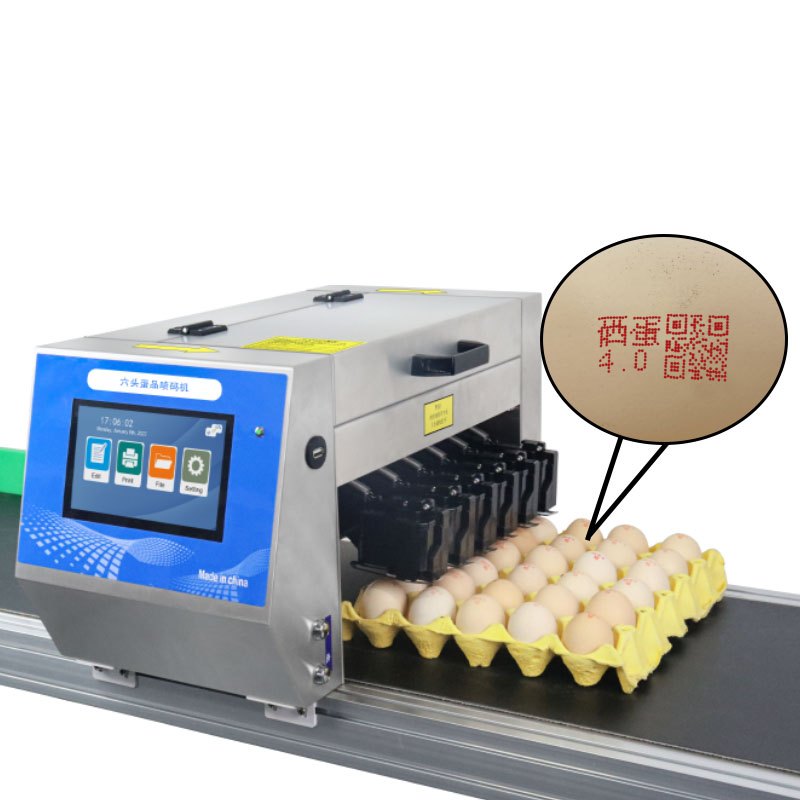
S350 Pagination conveyor is built for this kind of work:
- Conveyor speed 5-110 m/min
- Friction paging separates sheets reliably
- Stainless steel frame, 120W
- Sheets 60-320 mm, 0.02-5 mm thick
Click the image to see the product page.
Learn more about inkjet printing and ISO 9001 quality management.
Next Steps
- Read related FAQ guides on coding and marking basics.
- See the S350 Pagination conveyor for full specifications.
- Get a free sample print on your material. No commitment, reply within 24 hours.
Need help choosing the right printer?
Talk to our engineers for a free production-line assessment and quotation.
Request a Quote