
Last Updated: 2026-09-07
A thermal inkjet printer fires thousands of drops a second with no pump, no jet, and no moving parts in the head. The question how does a thermal inkjet printer work has a four-step mechanical answer, and understanding it explains both why these printers are clean to run and why the cartridge is the maintenance plan.
The Short Answer
Four steps, repeated for every drop:
One: a tiny resistor behind each nozzle receives a current pulse and heats up in microseconds. Two: the ink touching that resistor vaporizes into a small bubble. Three: the bubble expands and pushes a precise drop of ink out of the nozzle onto the product. Four: the current stops, the bubble collapses, and fresh ink is drawn into the chamber, ready for the next pulse.
| Step | What happens | What can go wrong |
|---|---|---|
| Heat | Resistor pulses to vaporize ink | Worn resistor, weak drop |
| Bubble | Bubble expands in the chamber | Dried ink blocks the nozzle |
| Eject | Drop leaves the nozzle | Wrong ink, poor adhesion |
| Refill | Bubble collapses, chamber refills | Air in the cartridge |
Because the heater lives in the cartridge, the printhead is replaced every time you change ink. That is the whole reason thermal inkjet printers need almost no head maintenance, and the reason consumables carry the running cost.
What to Know in Practice
The heat-based mechanism sets real limits. Ink must tolerate vaporization, which is why these printers run water-based or solvent formulations made for them rather than arbitrary inks. Surfaces must accept a small, fast-drying drop, so porous cartons and coated board work well and heavily textured stock can struggle.
Idle time is the main enemy. A cartridge left uncapped dries at the nozzles, and the first prints after a pause come out broken. Cap or store cartridges as specified, and print a test strip at the start of each shift so the operator sees the problem before the product does.
About SHICAI
SHICAI builds industrial coding and marking equipment across inkjet and laser lines, for production and warehouse use. Machines ship with genuine components and tested consumables, and service and spares are arranged for export markets. The technical team answers directly rather than through a reseller chain.
Related Questions
- Is thermal inkjet the same as TIJ?
- Yes, TIJ is the standard abbreviation for thermal inkjet. Both describe the resistor-and-bubble mechanism, and the terms are used interchangeably in the industry.
- How long does a thermal inkjet cartridge last?
- It depends on coverage, but cartridges are rated in characters or milliliters of ink. Price them against your codes per shift rather than against the sticker alone.
- Why do my first prints come out faded?
- Usually dried ink at the nozzles after idle time. Print a test strip, and if it stays faded, clean or replace the cartridge rather than increasing print density.
A Model Worth Looking At
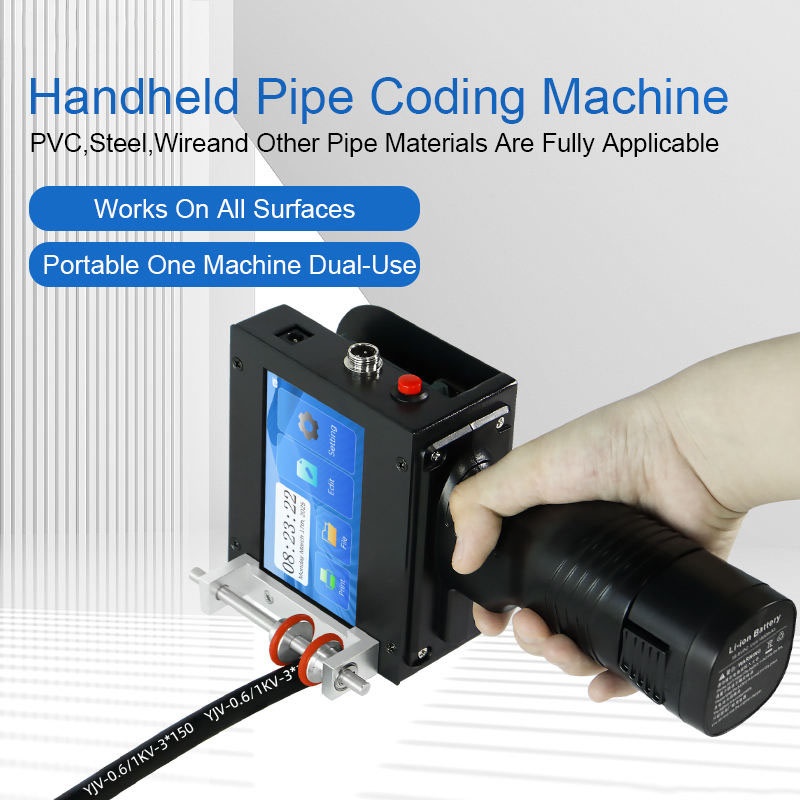
MX3-G Handheld Inkjet Printer is built for this kind of work:
- 600dpi print accuracy
- 2-12.7mm print height
- Available in 7 ink colors
Click the image to see the product page.
Learn more about inkjet printing and ISO 9001 quality management.
Next Steps
- Read related FAQ guides on coding and marking basics.
- See the MX3-G handheld printer for cartridge and resolution options.
- Get a free sample print on your material. No commitment, reply within 24 hours.
Need help choosing the right printer?
Talk to our engineers for a free production-line assessment and quotation.
Request a Quote