Last Updated: 2026-09-09
Ink jet coding prints variable information like dates, lot numbers, and barcodes directly onto product and packaging as it moves down the line. It is the workhorse of traceability, and the technology splits into a few distinct methods. Here is what each one does and how to choose.
The Short Answer
Ink jet coding is the family of printing methods that fire tiny ink droplets onto a surface to write variable data. It differs from label printing because there is no label: the code goes straight onto the product. The main methods share the same job but work differently:
| Method | How it works | Best for |
|---|---|---|
| CIJ continuous inkjet | A continuous stream of charged droplets is deflected to form characters | High-speed lines, small text, non-porous surfaces |
| TIJ thermal inkjet | Heat pulses a cartridge to eject droplets on demand | Cartons, labels, lower cost per unit |
| DOD drop-on-demand | Piezoelectric or valve action fires droplets only when needed | Large characters, porous surfaces |
Which one fits depends on line speed, surface, and what you are printing. A food line printing an expiry date onto film wants a different method than a factory printing a batch code onto a metal pipe.
5 Things to Know About Ink Jet Coding
1. It is not one technology. CIJ, TIJ, and DOD all count as ink jet coding, and they are not interchangeable. CIJ runs fastest and handles curved and non-porous surfaces; TIJ is the low-cost choice for cartons and labels; DOD covers larger characters on porous materials. Picking the wrong family is the most common buyer mistake.
2. The ink must match the surface. A formulation rated for film will not hold on metal or glass, and food packaging needs food-safe ink. This is where most smudging and fading comes from, and it is fixed by matching the fluid, not by buying a bigger machine.
3. Line speed sets the technology. CIJ holds clean codes at very high speed because the stream is always running. TIJ and DOD have a top speed where droplets stop forming properly, so a fast line usually points to CIJ.
4. Variable data is the point. The reason to print instead of label is that every code can be different: dates, lot numbers, serial numbers, and barcodes change with each item. Static information is cheaper to print another way.
5. Maintenance is predictable. CIJ runs a solvent make-up system and a printhead that needs regular cleaning. TIJ swaps a cartridge and is done. Knowing the routine before you buy avoids a machine that sits idle for want of a five-minute clean.
About SHICAI
SHICAI builds industrial coding equipment across the CIJ and TIJ families, for production and warehouse use. Machines ship with genuine components and tested consumables matched to common packaging surfaces, and service and spares are arranged for export markets. The technical team answers directly rather than through a reseller chain.
Related Questions
- What is the difference between CIJ and TIJ?
- CIJ runs a continuous ink stream and suits high-speed lines and non-porous surfaces. TIJ fires droplets on demand from a cartridge and suits cartons and labels at a lower cost per unit.
- Does ink jet coding need a label?
- No. The code prints directly onto the product or packaging, which is why it is used for variable data that changes with every item, such as dates and lot numbers.
- What ink should I use for food packaging?
- A food-safe formulation rated for your packaging material. Compatibility depends on the surface, so send a sample for testing rather than guessing from the label.
A Model Worth Looking At
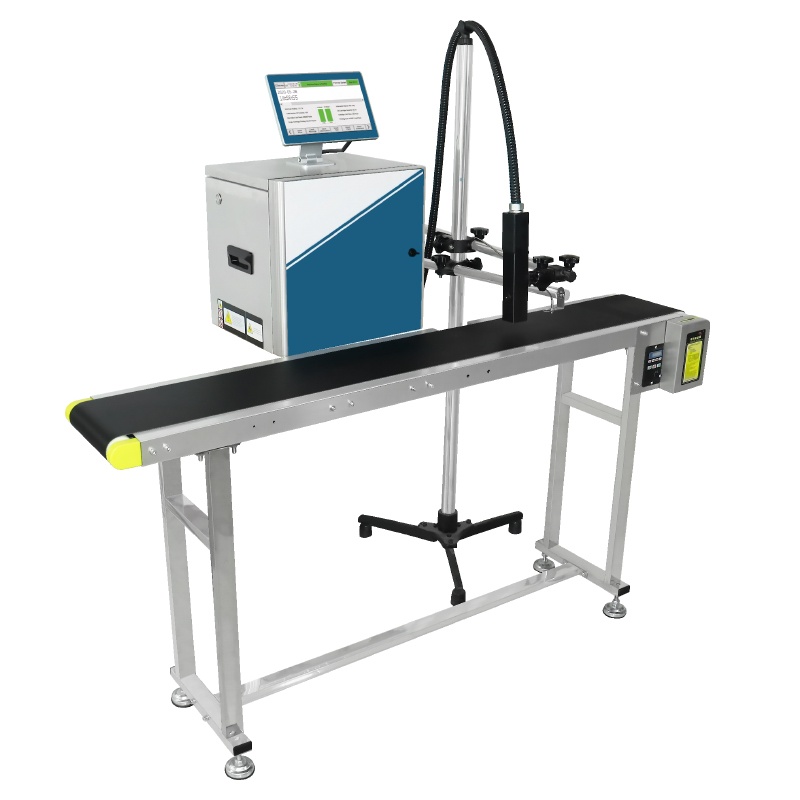
S1000 small character inkjet printer is built for this kind of work:
- Prints up to 400 Meters Per Minute
- 2-20mm print height
- 10.1-Inch Industrial Touchscreen
Click the image to see the product page.
Learn more about inkjet printing and ISO 9001 quality management.
Next Steps
- Read related FAQ guides on coding and marking basics.
- See the S1000 small character inkjet printer for speed and print-height options.
- Get a free sample print on your material. No commitment, reply within 24 hours.
Need help choosing the right printer?
Talk to our engineers for a free production-line assessment and quotation.
Request a Quote