Last Updated: 2026-09-11
A bottle label that carries the wrong batch code is a recall waiting to be found. A bottle label printer puts that variable data onto the label or the bottle, and which type you need depends on whether the label is printed before or after it is applied. Three approaches cover the field.
The Short Answer
A bottle label printer is a machine that prints onto labels for bottles, either before application or as part of a print-and-apply unit. The three approaches differ in where the variable data comes from and when it is printed:
| Approach | How it works | Best for |
|---|---|---|
| Pre-printed labels | Artwork printed offline, variable data added later | Long runs of one design |
| Print-and-apply | Label printed then applied in one machine | Variable data per bottle |
| Direct-to-bottle coding | No label; code printed on the bottle itself | Bare glass and PET lines |
Most bottled-product lines use a combination: a pre-printed branded label plus a coded area for date and lot, or direct coding where no label is used at all. The deciding question is which data has to change per bottle and which can stay fixed.
Once that is settled, the machine choice follows the label stock, and that is where most specification errors happen.
What to Know in Practice
Label stock decides the printing method. Porous paper labels accept a wide range of fluids and dry fast; glossy film and synthetic stocks need a formulation made for low-energy surfaces, and a code that reads well on paper can wipe off film. Ask for a sample on your actual label material, not on a generic test sheet.
Curved application adds a second constraint. A label wrapped around a bottle changes dimension slightly as it conforms, so codes printed before application can distort. Where the data must stay scannable, print after application or leave the code area flat.
Finally, check the verification step. A label printer is only as good as the read-back: if nobody checks a sample from each run, a faint or wrong code reaches the customer. Make the check part of the shift routine rather than a judgement call.
About SHICAI
SHICAI builds industrial coding and marking equipment across inkjet and laser lines, for production and warehouse use. Machines ship with genuine components and tested consumables, and service and spares are arranged for export markets. The technical team answers directly rather than through a reseller chain.
Related Questions
- Can one machine print and apply bottle labels?
- Yes, print-and-apply units do both in one pass, which is the usual choice when every bottle carries different data such as a serial or a short date code.
- Is direct-to-bottle coding better than labels?
- It removes label stock and application cost, and it suits bare glass and PET. Labels win where branding needs high-quality artwork that direct coding cannot match.
- Why do my label codes smudge?
- Usually a formulation mismatch on glossy or synthetic stock, or handling before the print has cured. Verify on your actual label material and allow full cure before winding or stacking.
A Model Worth Looking At
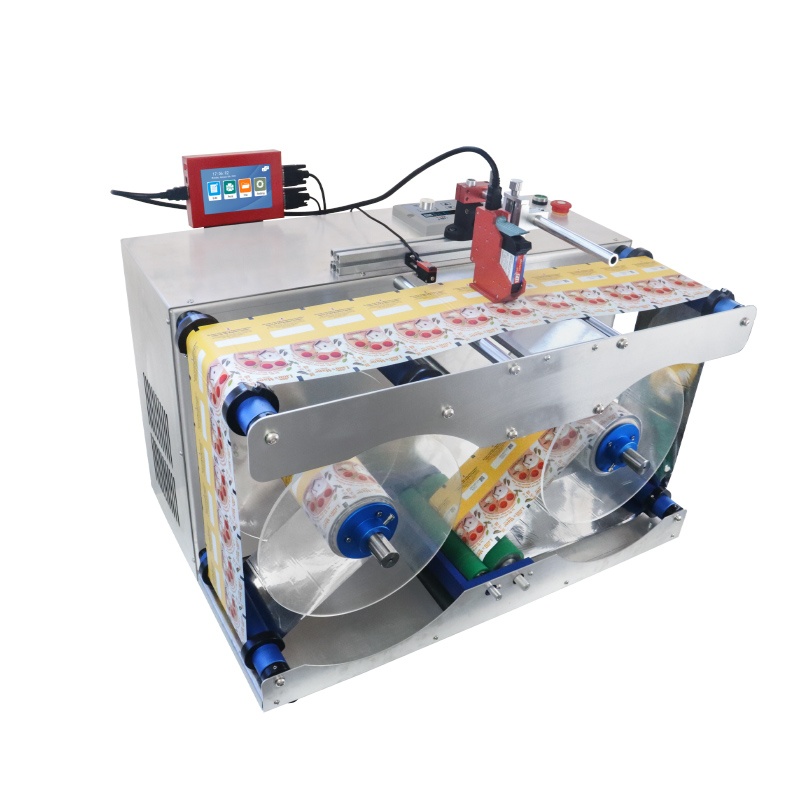
Automatic label spray coding rewinding machine is built for this kind of work:
- 2-12.7mm print height
- Available in 7 ink colors
- Marks paper labels, stickers, PVC film, tape and silver foil
Click the image to see the product page.
Learn more about pressure-sensitive labelling and ISO 9001 quality management.
Next Steps
- Read related FAQ guides on coding and marking basics.
- See the automatic label coding and rewinding machine for label stock and print-height options.
- Get a free sample print on your material. No commitment, reply within 24 hours.
Need help choosing the right printer?
Talk to our engineers for a free production-line assessment and quotation.
Request a Quote