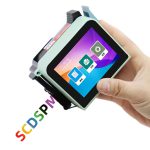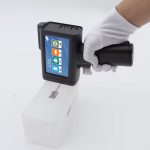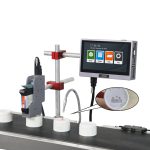
For decades, inkjet printers owned the coding line. Today, fiber laser marking machines are taking share in applications where permanence, cleanliness, and zero consumables matter most. The shift is especially visible in automotive parts, wire and cable, medical devices, and electronics — segments that prize indelible, tamper-proof identification.
The Core Trade-Off
| Factor | Inkjet (CIJ/TIJ) | Fiber Laser |
|---|---|---|
| Consumables | Ink, solvent, make-up | None |
| Mark permanence | Good, can fade | Permanent |
| VOC emissions | Some (CIJ) | None |
| Initial cost | Lower | Higher |
| Best for | Flexible packs, dates | Metal, cable, rigid parts |
Why Laser Wins on Total Cost
Although laser marking machines cost more upfront, they eliminate recurring ink and solvent purchases, reduce waste, and need far less maintenance. Over a 5-year horizon, many plants break even and then save steadily — a compelling case for high-volume lines.
Where Laser Is the Clear Choice
- Automotive & hardware — VIN-related serials, permanent part numbers.
- Wire & cable — indelible specification and metering marks.
- Medical devices — UDI etched to survive sterilization.
- Aerospace & tools — tamper-resistant identification.
Expert Perspective
” Laser is not replacing ink everywhere — it is replacing it where the mark must outlive the product,” says a SHICAI laser product lead. ” For food date codes, inkjet stays king; for metal, laser is unbeatable.”
FAQ
Q: Can laser mark plastic and glass too? A: Yes, with proper wavelength (e.g., CO2 for plastic/glass, fiber for metal).
Q: Is laser coding faster than inkjet? A: For static marks at speed, yes; for variable high-density data, CIJ can be competitive.
Q: Does laser need ventilation? A: Generally no fume extraction for marking; some plastics need basic filtration.