
Last Updated: 2026-09-04
A beverage line prints thousands of bottles a minute, and every code has a few milliseconds to land. A continuous inkjet coder manages this by running a constant, electrically charged jet of ink that is deflected into characters mid-flight. Six facts explain the machine behind that trick.
The Short Answer
A continuous inkjet coder pushes ink through a fine nozzle in an unbroken stream, breaks it into charged droplets, and deflects those droplets with charged plates to form characters on the product. Unused droplets are recycled. Because the jet never stops, printing keeps pace with fast lines and works on curved, coated, or damp surfaces.
The six facts that matter: the jet runs continuously whether or not printing; make-up fluid keeps ink viscosity stable as solvent evaporates; character height comes from deflection range, typically 1 to 12 mm; the head never touches the product; codes dry in seconds on most packaging; and daily fluid checks keep the whole system healthy.
What to Know in Practice
Daily care takes minutes: check ink and make-up levels, run the automatic cleaning cycle at start and shutdown, and flush the nozzle when codes blur. A continuous inkjet coder that runs dry pulls air into the system, and that single event causes most of the faults blamed on the machine.
On line integration, verify two things monthly: that the head has not drifted from its mount, and that the trigger sensor still fires at the right moment. Placement problems accumulate slowly enough that operators stop noticing them. Finally, keep fluids in date: expired ink and make-up quietly cause faded codes and blocked nozzles, and the shelf life printed on the container is the only authority worth trusting on that point.
About SHICAI
SHICAI builds industrial coding and marking equipment across inkjet and laser lines, for production and warehouse use. Machines ship with genuine components and tested consumables, and service and spares are arranged for export markets. The technical team answers directly rather than through a reseller chain.
Related Questions
- What is the difference between CIJ and TIJ coders?
- CIJ runs a continuous deflected jet for speed and difficult surfaces; TIJ fires drops on demand from a sealed cartridge for cleaner, simpler operation at moderate speeds.
- How often does a CIJ coder need maintenance?
- Daily checks of fluid levels and a cleaning cycle at start and shutdown; a scheduled flush and filter change keep it healthy on production lines.
- Can CIJ print on curved surfaces?
- Yes, and that is one of its strengths. The short throw distance and fast-drying ink suit bottles, cans, and extrusions where contact methods fail.
Continuous Inkjet Coder Worth Looking At
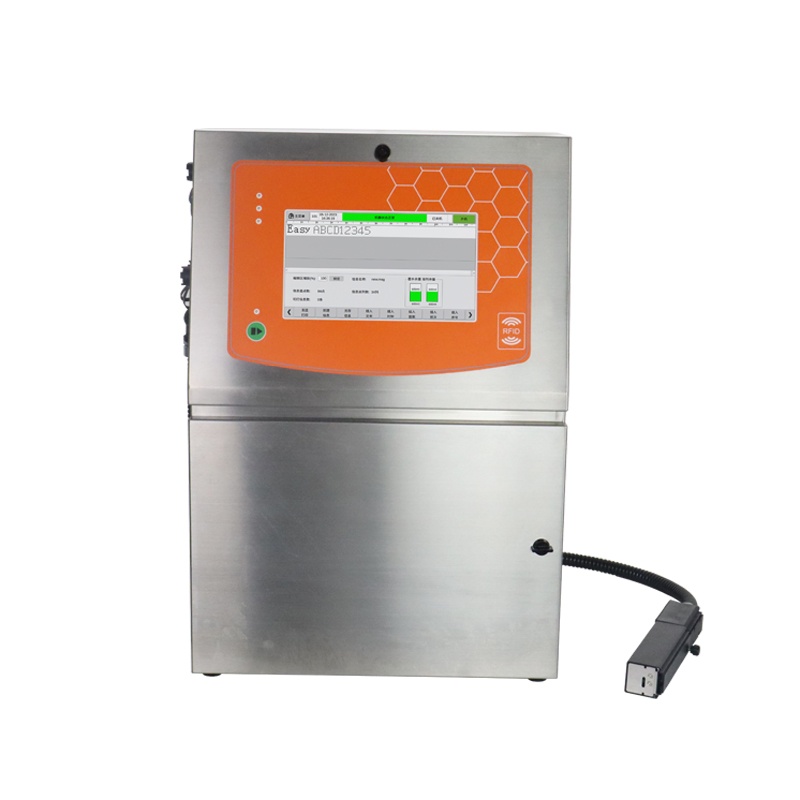
Small character inkjet printer is built for this kind of work. Click the image to see the product page.
Learn more about continuous inkjet technology and ISO 9001 quality management.
Next Steps
- Read related FAQ guides on coding and marking basics.
- Get a free sample print on your material. No commitment, reply within 24 hours.
Need help choosing the right printer?
Talk to our engineers for a free production-line assessment and quotation.
Request a Quote