Last Updated: 2026-09-03
A serial number that survives ten years of service starts as a fraction-of-a-second flash of light. A fiber marking laser focuses a fine infrared beam onto metal or hard plastic and bonds a permanent, high-contrast mark into the surface itself. Five facts decide whether one belongs on your line.
The Short Answer
A fiber marking laser generates a beam at about 1,064 nanometers, guides it with a galvo scanning mirror, and focuses it to a spot a fraction of a millimeter wide. On metals the beam either engraves material away, anneals a dark oxide layer, or ablates a surface coating, and on many plastics it triggers a permanent color change. Because the mark is structural rather than applied, it survives abrasion, solvents, and years of handling without ink or consumables.
The five facts that matter when choosing one: wavelength fit to your substrate, source power for depth and speed, galvo field size for working area, spot size for fine codes, and the control software that turns your serial data into marking patterns.
What to Know in Practice
Upkeep is light but real. Keep lenses and protective windows clean, because residue absorbs power and weakens marks long before the source ages. Check focus weekly on daily-running machines, and keep spare lenses on the shelf. A fiber source is typically rated for 100,000 hours, so the maintenance conversation is about optics, not the beam itself.
Always test on your actual parts. Alloy, coating, and surface finish change the mark more than any spec sheet suggests, and a sample run costs almost nothing.
About SHICAI
SHICAI runs a full laser line: fiber, CO2, and UV systems for continuous production. The company ships to overseas production lines and warehouses, and specifies genuine rated laser sources so the machine runs to its rated life. Service and spares are arranged for export markets, and the technical team answers directly rather than through a reseller chain.
Related Questions
- How long does a fiber laser source last?
- A rated industrial fiber source is commonly specified for 100,000 hours or more, which works out to years of two-shift operation.
- Can a fiber marking laser mark plastic?
- Many engineering plastics mark well, producing a permanent color change. Results vary by resin and additives, so a sample test on your actual part is the reliable answer.
- Does laser marking wear off?
- On metal the mark is structural, so abrasion removes material before it removes the code. That is the main reason traceability-critical parts use it.
A Model Worth Looking At
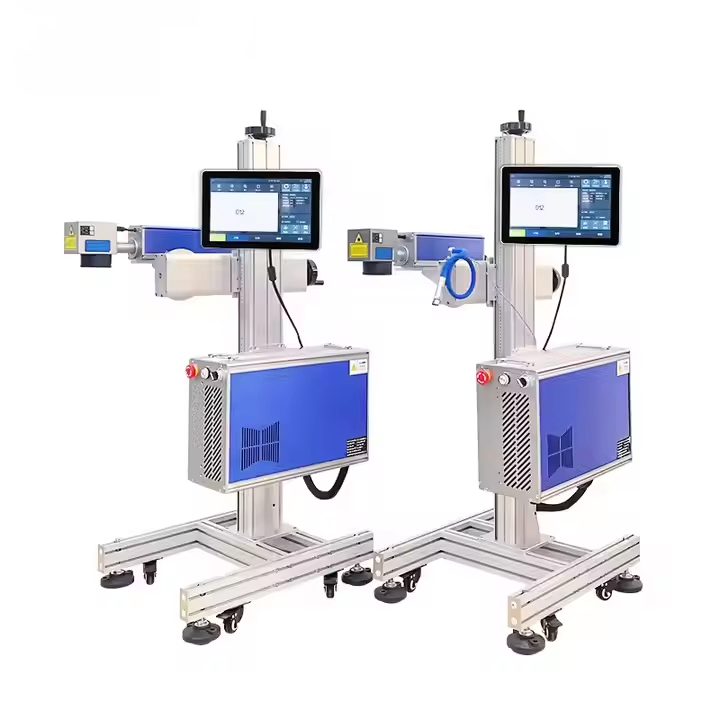
G-20 Fiber laser inkjet printer is built for this kind of work. Click the image to see the product page.
Learn more about laser engraving technology and ISO 9001 quality management.
Next Steps
- Read related FAQ guides on coding and marking basics.
- See the G-20 Fiber laser inkjet printer if you need a marker for this job.
- Get a free sample mark on your material. No commitment, reply within 24 hours.
Need help choosing the right printer?
Talk to our engineers for a free production-line assessment and quotation.
Request a Quote