
Last Updated: 2026-09-06
Marking a stack of bags one at a time is slow, and marking them in a stack is impossible. A pagination machine solves this by separating products from a pile into single, spaced items on a conveyor, so a coder can mark each one at line speed. Four ways it speeds up the job.
The Short Answer
A pagination machine, also called a paging or singulation machine, takes a stack of flat or semi-rigid products and feeds them out one at a time with even spacing. Once separated, each item passes a printhead that marks it. The four ways this speeds up coding:
One: it converts a manual, one-by-one task into continuous flow. Two: even spacing means the trigger fires at the same point on every item, so codes land consistently. Three: the correct orientation is presented to the head, which removes missed or partial prints. Four: it works off-line, so products made elsewhere, or in an earlier shift, can be coded without occupying the main production line.
| Product type | Pagination fit |
|---|---|
| Pouches and sachets | Excellent |
| Cartons and cards | Excellent |
| Labels and tags | Good, check thickness range |
| Rigid bottles, cans | Poor, use a line conveyor |
What to Know in Practice
Match the machine to your thickness and width range, because pagination relies on friction and pressure to separate items. Products outside the rated range either double-feed or jam, and both faults look like a printer problem until you check the feed.
Speed is set by the slowest step. If the coder can print faster than the pager can separate, the pager is your bottleneck; if the reverse, add print capacity rather than feed capacity. Measure both before buying either.
About SHICAI
SHICAI builds industrial coding and marking equipment across inkjet and laser lines, for production and warehouse use. Machines ship with genuine components and tested consumables, and service and spares are arranged for export markets. The technical team answers directly rather than through a reseller chain.
Related Questions
- What is the difference between a pagination machine and a conveyor?
- A conveyor moves products; a pagination machine also separates them from a stack into singles. Many paging units include a short conveyor section for the coding step.
- Can it handle very thin film sachets?
- Yes, within the rated thickness range. Thin, flexible films are the classic pagination application, but static and double-feeds need checking on your actual product.
- Does pagination require a separate coder?
- Not necessarily; integrated paging and coding units combine both in one machine, which saves floor space and simplifies synchronization.
A Model Worth Looking At
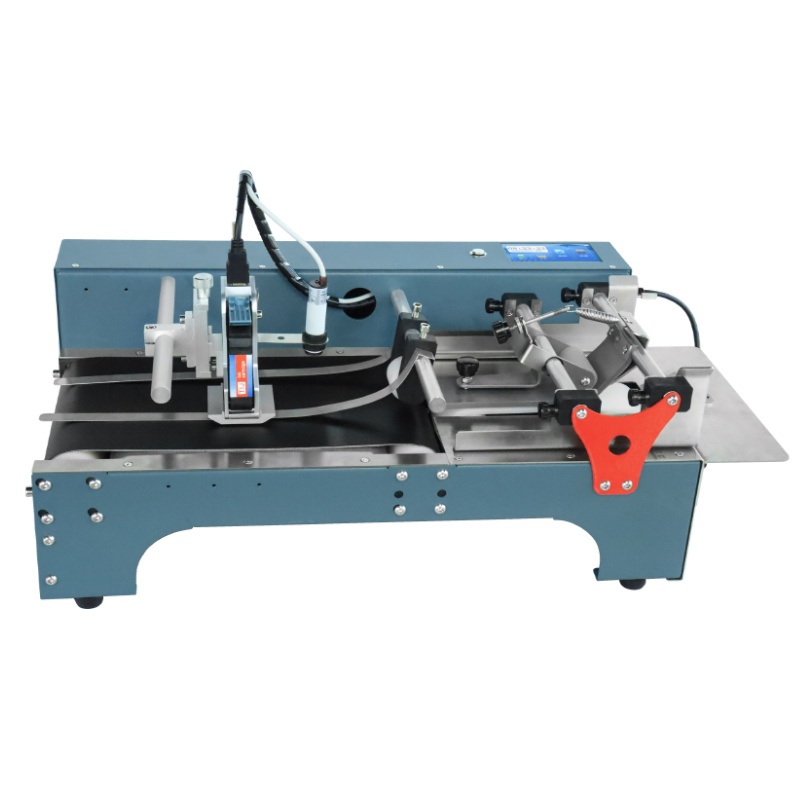
T110-FY Mini Paging Machine is built for this kind of work:
- 2-12.7mm print height
- 2-5mm throw distance
- Weighs 16.6 kg
- 7 ink colors
- USB/Bluetooth connectivity
Click the image to see the product page.
Learn more about inkjet printing and ISO 9001 quality management.
Next Steps
- Read related FAQ guides on coding and marking basics.
- See the T110-FY Mini Paging Machine for full specifications.
- Get a free sample print on your material. No commitment, reply within 24 hours.
Need help choosing the right printer?
Talk to our engineers for a free production-line assessment and quotation.
Request a Quote