
Last Updated: 2026-09-12
A recall you cannot narrow to one production run pulls every unit you sold. A batch code is the printed identifier that prevents it, tying each item to the run, line and date it came from. It has to carry five things, and it is not a date code.
The Short Answer
The plain question, “what is a batch code”, has a short answer: it is an identifier printed on a product or its packaging that ties that unit to one specific production run.
| Element | What it records | Why an auditor asks for it |
|---|---|---|
| Run or lot identifier | The number tying the item to one run | Narrows a recall to one run, not a season |
| Production date | When the run was made, in date or Julian form | Fixes shelf life and separates same-line runs |
| Line or plant code | Which line or site produced the unit | Two lines can share a recipe and differ |
| Expiry or best before | Where required, printed beside the batch code | Read without opening the carton |
| Text plus a scan form | The same data as a barcode or QR code | Lets a warehouse scan instead of typing |
A batch code is not a date code. A date code says when something was made or used by; a batch code says which run it came from, and a run can span several days or several lines. Most packaging carries both, printed together.
What to Know in Practice
Placement decides whether the code does its job. It has to sit where a warehouse operative and an auditor can both find it without opening the case, which normally means the same panel on every unit. Moving the position between runs to suit a printer quietly breaks the trail.
Legibility is the second failure point. A batch code at low contrast on dark film, or squeezed into a fold, will not scan and often will not read by eye. Match the ink to the substrate, hold a throw distance of 2-5 mm, and check a sample at the start of each shift.
Retention is the third. The printed code only works if the records behind it last as long as the product, which most food and pharmaceutical schemes set at the shelf life plus a margin. That expectation sits inside a documented quality system and the traceability records an auditor asks to see.
About SHICAI
SHICAI builds industrial coding and marking equipment across inkjet and laser lines, for production and warehouse use. Machines ship with genuine components and tested consumables, and service and spares are arranged for export markets. The technical team answers directly rather than through a reseller chain.
Related Questions
- What is a batch code, and how is it different from a date code?
- A batch code identifies the production run; a date code identifies a point in time such as production or expiry. A run can span several days, so the two are printed together rather than used interchangeably.
- Where should a batch code be printed?
- On a panel visible without opening the case, in the same position on every unit, at a size and contrast that a person and a scanner can both read.
- How long do batch records need to be kept?
- Normally for the shelf life of the product plus a margin, and longer where a contract or regulation says so.
A Coder Worth Looking At
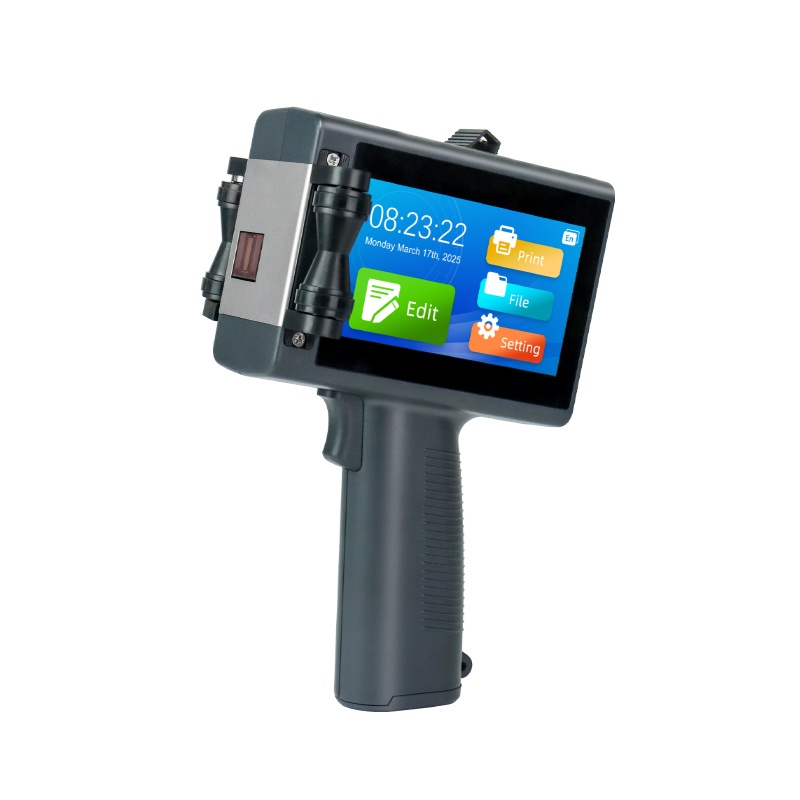
M5 Handheld inkjet printer prints batch and date codes on cartons, bags and labels without a fixed line mount:
- Prints up to 50m/Min
- 600dpi print accuracy
- 2-12.7mm print height
Learn more about product traceability and ISO 9001 quality management.
Next Steps
- Read how to print batch codes in six steps for the setup sequence.
- If you need the machine as well as the method, see what a batch code printing machine does.
- Ask for a free sample print on your own material. No commitment, and an engineer replies within 24 hours.
Need help choosing the right printer?
Talk to our engineers for a free production-line assessment and quotation.
Request a Quote