
Last Updated: 2026-09-23
A smeared code on a returned pallet costs more than the label it sits on. Ink smear on plastic has one root cause: the droplet lands on a closed surface it cannot soak into, so it must dry rather than absorb. Six things push that failure into view, and each has a different fix.
Why Ink Smear on Plastic Happens
On carton or paper, ink moves into the fibers within milliseconds and fixes almost as soon as it lands. Plastic does none of that. The surface is closed, so the droplet sits on top as a wet film until the carrier evaporates, and anything that touches the pack before then moves the code.
Surface energy decides how badly. Polyethylene and polypropylene are low-energy plastics that repel water-based ink, so a grade that behaves on a PET bottle can bead up and lift off a PE crate. Contamination multiplies it: mold release, plasticizer bloom and hand oil all sit between ink and surface, which is why ink smear on plastic often appears on part of a batch rather than all of it.
The Six Causes, in Order of Likelihood
| Cause | How to spot it | The fix |
|---|---|---|
| Wrong ink grade | Water-based ink on PE, PP or coated film; the code beads instead of wetting | Match the grade to the polymer, not the color |
| Drying window too short | Smearing starts exactly where the pack first touches something | Move the coder from that contact point, or slow handling |
| Throw distance too wide | Edges feather and the block greys out | Bring the head closer inside its rated range |
| Contaminated surface | Appears after a mold or supplier change, on part of the batch | Clean the print area, change grade, flag the release agent |
| Cold or damp packs | Worst first thing in the morning or on stock from cold storage | Condition the packs, or use a low-temperature grade |
| Over-inking | Block is wet and dark, then transfers to belt or next pack | Reduce dot density or height, and check the head is clean rather than over-firing |
Test One Variable at a Time
Wipe a few packs with a dry cloth and reprint. If the smear disappears, contamination caused it and nothing else needs changing. If not, print a block and leave it untouched for a minute before handling: a mark that survives that pause but fails on the line is a drying-window problem, not an ink problem. Change grade last, because it is the slowest to reverse, and test the candidate against the abuse the pack really meets. How inkjet printing forms and fixes droplets covers the two mechanisms in play, porosity and carrier evaporation.
What SHICAI Checks First
Ink smear on plastic is a surface decision before it is a machine decision, so SHICAI keeps the ink choice inside the equipment conversation. Send the pack and say where the mark fails; the grade is tested on your surface and your handling time, printed and rubbed before anything is quoted. Builds run under ISO 9001 quality management.
More questions
- Why does ink wipe off a container after printing?
- Same root cause: the grade sits on a closed surface instead of absorbing, and the pack was handled before the carrier left the film. Rubbing off under a thumb points at adhesion; smearing in transit points at the drying window.
- Which ink dries fastest on plastic?
- Solvent and oil-based grades flash off far faster on closed surfaces than water-based inks, which rely on absorption. Polyethylene and polypropylene are the hard cases because their surface energy is low.
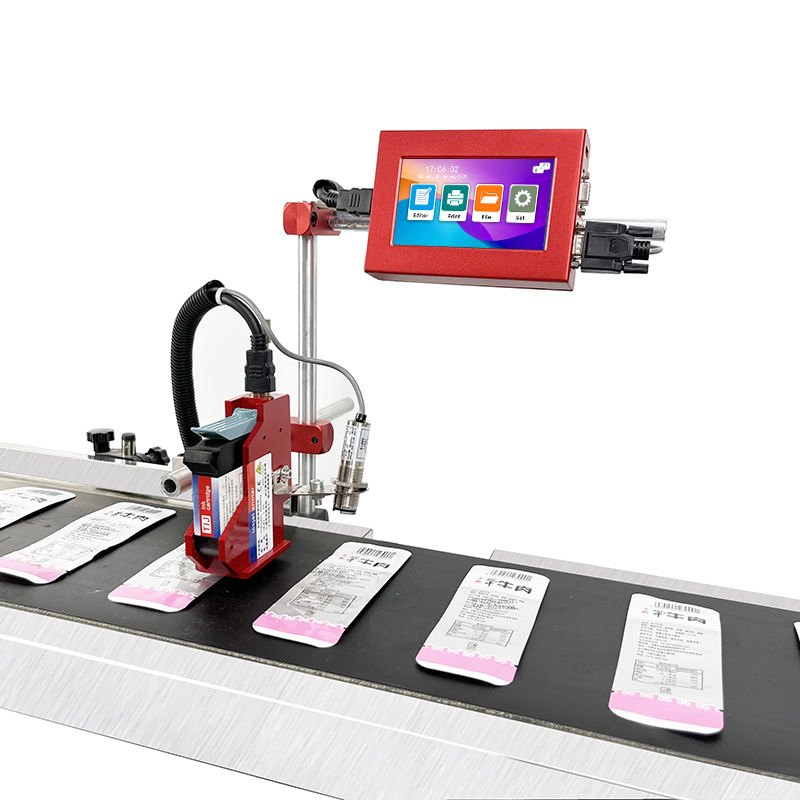
Y110 Online inkjet printer
one frame that runs several ink grades:
- 300-600dpi print accuracy
- 2-12.7mm print height
- food-grade/water-based/oil-based/42ml ink cartridge ink
What to do next
- If the code is faint rather than smeared, the cause list differs: see why a CIJ printer prints faint codes.
- Send the pack through our contact page and tell us where the mark fails. We test the grade on your surface free of charge and reply within 24 hours.
Need help choosing the right printer?
Talk to our engineers for a free production-line assessment and quotation.
Request a Quote