
Last Updated: 2026-11-12
A coder is only as good as the spacing in front of it. A paging machine turns a stack of flat items into a single stream with a repeatable gap, and that gap is the number the print head actually needs.
How a Paging Machine Separates Sheets
The stack sits on a belt and a friction wheel peels the bottom item away. Because the wheel meets one sheet at a time, the stream that leaves is single file even when the stack is deep.
That mechanism sets the thickness range. It handles thin sheets well and struggles with anything thick or slippery, which is why a card stock sample matters more than a specification sheet.
The Gap Is the Product
The gap is what the sensor triggers on and what the head uses to finish before the next item arrives. Too small and the code overlaps the leading edge; too large and the throughput falls away.
Set the gap from the code, not the other way round. A wide two line block needs more space between sheets than a single date, so the feeder is sized after the layout is known.
Handing Over to the Coder
The handover point is where the two machines argue. The item has to be flat, at a known height and travelling at a speed the head can match, so the coder is usually mounted on the paging frame rather than on its own stand. Sheet handling follows the same logic as any conveyor belt station.
Height adjustment then becomes shared. A feeder with a fixed deck and an adjustable head is easier to set than the reverse, because the item path stays constant, and the deck height is recorded in the ISO 9001 commissioning sheet.
Where Paging Stops Working
Loose or irregular items are out of scope. A bag of parts has no leading edge to peel, so the stream never forms and the coder sees a moving target.
Very short runs are also better done by hand. Setting a paging machine takes a few minutes, and at forty items that setup exceeds the whole job.
The Feeder We Pair With a Head
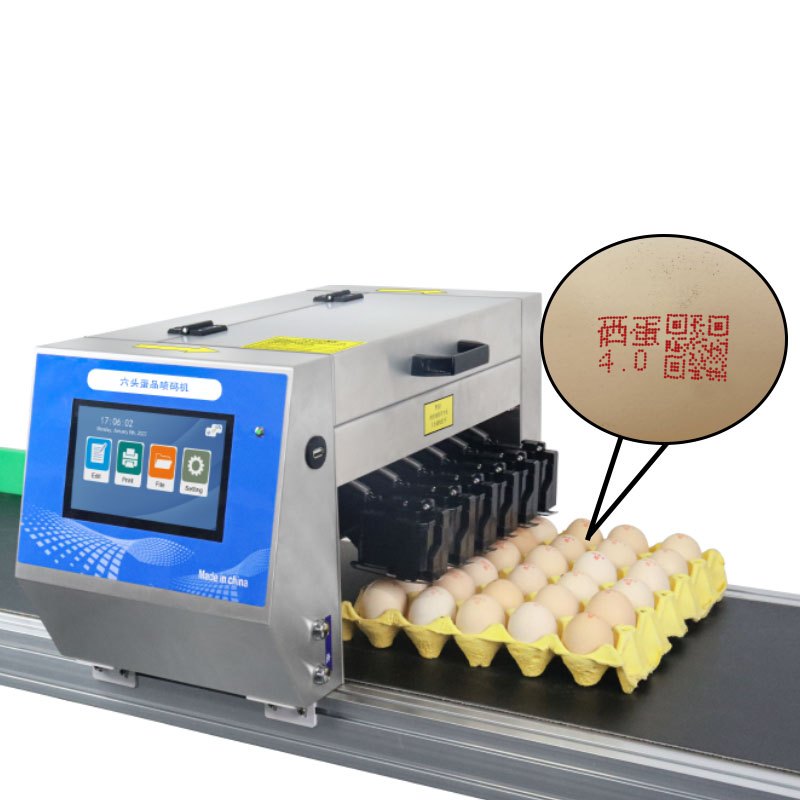
S350 Pagination conveyor
a friction feeder with a stainless frame:
- Conveyor speed 5-110 m/min
- Friction paging separates sheets reliably
- Stainless steel frame, 120W power draw
- Handles sheets 60-320 mm long, 0.02-5 mm thick
The thickness band is the number to read first. Five millimetres covers cartons and folded leaflets, while the lower end of that band is where a friction wheel earns its keep and where a belt feeder usually fails.
Related Questions
- Can it feed a folded leaflet
- Yes, within the thickness band, though a fold that has memory can ride up and needs a guide rather than a faster setting.
- Does the gap need adjusting per job
- Per layout, yes. The gap follows the code width, so a wider block needs a wider setting on the same machine.
- Can two heads share one feeder
- On a wide deck, yes. Both heads then trigger from the same sensor, which keeps the two marks aligned.
Send the Sheet and the Code
Send the item dimensions and the code layout. We return the gap, the speed and the mounting height, so the paging machine and the head arrive as one station rather than as two machines that have to be married on site.
Next Steps
- Inline coding without rejects: keeping a conveyor line clean.
- The feeder in brief: what a coding conveyor does.
- Start at the contact page, on +86 17625427465 or kuangcy@126.com. We reply within 24 hours.
Need help choosing the right printer?
Talk to our engineers for a free production-line assessment and quotation.
Request a Quote