Last Updated: 2026-09-09
An inkjet printer for industrial marking is only as good as the match between machine, surface, and line. Choosing one comes down to a few questions about what you mark, how fast the line runs, and how the unit fits your conveyor. Answer them and the right model is obvious.
The Short Answer
Start with the mark, not the machine. The code content, the surface it lands on, and the speed of the line decide the technology long before price does. Most buyers reverse this and shortlist machines first, which is how a well-reviewed printer ends up smudging on the wrong film.
The decision breaks into four variables: the material you mark, the line speed, the code size and resolution you need, and how the unit mounts into your existing conveyor. Every other feature is secondary to those four.
How to Choose
Choosing an inkjet printer for industrial marking narrows to five checks. Work through them in order and the choice makes itself:
| Check | What to decide |
|---|---|
| 1. Surface | Porous, non-porous, curved, or damp: the surface sets the ink and the technology |
| 2. Line speed | Fast lines point to CIJ; lower speeds leave TIJ and DOD on the table |
| 3. Code size | Small date codes need one head; wide case marks may need a multi-head array |
| 4. Integration | Confirm the trigger, sensor, and bracket fit your conveyor before ordering |
| 5. Maintenance | CIJ runs a solvent make-up and printhead cleaning; TIJ swaps a cartridge |
Surface is the one that overrides the others. A non-porous film, a curved bottle, and a damp carton each demand a different formulation, and no amount of resolution fixes the wrong ink. Ask the supplier to print a sample on your actual material before you commit.
Line speed then settles the technology. Continuous inkjet holds clean small characters at very high speed because the stream is always running. Thermal inkjet is the lower-cost option once the line is slow enough for it, and drop-on-demand covers larger characters on porous surfaces. Matching the speed to the family avoids paying for capability you will not use.
Integration is the quiet cost. A printer that mounts cleanly into your conveyor with a trigger and sensor already sized for the job costs less to install than one that needs a custom bracket and guarding after the fact. Ask for the installed price, not just the machine price.
About SHICAI
SHICAI builds industrial coding and marking equipment across inkjet and laser lines, for production and warehouse use. Machines ship with genuine components and tested consumables matched to common packaging surfaces, and service and spares are arranged for export markets. The technical team answers directly rather than through a reseller chain.
Related Questions
- What is the difference between CIJ and TIJ for industrial marking?
- CIJ runs a continuous ink stream and suits high-speed lines and non-porous surfaces. TIJ fires droplets on demand from a cartridge and suits cartons and labels at a lower cost per unit.
- Do I need one head or several?
- It depends on the code width. A single head covers a narrow date or lot code, while a wide case mark may need a multi-head array. Measure the widest code you print before comparing heads.
- Can an inkjet printer mount into my existing line?
- Usually yes, with a bracket, a trigger, and a sensor sized to your conveyor. Confirm the mounting point and the throw distance before ordering so the head stays where the code lands clean.
A Model Worth Looking At
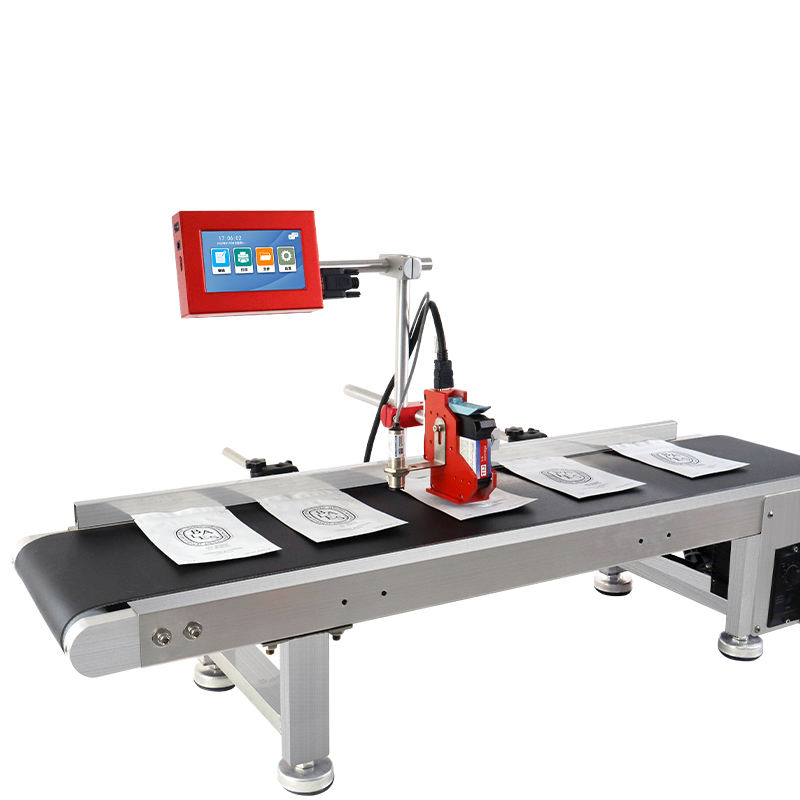
T110 Online inkjet printer is built for this kind of work:
- 600DPI HD print accuracy
- 2-12.7mm print height
- 4.3-inch Touch Screen
Click the image to see the product page.
Learn more about inkjet printing and ISO 9001 quality management.
Next Steps
- Read related FAQ guides on coding and marking basics.
- See the T110 Online inkjet printer for print height and head options.
- Get a free sample print on your material. No commitment, reply within 24 hours.
Need help choosing the right printer?
Talk to our engineers for a free production-line assessment and quotation.
Request a Quote