
Last Updated: 2026-09-13
A handheld inkjet printer for wood is used the way a stencil is used: you brace the mouth of the unit on the board, squeeze the trigger, and sweep across the grain so the code lands where a forklift driver will read it. It is built for pallets, crates and sawn timber that never pass a conveyor.
The Short Answer
Five checks decide whether a portable coder suits timber, and four of them concern the surface rather than the machine:
| Check | What to look at | Why it decides the result |
|---|---|---|
| Surface finish | Bare, planed, oiled or varnished | Water-based fluid soaks into bare timber; a sealed face needs a formulation that grips instead of beading |
| Grain and roughness | Sawn pallet stock or dressed board | Open grain draws fluid sideways, so one setting reads differently across a batch |
| Print height and accuracy | 2-12.7 mm at 300-600 dpi | Pallet and crate codes are read at a distance, which a carton-sized code cannot serve |
| Fluid for the job | Water-based, solvent-based or UV-cured | Food, export and warehouse rules can decide before print quality does |
| Shift endurance | Battery and cartridge life | A full shift on one charge and a cartridge swap in seconds keeps a manual station moving |
Wood rewards a test mark: a setting that looks right on a planed sample can wick along the grain of a sawn pallet.
What a Handheld Inkjet Printer for Wood Demands
Speed and pressure are held by hand, so consistency is what to practise. Keep the unit square to the surface, hold the print gap at 2-5 mm, and sweep at a steady pace. A straight edge clamped to the stack gives repeatable rows and removes most of the variation between operators.
Fluid choice follows the finish, not the species. Bare timber takes a water-based formulation that dries as it soaks in; oiled or varnished faces need a solvent-based or UV-cured one, because a water-based drop sits on the film and wipes away. Run the rub test on an offcut: mark it, wait the stated dry time, then rub firmly with a thumb.
Cap the printhead when the unit is set down, wipe the nozzle face at the end of a shift, and keep the coder out of the sawdust stream.
About SHICAI
SHICAI builds portable coders for timber yards, pallet plants and export packing lines, alongside its online and laser ranges. The handheld models ship with genuine printheads and cartridges, spares are held for overseas customers, and a question about a specific timber or finish reaches the engineers directly.
Related Questions
- What fluid should a handheld inkjet printer for wood use?
- It depends on the finish. Bare timber takes a water-based formulation that soaks in and dries quickly; planed, oiled or varnished faces need a solvent-based or UV-cured one that grips the film. Confirm it with a rub test on an offcut.
- Can a portable coder mark rough sawn pallets?
- Yes, with a larger character height and a closer print gap. Rough faces scatter the drop, so set the height for the distance the code will be read from and check a marked pallet from the warehouse floor.
- How do you stop codes on wood from fading?
- Match the fluid to the finish, respect the stated dry time before stacking, and avoid dragging marked boards across each other.
A Coder Worth Looking At
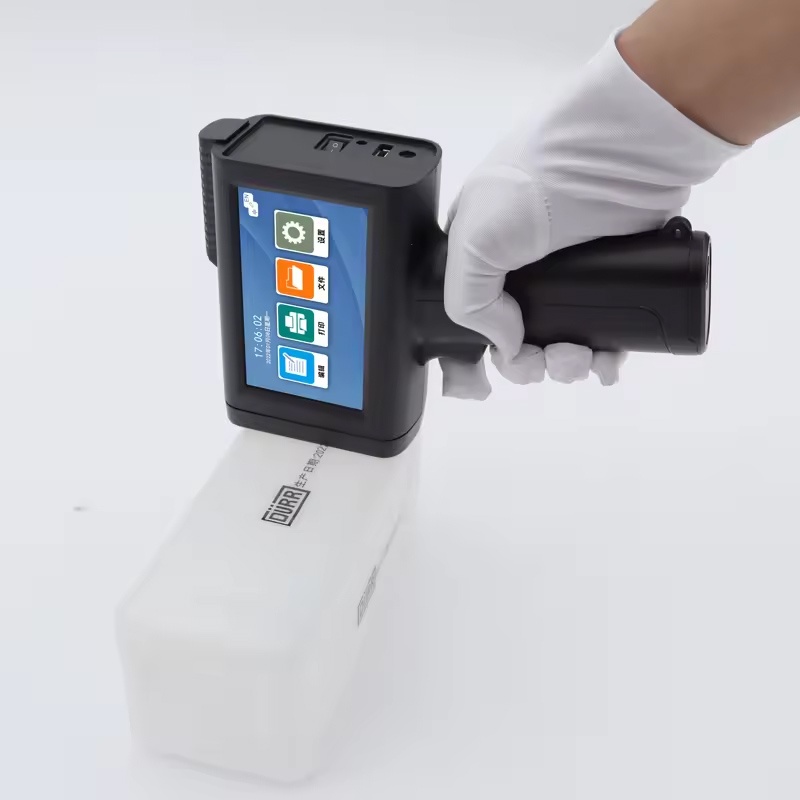
M10 Handheld Inkjet Printer is a portable coder for timber, pallets and crates, with a 4.3-inch touch screen:
- adjustable from 300-600dpi print accuracy
- 2-12.7mm adjustable print height
- Weighs only 2.5 kg
Compare the options in laser marking and ISO 9001 quality management.
Next Steps
- Weigh the processes first: how to print on plastic, five methods compared.
- See what is inside an industrial laser marking system before you specify one.
- Send a sample part and the code you need. Test marks are free, nothing is committed until you approve, and an engineer replies within 24 hours.
Need help choosing the right printer?
Talk to our engineers for a free production-line assessment and quotation.
Request a Quote