A marking laser puts a permanent, legible trace on a part without touching it, so there is no ink, no tool wear, and no consumable that runs out mid-shift. What makes one worth choosing is not wattage alone but how well the beam, the material, and the mark type work together: a good match gives a dark, scannable code in one pass; a poor match gives a faint mark that fails inspection.
The Short Answer
Four quality markers decide whether a marking laser earns its place. Beam quality comes first: a low M² value means a tight, uniform spot, which is what produces consistent contrast across the whole marking field. Material compatibility is second: annealing works on stainless steel, ablation suits anodised aluminium, and foaming fits dark plastics. The wrong process on the wrong surface wastes time. Mark speed and field size set throughput: a galvo scanner covers a 100 mm square in well under a second, while a plotter head trades speed for a larger area. Software closes the loop: editable parameters, DataMatrix and QR generation, and shift counters turn a capable laser into a traceable one.
In practice, a marking laser is judged by the same yardstick as any traceability tool: can the code be read after handling, storage, and customer inspection? Contrast and depth, not raw power, are what keep a mark legible for years.
It is worth remembering what a marking laser is not: it will not fix a low-resolution logo or a cluttered data matrix. The laser marks exactly what the file tells it, so clean artwork and a first-article verification are part of the job, not afterthoughts.
What to Know in Practice
Routine care keeps a marking laser productive. The F-theta lens and protective window are the parts that suffer most — factory dust and marking vapour settle on the glass, absorb beam energy, and turn a sharp mark into an uneven one before the source ages. Inspect and clean optics weekly on daily-running units, verify focus height when the part fixture changes, and keep a spare lens and window on the shelf. Stable power and fume extraction prevent the intermittent faults that get blamed on the laser itself.
Whatever beam source you choose, budget for optic cleaning supplies, a spare protective window, and a source-life plan if the line runs two shifts. These running costs decide whether the marking laser stays in service or becomes the reason a batch ships late.
About SHICAI
SHICAI builds fiber, CO₂, and UV marking laser systems for metal, plastic, and packaging lines. The company ships to overseas factories, specifies genuine rated beam sources so contrast stays consistent, and arranges service and spares for export markets. The technical team answers questions directly rather than through a reseller chain.
Related Questions About Marking Laser
- What materials can a marking laser handle?
- A fiber marking laser works on most metals and many plastics; CO₂ suits organics and glass, and UV handles heat-sensitive plastics. Ask for sample marks on your actual material before buying.
- How much does a marking laser cost?
- Pricing depends on the laser type, marking field size, and marking software you need. We do not quote a fixed figure here. Contact our team for a current quotation.
- How do I keep a marking laser producing sharp codes?
- Clean the F-theta lens and protective window on a schedule, verify focus height when fixtures change, and run a test mark at each shift start. Clean optics are the single biggest factor in mark quality.
Marking Laser Worth Looking At
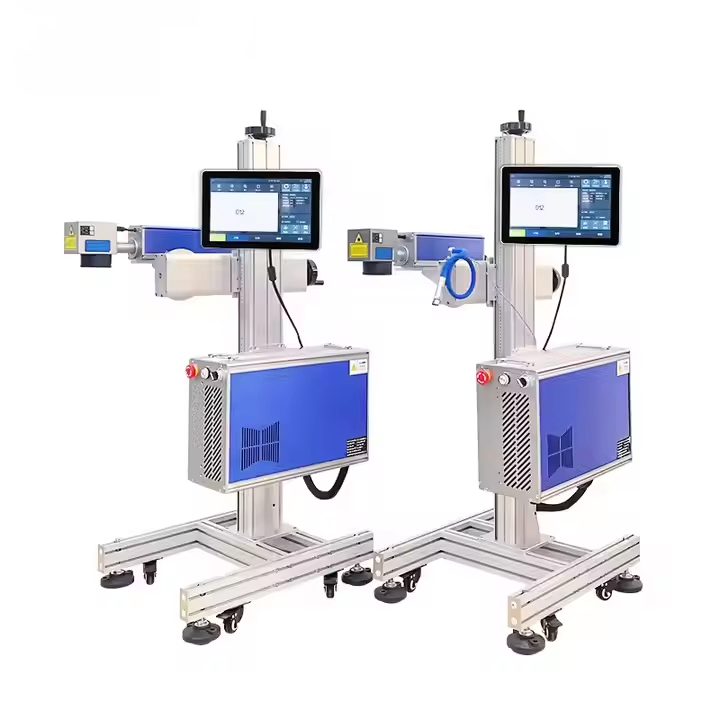
G-20 Fiber laser inkjet printer is built for this kind of work. Click the image to see the product page.
laser engraving technology See also: ISO 9001 quality management.
Need help choosing the right printer?
Talk to our engineers for a free production-line assessment and quotation.
Request a Quote