
Last Updated: 2026-09-29
A code that rubs off in a wash tank cannot trace a part for life. So how long does laser marking last? On bare metals, effectively as long as the part: the surface is altered rather than covered, so there is nothing left to peel. Four things decide whether that holds on your component.
How Long Laser Marking Actually Lasts
The process changes the surface it works on. On metals the beam displaces or oxidizes material to create contrast; on plastics it can char or foam a thin layer in place. Because the mark is the surface, there is no separate film to crack, lift or dissolve. That is the whole difference in durability from a deposited mark, and why a marked part can go through degreasing, autoclaving and outdoor exposure without losing its identity.
Four Factors That Decide It
| Factor | Why it matters | What to check |
|---|---|---|
| Base material | Bare metal marks by displacement; coated stock marks through the coating | Ask what the mark sits on, not just what the part is called |
| Surface condition | Oil, oxide and paint all change contrast and depth | Clean the sample before the trial, then repeat it dirty |
| Environment | UV is harmless; corrosion and abrasion are not | Salt spray, wash tank or handling wear, whichever the part really meets |
| Later processing | Machining, plating or heat-treat can remove material over the mark | Mark after the last process that takes material off |
How laser marking alters surfaces covers the mechanisms behind the first two rows.
Where It Fails
It does fail, and rarely in the way buyers expect. Anodised aluminium loses color under strong UV, so a cosmetic mark outdoors is a different problem from an annealed mark in steel, which is essentially stable. Deep engraving survives abrasion better than a high-contrast surface mark that has been kept shallow to look clean. And on a part that is plated or passivated after marking, the finish simply covers the code. Order the process, not only the machine: build sequence is where most durability is won or lost. For the traceability side, ISO 9001 quality management is what records the sequence a part is marked in.
Durability questions
- Is a laser mark permanent?
- On metals it is: the surface itself is altered, so there is no deposited layer left to lift. On coated or printed substrates the coating can still be worn away, and the mark goes with it.
- Does laser marking fade?
- The mark is not a dye that breaks down in light, so sunlight is not the failure mode. Wear, corrosion of the surface around it and machining after marking are what remove it.
- Can a laser mark be removed?
- Only by taking material off the part: grinding, polishing or a heavy coat of paint over it. That is also why a mark survives cleaning cycles and solvents that would lift a printed code.
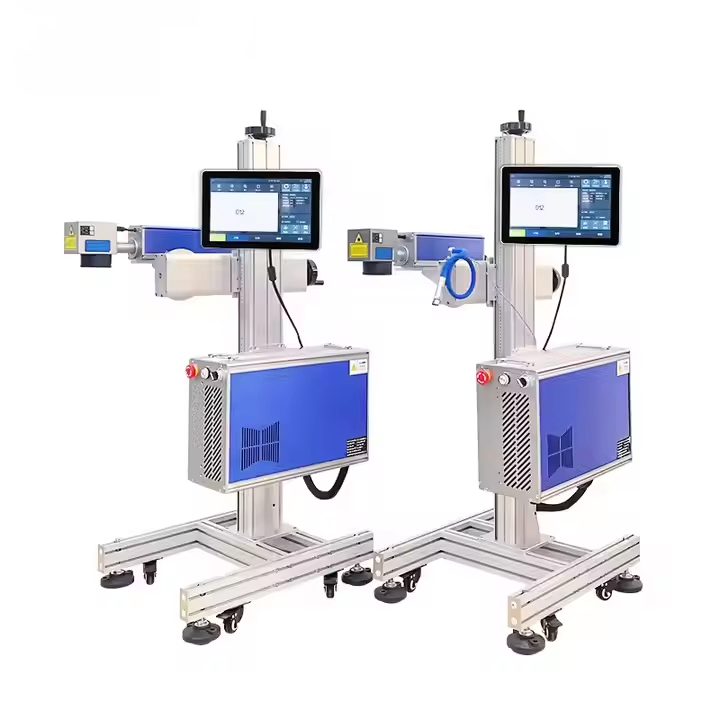
G-20 Fiber laser inkjet printer
one frame built for this duty:
- Permanent marks on metal without consumables
- Fiber laser output options from 20W to 100W
- Air-cooled design for continuous duty
Next steps
- Compare laser cutting against laser marking, which is where most of the confusion starts.
- Send a sample part through our contact page. We mark it, then test it against the process your part really goes through, free of charge.
Need help choosing the right printer?
Talk to our engineers for a free production-line assessment and quotation.
Request a Quote