Last Updated: 2026-09-01
Laser vs inkjet coding comes down to permanence and contact: a laser etches a permanent mark into metal and hard plastic without touching the part, while an inkjet coder prints dates and codes onto almost any surface at line speed. Choose laser for lifetime traceability, inkjet for flexible, low-cost packaging codes.
The Short Answer
Choose a laser when the mark must outlive the product. Fiber laser systems etch serial numbers, data matrix codes, and logos directly into metal, coated metal, and many plastics. There is no ink and no contact, so the mark survives heat, solvents, and years of handling. That is why laser dominates tools, automotive parts, medical devices, and UDI compliance.
Choose inkjet when the message changes often and the substrate varies. Continuous and thermal inkjet coders print production dates, expiry dates, batch numbers, and barcodes onto cartons, bottles, films, cans, and even eggshells, at full line speed, with a new message for every shift. Entry cost is lower, and one coder can cover many package shapes.
The two also differ in where the cost sits. A laser costs more up front and little afterwards; an inkjet coder costs less up front and carries an ongoing ink and make-up budget. Which trade you prefer depends on volume, materials, and how often codes change; the table below compares them side by side.
Comparison and Checklist
| Factor | Fiber laser marking | Inkjet coding (CIJ / TIJ) |
|---|---|---|
| Mark type | Etched into the surface, permanent | Printed onto the surface, removable with solvents |
| Consumables | None | Ink, make-up fluid, occasional filters |
| Best surfaces | Metal, coated metal, many rigid plastics | Cartons, films, bottles, cans, labels, eggshells |
| Message changes | Easy, but marks are not meant to be refreshed | Built for dates, shifts, and rotating codes |
| Cost shape | Higher entry, near-zero running cost | Lower entry, steady consumable spend |
| Typical use | Serial numbers, UDI, lifetime traceability | Date and batch coding on packaging lines |
Working through laser vs inkjet coding for your own line? Use this checklist before you shortlist:
- Material first: metal and hard plastic lean laser; paper, film, and curved packaging lean inkjet.
- Mark lifespan: if the code must survive the product lifetime, choose laser.
- Message rotation: daily date and batch changes are inkjet territory.
- Line speed: both run at production speed, but confirm the model matches your throughput.
- Total cost: compare laser entry cost against a year of inkjet consumables, not sticker price alone.
About SHICAI
SHICAI builds both sides of this comparison: a fiber, CO₂, and UV laser line for permanent marking, and a full inkjet range for date and batch coding on packaging lines. The company ships to overseas production lines and warehouses, and its technical team answers directly rather than through a reseller chain, so the recommendation is about fit, not clearing stock.
Related Questions About Laser vs Inkjet Coding
- Are inkjet codes permanent?
- Standard inkjet codes resist handling and typical storage, but a strong solvent can remove them. Where permanence is a compliance requirement, laser etching is the safer choice.
- Is laser marking more expensive than inkjet?
- The laser costs more to buy and little to run, while an inkjet coder costs less to buy and carries ongoing ink costs. On high-volume lines with permanent-mark needs, the laser usually wins on total cost.
- Can one machine handle both jobs?
- Not in one head, but many lines pair them: an inkjet coder for date and batch marks on packaging, and a laser for permanent serials on the product itself. We can check your target market’s rules with you.
A Model Worth Looking At
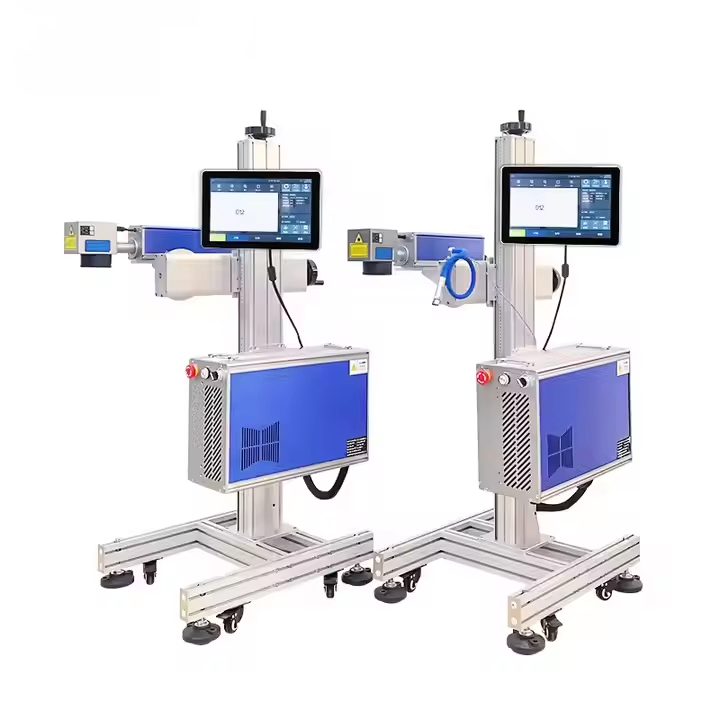
The G-20 Fiber laser inkjet printer covers the laser side of this comparison for metal and plastic parts. Click the image to see the product page.
For background on the beam-based side, see laser engraving technology; for supplier quality standards, see ISO 9001 quality management.
Next Steps
- Read related FAQ guides for more coding and marking basics.
- See the G-20 Fiber laser inkjet printer if you need permanent laser marking.
- Get a free sample print or marking test on your material. No commitment, reply within 24 hours.
Need help choosing the right printer?
Talk to our engineers for a free production-line assessment and quotation.
Request a Quote