Last Updated: 2026-09-04
Choosing between industrial lasers is really choosing a wavelength, and the wrong one wastes the beam and the part. The five main types, fiber, CO2, UV, and their cousins, each own a different slice of the material map. Here is who does what, and how to match the beam to your job.
The Short Answer
Industrial lasers do two families of work: marking, which changes the surface without cutting through, and cutting, which removes material to shape parts. Within marking, the source type decides what marks well:
| Type | Wavelength | Best on |
|---|---|---|
| Fiber | About 1,064 nm | Metals, hard plastics |
| CO2 | About 10.6 micrometers | Wood, glass, paper, clear film |
| UV | About 355 nm | Heat-sensitive plastics, electronics |
| Green | About 532 nm | Reflective metals, some glass |
The rule underneath the table: the material must absorb the wavelength for anything useful to happen. Fiber etches steel beautifully and barely touches clear glass; CO2 marks that same glass cleanly.
What to Know in Practice
For marking work, the practical questions are contrast and durability: does the mark read after coating, cleaning, and years of service? For cutting work, edge quality and thickness capacity on your specific material decide the machine. Some platforms attempt both, but each is optimized for its own job.
Test on your actual parts before buying. Alloy, coating, and surface finish change results more than any specification sheet suggests, and reputable suppliers run sample marking free of charge. Ask about the source rating too: an industrial fiber source is commonly specified for 100,000 hours or more, which is why the maintenance conversation for marking systems revolves around optics and focus rather than the beam itself. That single number separates machines built for production from machines built for occasional work.
About SHICAI
SHICAI runs a full laser line: fiber, CO2, and UV systems for continuous production. The company ships to overseas production lines and warehouses, and specifies genuine rated laser sources so the machine runs to its rated life. Service and spares are arranged for export markets, and the technical team answers directly rather than through a reseller chain.
Related Questions
- Which laser is best for metal marking?
- Fiber, for the vast majority of marking jobs on metals. It engraves and anneals with fine spots and holds up through years of production.
- Can one laser mark and cut?
- High-power platforms can do both, but compromises show in each. Dedicated machines outperform combination systems on quality per dollar.
- Do industrial lasers need consumables?
- No ink or solvent; the running costs are electricity, optics, and eventually the source. A fiber source is typically rated for 100,000 hours or more.
A Model Worth Looking At
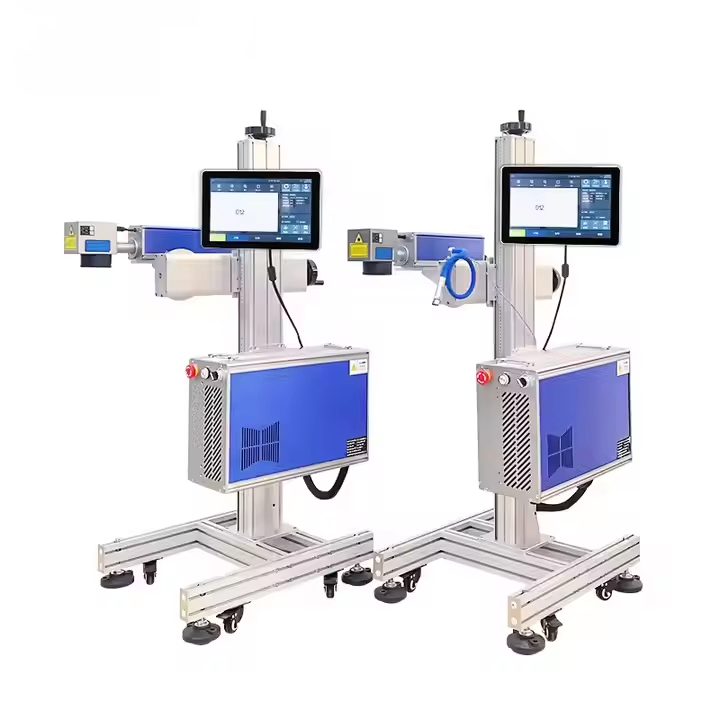
G-20 Fiber laser inkjet printer is built for this kind of work. Click the image to see the product page.
Learn more about laser engraving technology and ISO 9001 quality management.
Next Steps
- Read related FAQ guides on coding and marking basics.
- See the G-20 Fiber laser inkjet printer if marking is what you need.
- Get a free sample mark on your material. No commitment, reply within 24 hours.
Need help choosing the right printer?
Talk to our engineers for a free production-line assessment and quotation.
Request a Quote