
Last Updated: 2026-10-19
An egg batch coding machine prints a batch number, a date and a farm or line identifier on each shell. The mark is the easy part. What decides whether a shed keeps its rate is what has to change when the batch changes, and how long that takes at the panel.
What an Egg Batch Coding Machine Puts on a Tray
A tray of thirty eggs is six shells deep and five across on the common format, and every shell in a row carries the same string. That string is usually three parts: a date, a batch or lot reference, and an identifier for the farm, house or line the eggs came from. Large flocks add a best-before offset; multi-retailer packers add a short customer code.
The shell mark is the only element that travels with the individual egg once the tray is broken up, so it carries the whole trace.
Three Fields That Change With the Batch
- The batch or lot reference. Changes at every collection, sometimes twice a day on a large site, and it is the field most often retyped by hand.
- The date string. Format and offset differ by destination, so one unit may print a day-month layout for one buyer and a best-before in weeks for another.
- The house or line identifier. Changes with flock movement rather than with the calendar, which makes it the field an operator forgets at handover.
The fixed parts, such as a plant code or prefix, are set once. Splitting the moving fields from the fixed ones is what makes a changeover quick.
Setting the Changeover
A batch-capable egg date printing machine usually arrives with two ways to load a job. One selects a whole recipe from a file or a line signal and populates every field. The other keeps a template on the panel and the operator edits the batch value in place, which is faster where there is no network and slower when several fields move at once.
Either way the check on an egg batch coding machine is the same. Print the first tray of the new batch, read every field against the collection sheet, and only then release the run. A batch number one digit out does not fail at the printer, and it will not be found until a pallet is stopped at the retailer.
A 7.0-inch capacitive panel matters for a simple reason: a gloved hand enters a batch value without hunting for a stylus, in a cold shed, with the line waiting.
Tray Questions
- Does every egg in a tray get the same code?
- Yes, when the tray is collected as one lot. Mixed trays packed from two houses need the printer split by row or handled as two runs.
- Can the batch number change without stopping the line?
- On most installs the edit is made at the panel while the line runs, and the new string takes effect from the next trigger.
- What if a shell is already marked from the farm?
- A second mark over an existing one stays readable if the offset is adjusted, but the cleaner option is to leave the farm mark and print the batch on a clear part of the shell.
Send a Tray
Send one loaded tray and the exact string you print today, including the format the retailer asks for. We mark the shells and return the sample, so the changeover can be measured against the one you have.
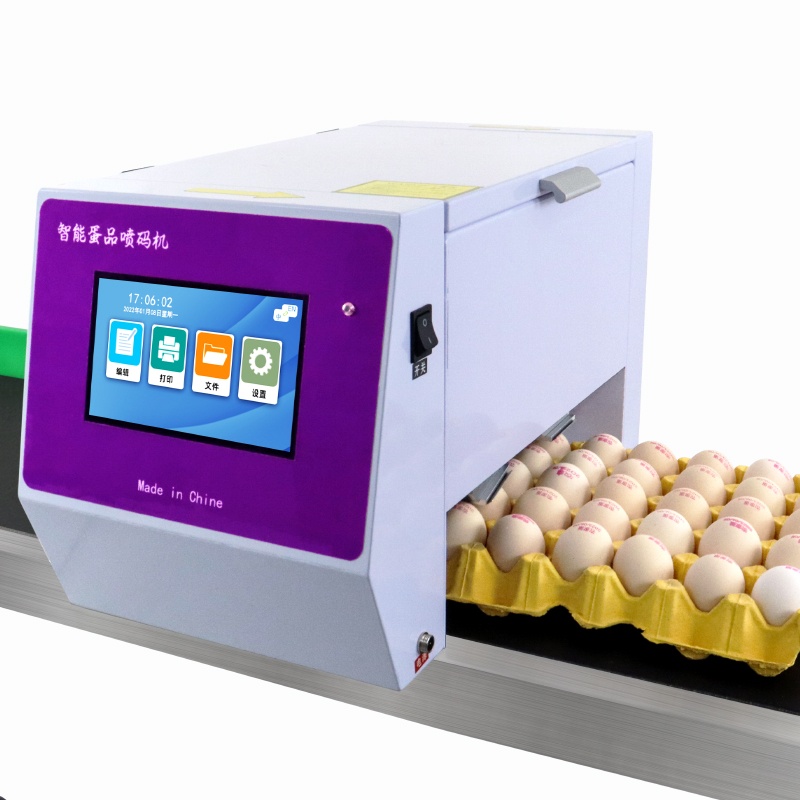
Six head egg inkjet printer
the parallel-head build for tray work:
- Six individual nozzles print in parallel
- 7.0-inch capacitive screen
- Food-grade ink safe for eggshell contact
- Prints Chinese/English characters and dynamic QR codes
Ink is agreed against the shell rather than the carton, and builds follow ISO 9001 quality management. The background on inkjet printing explains how a drop reaches a curved surface.
Next Steps
- Send the collection sheet and one tray. We print the real fields and return the sample free of charge.
- Start at the contact page, on +86 17625427465 or kuangcy@126.com. We reply within 24 hours.
Need help choosing the right printer?
Talk to our engineers for a free production-line assessment and quotation.
Request a Quote