
Last Updated: 2026-10-08
A batch code is only useful if it can be traced back to a run. A batch number printer places that code on every unit from the same shift, so a query narrows to a date and a line instead of a whole warehouse. Five fields decide whether the mark does that job.
What a Batch Number Printer Marks That a Date Alone Cannot
A date tells a buyer when a pack was filled; a batch number tells them which run it came from. Those are different questions, and buyers and regulators ask both. A batch number printer writes the second one, linking every unit in a production block to a single record.
The string itself is short, usually a shift letter, a line digit and a Julian date, so print area is rarely the challenge. What matters is that the same block lands on every unit and stays legible until the pack is opened.
Five Fields a Batch Number Printer Must Get Right
- The block ID. A short run identifier that ties each unit to one production record.
- The line or plant code. Where the unit was filled, so a query narrows to a single site.
- The date. A Julian or calendar stamp that places the run in time.
- The shift. Which team was running, useful when a fault repeats on one crew.
- Placement. The code must sit where it survives handling and still reads on a curved or filmed surface.
A batch code is not the same as a lot or a serial. A serial is unique per unit, a lot groups the units a buyer will handle together, and a batch ties them to one production run. The batch production record is what a traceability check is compared against, so the printed string has to match the paperwork exactly, field for field, rather than approximately.
Format is decided before hardware. If the record uses a Julian date, print a Julian date; if it uses a shift letter, make sure the font carries it. Changing the format halfway through a season is what turns a clean trace into a manual search.
How SHICAI Sets Up a Batch Number Printer
SHICAI builds inline frames that print a batch number, a date and a barcode in one pass, and the string is specified from the buyer’s record format rather than a fixed template.
The panel stores the block as a job, so an operator recalls it at the start of a shift instead of retyping it, and every head runs sealed in seven ink colors. ISO 9001 quality management covers how that format is approved and archived for traceability.
Related Questions
- Is a batch number the same as a lot number?
- Often, but not always. A lot usually groups units a buyer handles together, while a batch ties them to one production run. Use whichever your buyer’s paperwork names.
- How many characters does a batch code need?
- Usually six to ten. Enough to carry a plant, a line, a shift and a date without crowding a small print area.
- Can a batch printer add a date too?
- Yes. The same head prints the batch block and the date in one pass, so both fields stay aligned on every unit.
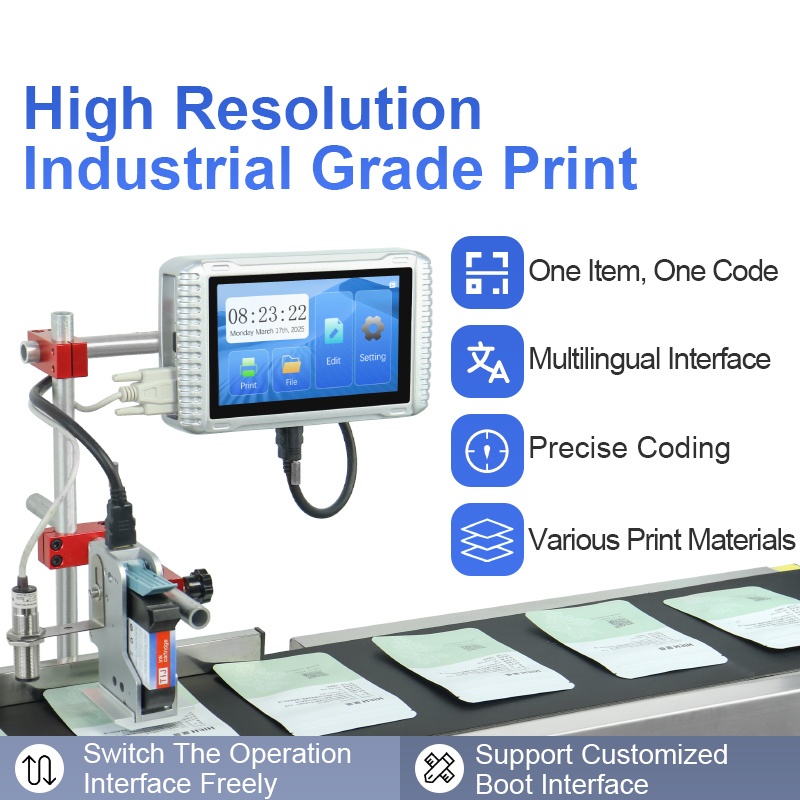
L10 Online inkjet printer
an inline build that prints a batch number and a date in one pass:
- Prints up to 120m/min
- 600dpi print accuracy
- 2-12.7mm/2-25.4mm print height
Where to Go Next
- Read next: how to read a lot number, which breaks the same fields down for a buyer
- See the product: L10 Online inkjet printer
- Talk to us: send your record format through our contact page. We match the fields and the head setting to your job before you order.
Need help choosing the right printer?
Talk to our engineers for a free production-line assessment and quotation.
Request a Quote