
Last Updated: 2026-09-28
A recall is contained by a code or lost by one. To read a lot number, treat it as five fields rather than one string: the lot itself, the production date, the line, the shift, and where relevant an expiry. Each answers a different question, and a block missing one cannot isolate a shipment.
What a Lot Number Encodes
A lot number names the group of product made together under the same conditions. It is decided by the manufacturer, so its format is internal, which is exactly why it must be read alongside the date rather than on its own. The date anchors the group in time, the line and shift narrow it to one machine and one crew, and the expiry states how long the group stays sellable.
Five Fields, in Order
| Field | Question it answers | Common form |
|---|---|---|
| Lot or batch | Which production group? | Internal code, GS1 application identifier 10 on a label |
| Date of production | When was it made? | YYMMDD or a Julian day code, identifier 11 |
| Line | Which machine? | Short prefix inside the lot code |
| Shift | Which crew and changeover? | A single trailing character |
| Best before | How long is it sellable? | Date, identifier 17, where shelf life applies |
Read left to right and the block is a funnel: group, then time, then machine, then crew. The GS1 application identifiers fix the numeric meaning of the identifiers used on a label, while the lot itself stays the manufacturer’s own string.
How to Make It Readable
The block only works if the next person can read it. That means character height a person can see without a lamp, contrast against the surface rather than against the artwork, and a position that survives palletising and stretch film. Where the block is scanned instead of read, the same rule applies with a stricter margin: modules must stay separated and the quiet space around a symbol must stay clear.
Printing it is a production decision, not a printing afterthought. ISO 9001 quality management is the framework that keeps the format agreed, verified on a sample and rechecked after a changeover.
Lot number questions
- Is a lot code the same as a serial number?
- No. A lot code identifies a group of units made together, so every pack from that run carries the same value. A serial number identifies one unit, so every pack carries a different value. Trace usually needs the first; recall of a specific item needs the second.
- Where on the pack is it printed?
- On cartons it sits in the coded block with the production date, usually near a panel edge away from the seam. On cases it is often repeated on the label carrying the barcode, where the lot travels as an application identifier rather than as free text.
- Can the code be a date instead?
- Only where a date can isolate the affected run. If one shift produced two runs, a date alone cannot separate them, and a code that cannot separate them cannot contain a recall.
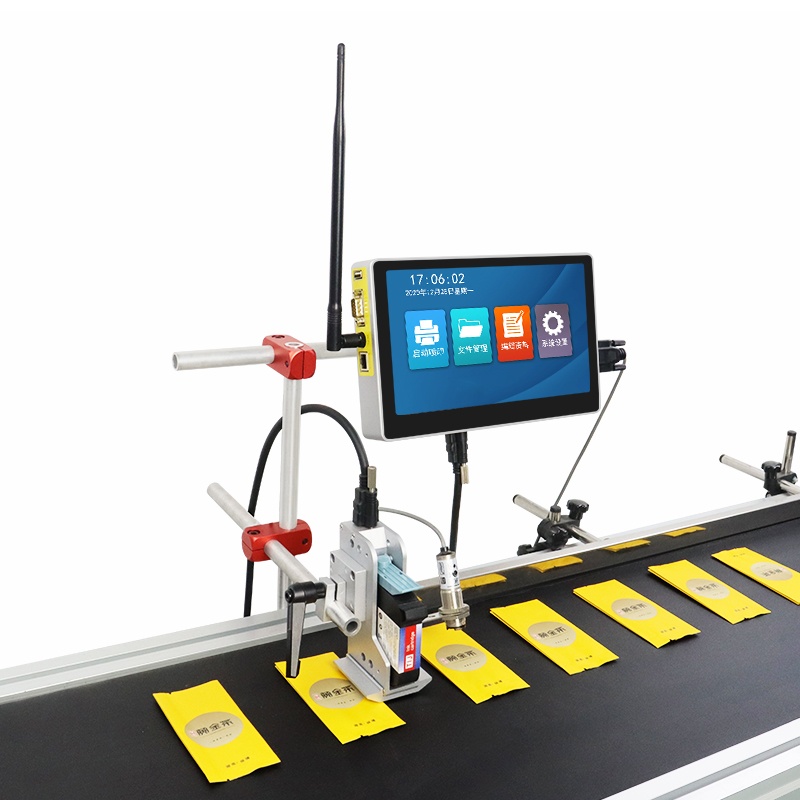
S100 Online inkjet printer
one frame that prints the block:
- Prints up to 100 m/min
- 600dpi HD print accuracy
- 10-inch touchscreen
Where to check next
- See what a lot code printer marks and when you need one.
- Compare the five things a batch code must carry, where lot and batch terms part company.
- Send your carton through our contact page and we print the block on it free of charge, with no commitment.
Need help choosing the right printer?
Talk to our engineers for a free production-line assessment and quotation.
Request a Quote