Last Updated: 2026-10-12
A reel line that cannot be moved ties a whole workshop to one bench. An inline inkjet printer portable shops can shift between jobs keeps the code and the wind repeatable wherever the work is, so five checks settle it before the first move.
What Moving a Reel Line Costs
Most small workshops start with one bench and outgrow it. When the coder is bolted to a fixed frame, moving a job means either buying a second unit or running the whole order at the wrong station.
A unit built to move solves that, but only if it repeats. Loose brackets, a changed throw distance or a re-levelled frame each move the code, which is why an inline inkjet printer portable build is judged on how quickly it is set back to the same position, not on how light it is. The traceability the code supports is checked against ISO 9001 quality management.
Three Places a Portable Unit Pays
Three jobs reward a unit that can be moved:
- Shared coder between benches. One head serves two tables, moved as orders change rather than bought twice.
- On-site and demo work. A unit taken to a customer’s floor to code their stock in front of them, then returned.
- Temporary and seasonal runs. Campaigns that run for weeks and then clear the floor for something else.
In each case the value is the same, which is how fast the setup returns to the same code position after the move.
Five Checks for an Inline Inkjet Printer Portable Setup
Settle these so the unit can be re-set the same way every time, rather than dialled in again from scratch.
| Check | What good looks like | What it prevents |
|---|---|---|
| Marked datum points | Head height and stop recorded once | Re-levelling the frame by eye |
| Fixed throw distance | 2 to 5 mm from head to stock | A gap that changes with each move |
| Repeatable reel seat | A stop that locates the core | A reel that winds on a different axis |
| Running count memory | A 1 to 15 digit range that holds | Losing the count between benches |
| Web width set for the stock | 20 to 300 mm range | Re-tracking the web each time |
The datum marks and the reel seat carry the most weight, because they are what let the same settings work at the second bench without a fresh test reel.
How SHICAI Sets a Relocatable Reel
SHICAI builds rewind coders for shops that move work between stations, and each unit is set with the datum points marked so the same code position is reached after a move. A batch coding machine portable enough to roll between benches still holds its reel seat with a stop, and the counter holds its range between jobs.
The unit on this line prints at 600 dpi with a 2 to 12.7 mm height, runs a 7-inch capacitive touch screen, holds a 2 to 5 mm throw distance, and takes ink in seven colours.
Portable Questions
- How heavy is a unit like this to move?
- Light enough for two people to shift between benches, and light enough that the frame does not have to be re-aligned from scratch if the datum points are marked.
- Does moving it reset the code position?
- Only if the datum points are ignored. Mark head height and the core stop once, and the same settings work at the next bench.
- Can it run on a plain bench?
- Yes. It needs a flat surface and power, not a built-in line, which is what makes it usable in a small workshop.
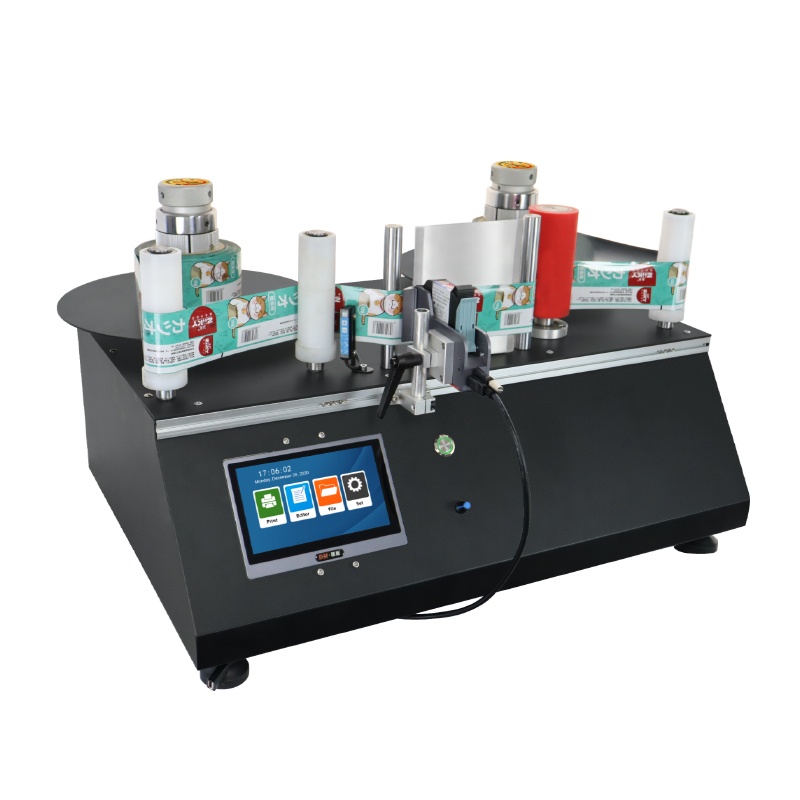
F320 rewinding machine
a bench-scale rewind unit that pairs with a coder and moves with the job:
- 600dpi HD print accuracy
- 2-12.7mm print height
- 7-Inch Capacitive Touch Screen
- 2-5mm throw distance
Plan Your Own Move
- See the machine: F320 rewinding machine
- Read next: the L10-FJ30 rewinding inkjet printer, the wide-web unit for a fixed bench
- Talk to us: send the number of benches you run through our contact page. We reply within 24 hours with a setup that repeats, free of charge.