
Last Updated: 2026-10-14
One sheet at a time at the head is where most lines lose their rhythm. A paging machine fixes that by separating stacked sheets and feeding them single file, so the coder sees one pack at a time, at a steady gap, with nothing left to guess.
What a Paging Machine Does to a Coding Line
It turns a stack into a queue. Sheets, cards, pouches or cartons that arrived overlapped are handed to the printer one after another, each at the same distance from the last.
That decides how the printed code looks. A mark placed on an overlapped sheet lands short of the edge; a mark placed on a double feed lands across two packs. Both end up as scrap, and both are usually found at the pallet rather than at the head.
Separation is done by friction, by vacuum, or by a belt with a nip roller; the mechanism sets the stock the unit handles. The published description of conveyor systems covers the same idea.
Five Checks Before You Buy
Five numbers separate a pager that keeps pace with the line from one that quietly becomes the bottleneck.
| Separation method | Stock it suits | Watch for |
|---|---|---|
| Friction | Card, board, cartons 0.02-5 mm thick | Static on very thin film |
| Vacuum | Film, foil, light pouches | Air supply and filter upkeep |
| Belt with nip roller | Mixed cartons and trays | Roller wear changes the gap |
- Sheet range. Length and thickness decide whether one unit covers your smallest and largest pack. A machine rated for sheets 60-320 mm long covers most cartons and pouches without a second set of guides.
- Line speed. The pager must run faster than the head, so a conveyor reaching 110 m/min leaves room for the gaps a print head needs.
- Gap repeatability. The distance between packs is what the sensor triggers on; a pager that holds the gap keeps the code in place all shift.
- Power and frame. A stainless frame and a modest power draw let the unit sit on a wash-down line without a dedicated supply.
- Interface with the coder. Pager and printer need one trigger and one speed reference, or the code drifts whenever the line accelerates.
Where those codes feed a traceability record, the printed position has to be repeatable enough to survive an audit, which is the discipline ISO 9001 quality management asks of a production process.
How the Gap Gets Set
SHICAI builds pagers on the same line as the coder, so the gap is set against a real print head instead of on a bench. Most faults we are called out to are the sensor and the pager disagreeing about where one pack ends.
The unit below carries the coder with it. It weighs 16.6 kg, holds a 2 to 5 mm throw distance, and covers a 2 to 12.7 mm print height, the range most carton and pouch work needs.
Line Questions
- Can a pager handle cartons as well as flat sheets?
- Within the thickness range, yes. Check the nip roller setting first, because a filled carton sits higher than an empty one and changes the gap.
- Do I need a pager if the line already has a conveyor?
- Only if packs arrive overlapped. A plain conveyor moves what it is given; a pager creates the single-file stream that timing marks depend on.
- How fast can it run without losing the gap?
- Speed matters less than repeatability. Set the pager faster than the head, then tune the gap until three consecutive packs land alike.
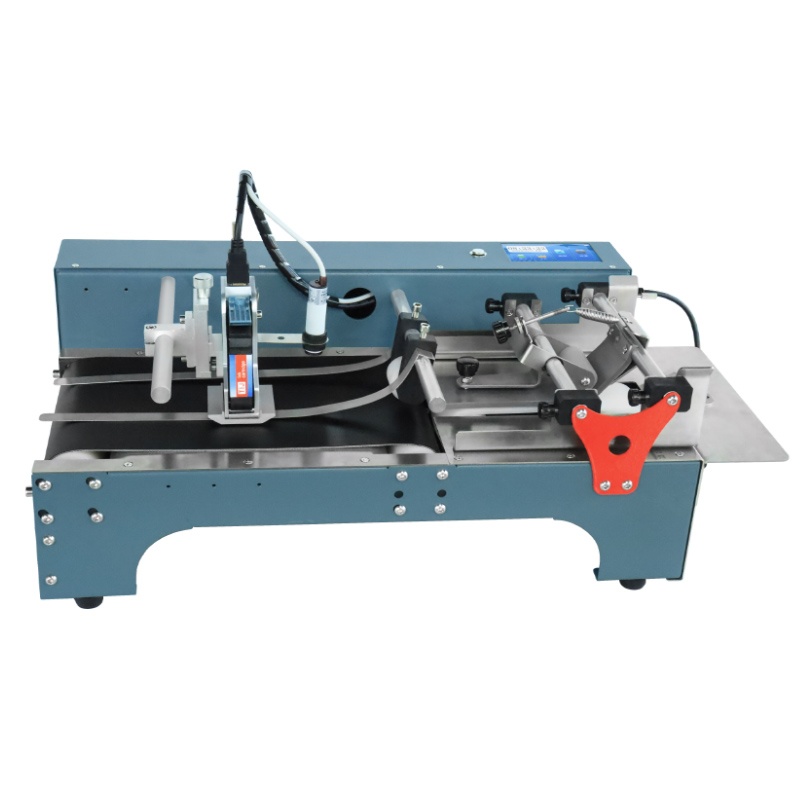
T110-FY Mini Paging Machine
a compact pager for short runs:
- 2-12.7mm print height
- 2-5mm throw distance
- Weighs 16.6 kg
- Available in 7 ink colors
Send a Sample
- See the machine: T110-FY Mini Paging Machine
- Read next: how a continuous inkjet printer works, for the head that sits after the pager
- Talk to us: tell us your sheet size and line speed through our contact page. We reply within 24 hours with a free fit check and no commitment.
Need help choosing the right printer?
Talk to our engineers for a free production-line assessment and quotation.
Request a Quote