Last Updated: 2026-11-04
Most coding faults are cheap to prevent and expensive to diagnose. An inkjet printer maintenance checklist earns its place when the items are ordered by the cost of ignoring them, because a list sorted by convenience is a list that gets done in the last ten minutes of a shift.
Why an Inkjet Printer Maintenance Checklist Wins
A print head that hazes does not fail. It loses contrast slowly, and the operator compensates by slowing the line or by accepting a code that a scanner hesitates over. Nobody logs either decision, so the fault arrives as a customer complaint rather than as a maintenance ticket.
That is the argument for a written list. It converts a gradual decline into a measurement somebody writes down, and a number on a sheet is the only thing that starts a repair before a pallet is rejected.
Two costs decide the order of the items. A blocked nozzle costs a shift. A dirty lens or a dry cartridge costs a shift plus the price of the part, because the part is ordered after the failure rather than before it.
Six Checks, Ordered by the Cost of Skipping Them
| Check | How often | Cost if skipped |
|---|---|---|
| Nozzle test block | Start of shift | An hour of unreadable codes |
| Print height and throw | Start of shift | Drift onto a flap or a seam |
| Cartridge level and date | Start of shift | A dry cartridge mid-pallet |
| Surface at the head | Every changeover | Dust pulled into the nozzle plate |
| Encoder and bracket | Weekly | Stretch that only shows at speed |
| Grade against the substrate | Every new material | A code that wipes off after packing |
The first row is one minute and it catches almost everything else. A test block printed at the shift start shows a missing nozzle before the line has wrapped a single pallet, and a missing nozzle is the fault most often blamed on ink.
The second row is where the physical machine drifts. A bracket that moves a millimetre a week puts the block on the flap by Friday, and the operator rarely notices because the code still reads under the lamp at the station.
The Weekly Item Nobody Logs
The encoder is the quiet one. A wheel that slips on a dusty belt still prints at a steady speed, so the fault only appears during acceleration, which is exactly when the line is catching up after a stop.
Test it the way it fails. Stop the line, start it, and read the first ten codes rather than the hundredth. A stretched first block means the encoder is measuring the motor rather than the belt.
Cartridge storage belongs on the same page. A cartridge left uncapped overnight draws air, and the first block the next morning has gaps that look like a nozzle fault. Cap it, store it upright, and write the opening date on the body.
The mechanism is described under inkjet printing, and our own builds carry inspection records under the ISO 9001 quality management route. Neither replaces a shift-start block, which remains the cheapest test in the plant.
What SHICAI Ships as a Kit
Every unit leaves with a cleaning kit, a spare cartridge in the grade the sample was proved on, and the print height written on the carton. The grade matters as much as the hardware, because a spare in the wrong grade is a spare that ruins a shift more slowly than an empty one.
What recurs in our export orders is the missing cap. Buyers order units and cartridges and forget the caps, and an uncapped cartridge in a warm store is a cartridge that has to be thrown away.
Questions Buyers Add
- How long should a nozzle test take
- Under a minute, and any unit that needs longer at shift start needs a service rather than a checklist.
- Is a daily list too much for one operator
- The first three rows take four minutes, which is less than the walk to fetch a supervisor.
- Should the list be printed or on the screen
- Printed, because a list on the machine is a list the next shift cannot initial.
Ask for the Kit List With the Quote
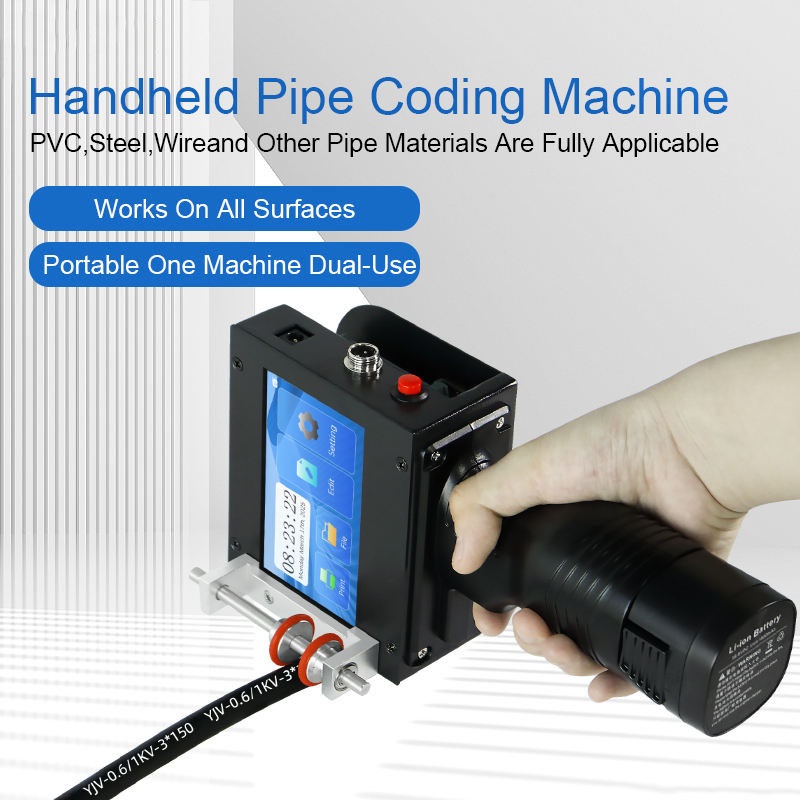
MX3-G Handheld Inkjet Printer
a unit whose list fits on one page:
- 600dpi print accuracy
- 2-12.7mm print height
- 4.3 Inch Touch Screen
- 2-5mm throw distance
- Available in 7 ink colors
A hand-held unit makes the list shorter rather than longer: no fluid loop, no filter stack, and a cartridge that either prints or does not. The 2 to 5 mm throw still has to be checked, because a nose held off the surface is the same fault as a bracket that has moved.
Send the surfaces you mark and the number of operators who share the unit. We will return the kit list, the spare grade and a one-page checklist sized to your shift, so the inkjet printer maintenance checklist you adopt is written around your line rather than around a manual.
Next Steps
- What a multi-unit order should include: seven clauses before you sign.
- Start at the contact page, on +86 17625427465 or kuangcy@126.com. We reply within 24 hours.