Last Updated: 2026-11-17
One number arrives by email and looks decisive. An industrial inkjet printer price is really six lines, and on a small order the first line is rarely the largest. The other five are what decide the cost per thousand codes.
What an Industrial Inkjet Printer Price Actually Contains
A quotation that lists one figure is not lying. It is answering a narrower question than the buyer asked, and the gap shows up as a second invoice six weeks later.
The six lines below are the ones that turn up on every export order we handle. Their sizes move with the order, and the ranking changes once volume passes a few thousand codes a day.
| Line | What it covers | Moves with |
|---|---|---|
| 1. Cabinet | Head count, model, controller, screen | Print height and head count |
| 2. Ink | Cartridges, solvent and make-up | Codes per day and open hours |
| 3. Fixtures | Bracket, stand, sensor, guide | Line layout and pack shape |
| 4. Freight | Pallet, insurance, port charges | Volume and destination |
| 5. Duty | Tariff, VAT, local installer | Country and clearance terms |
| 6. Year two | Spares, consumables, service hours | Duty cycle and shift pattern |
Line 1: The Cabinet and the Head Count
The cabinet price moves in steps, not percentages. One head, two heads and four heads sit in three different price bands, and the jump from one to two is smaller than the jump from two to four.
Ask what the next band up costs before you choose. A buyer who discovers the two-head build was ten percent more, after ordering a one-head build that cannot print a barcode, has bought the machine twice.
Line 2: Ink by the Thousand Codes
This line is the one that decides year one. A single date line uses a fraction of the ink a two-line batch block does, and the difference compounds across every shift of the month.
Ask for the figure as cost per thousand codes rather than cost per cartridge. A cheap cartridge that covers eight hundred codes is more expensive than a dear one that covers two thousand, and the datasheet will not tell you which is which.
Line 3: Fixtures, Brackets and the Sensor
A coder on a pallet is worth nothing. The bracket, the stand and the trigger have to exist before the machine can print a single valid pack, and those items are frequently quoted separately or not at all.
Ask for the packing list in writing and compare two suppliers on the same list. The supplier who includes the sensor and the bracket looks dearer until the second invoice arrives.
Line 4: Freight, Insurance and the Pallet
A coder ships as a pallet, not a parcel, and volumetric weight is what the forwarder charges on. A cabinet that weighs forty kilograms can bill as two hundred once the crate dimensions are entered.
Insurance is optional until a pallet is dropped at the port. Price it in from the start, and ask which Incoterm applies, door to door or port to port, because the difference is a truck ride at your end.
Line 5: Duty, VAT and the Local Installer
The tariff code on the invoice decides this line, and the code follows the machine type rather than the brand. Ask for the code before the order so your broker can quote it properly.
Installation is the line most often left out of the quotation. If commissioning is not included, budget a technician day plus travel, and confirm whether the supplier supports it remotely before the machine arrives.
Line 6: The Second Year, Priced Now
Year one is dominated by the cabinet and year two by consumables, spares and the question of whether the cartridge you standardised on still exists. Both belong in the same comparison.
Ask for the consumable price in writing with a validity period, and ask how long the ink has been in production. A coder tied to one bespoke cartridge is a five-year commitment presented as a machine purchase. Ask for the same figure in writing at the next volume band, because the consumable number rarely holds.
The Build We Quote for a First Line
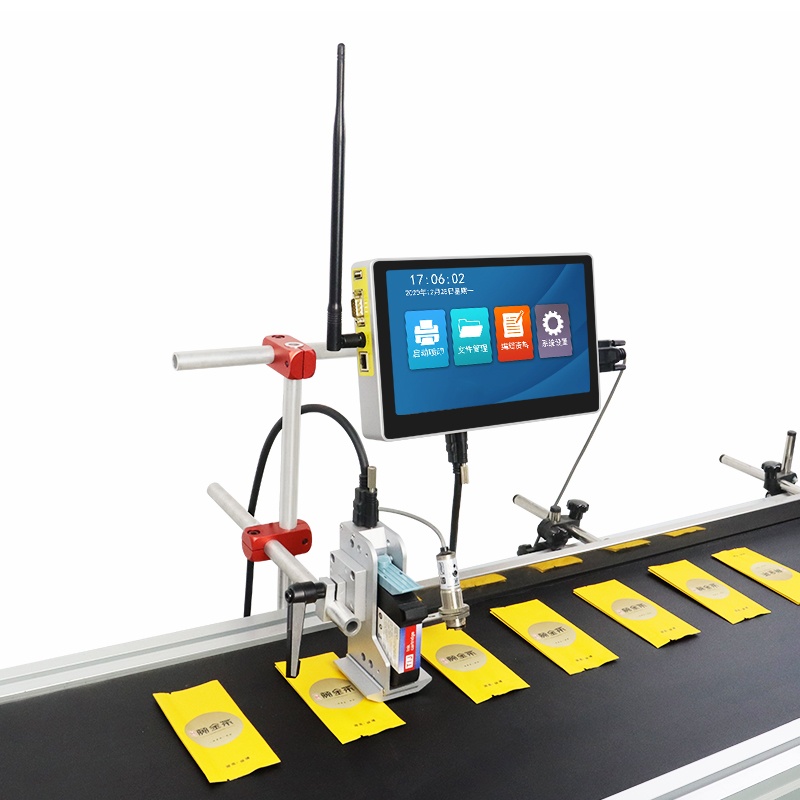
S100 Online inkjet printer
the build that keeps all six lines small:
- Prints up to 100 m/min
- 600dpi HD print accuracy
- 10-inch touchscreen
- 2-5mm throw distance
- Weighs only 3 kg
Three kilograms is a freight line that stays small and a bracket that does not need a pedestal, which is why a light cabinet often wins on total cost even when the headline number is higher.
Buyer Questions
- Why do two quotes for the same model differ
- Because they include different lines. Compare the packing list, the incoterm and whether commissioning sits inside the number.
- Is the cheapest machine always dearer long term
- Not always, but the risk sits in line two and line six. A cheap cabinet with an expensive cartridge is the common shape of that mistake.
- What should I ask for first
- The six lines as a single table, with the consumable price valid for a stated period. A supplier who cannot produce that table is quoting a cabinet, not a cost.
Ask for Six Lines, Not One
A single figure is easy to compare and easy to mislead with. Six lines on one page show where the money actually goes, and they make two suppliers comparable without a second round of emails.
Send the codes per shift, the pack and the destination port. We return all six lines with the consumable figure attached, so the industrial inkjet printer price you compare is the one you will actually pay across two years.
Next Steps
- How to check the supplier behind the number: seven checks before you wire money.
- Start at the contact page, on +86 17625427465 or kuangcy@126.com. We reply within 24 hours.