Last Updated: 2026-09-02
Marking the wrong material with the wrong laser wastes both the machine and the batch. Fiber vs CO2 laser marking is a wavelength decision: the fiber beam at about 1,064 nm etches metals and dense plastics, while the CO2 beam at about 10.6 micrometers absorbs into organics, wood, glass, and clear films. Match the source to the substrate and the rest follows.
The Short Answer
The difference is the wavelength. A fiber laser emits at about 1,064 nm, which metals and dense engineering plastics absorb well, so it engraves and anneals sharply. A CO2 laser emits at about 10.6 micrometers, which organics, paper, wood, glass, and clear films absorb better. Neither is better overall; each owns a different half of the material map.
| Fiber | CO2 | |
|---|---|---|
| Wavelength | About 1,064 nm | About 10.6 micrometers |
| Best on | Metals, hard plastics | Wood, paper, glass, clear film |
| Mark style | Engraving, annealing, deep serials | Surface marking, thin organics |
| Spot | Finer, suits small codes | Larger, faster area coverage |
In the fiber vs CO2 laser marking decision, one test beats every spec sheet: put your actual part under each beam and read the result. Substrate behavior decides, not marketing.
What to Know in Practice
Routine care is the same for both sources. Keep lenses and protective windows clean, because a speck of residue absorbs power and turns a crisp mark into a weak one long before the source ages. Check focus and calibration weekly on daily-running machines, keep spare lenses on the shelf, and confirm that spares ship to your region before you buy. Stable power and ventilation prevent most intermittent faults.
About SHICAI
SHICAI runs a full laser line: fiber, CO₂, and UV systems for continuous production. The company ships to overseas production lines and warehouses, and specifies genuine rated laser sources so the machine runs to its rated life. Service and spares are arranged for export markets, and the technical team answers questions directly rather than through a reseller chain.
Related Questions
- Can a fiber laser mark glass?
- Not well; glass is largely transparent to the fiber wavelength and may chip. CO2 marks glass cleanly, which is exactly the split this comparison describes.
- Which laser is cheaper to run?
- Both avoid ink consumables; costs sit in electricity, lenses, and eventual source replacement. A fiber source is often rated for tens of thousands of hours, which keeps long-run cost low.
- How do I test which one I need?
- Send a sample part for marking under both sources and check readability after your normal handling, cleaning, and storage. Most suppliers, including our team, run this test free of charge.
A Model Worth Looking At
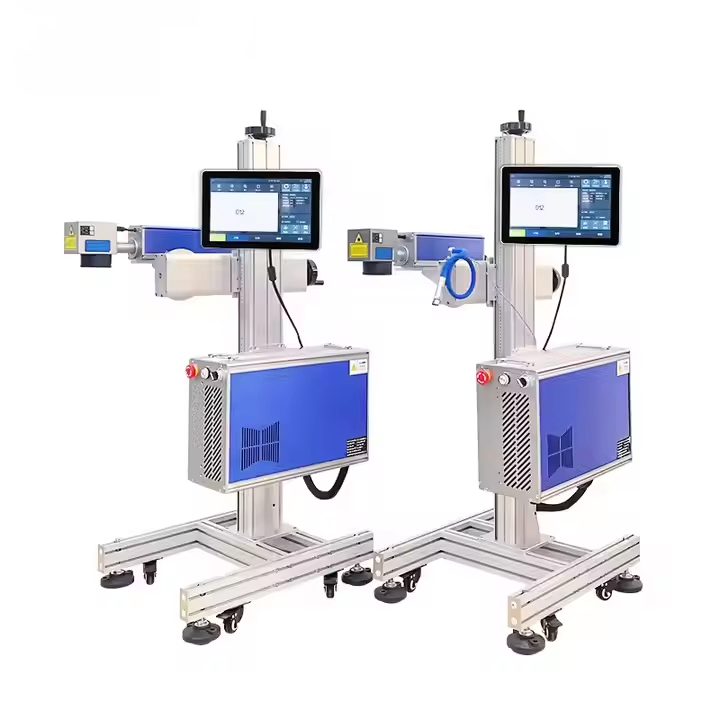
G-20 Fiber laser inkjet printer is built for this kind of work. Click the image to see the product page.
Learn more about laser engraving technology and ISO 9001 quality management.
Next Steps
- Read related FAQ guides on coding and marking basics.
- See the G-20 Fiber laser inkjet printer if you need a marker for this job.
- Get a free sample mark on your material. No commitment, reply within 24 hours.
Need help choosing the right printer?
Talk to our engineers for a free production-line assessment and quotation.
Request a Quote