Last Updated: 2026-09-03
A traceability code etched into a surgical tool has to outlast the tool. Industrial laser marking systems deliver that permanence by bonding codes into metal and plastic with light, and they are systems in the full sense: five parts must work together, and the weakest one sets the ceiling.
The Short Answer
Five parts make up industrial laser marking systems. The laser source generates the beam, and its type, fiber, CO2, or UV, decides which materials mark well. The galvo scanner steers the beam across the part with no moving mass, which is why marking keeps pace with production. The lens focuses the beam to a fine spot, setting how small your codes can be. The fixture holds the part in the focal plane, because focus drift is the quiet killer of mark quality. The controller and software turn your serial data into marking patterns and log what was marked.
Choose by material first: fiber for metals and engineering plastics, CO2 for organics, glass, and clear film, UV where heat damage must be avoided.
What to Know in Practice
Maintenance is mostly optics. Keep lenses and windows clean, check focus on a schedule, and keep spares of the consumable optical parts. The source itself is typically rated for tens of thousands of hours, so planned downtime revolves around cleanliness, not beam generation.
Integration planning pays: fixturing, fume extraction, and the data feed from your serialization system are where projects slip. Bring those conversations in before the machine arrives, not after.
About SHICAI
SHICAI runs a full laser line: fiber, CO2, and UV systems for continuous production. The company ships to overseas production lines and warehouses, and specifies genuine rated laser sources so the machine runs to its rated life. Service and spares are arranged for export markets, and the technical team answers directly rather than through a reseller chain.
Related Questions
- How much do industrial laser marking systems cost?
- Entry configurations start in the low four figures and scale with power, field size, and automation. Pricing depends on configuration, so ask for a quote against your actual parts.
- What materials can be laser marked?
- Fiber handles metals and many plastics, CO2 handles wood, glass, paper, and clear film, and UV suits heat-sensitive plastics and electronics. Sample marking on your part is the final answer.
- How fast can they mark?
- A galvo system marks typical date and serial codes in under a second, and the practical limit is usually part handling, not the beam.
A Model Worth Looking At
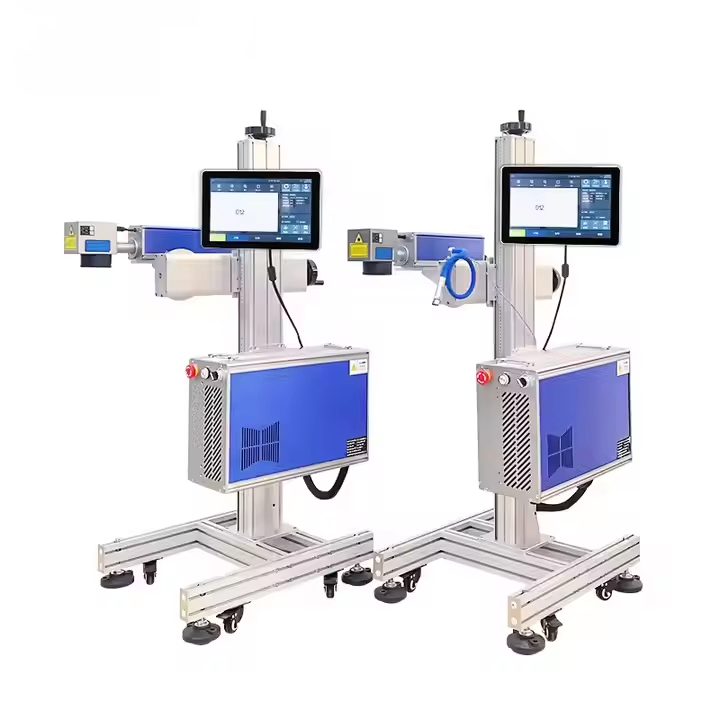
G-20 Fiber laser inkjet printer is built for this kind of work. Click the image to see the product page.
Learn more about laser engraving technology and ISO 9001 quality management.
Next Steps
- Read related FAQ guides on coding and marking basics.
- See the G-20 Fiber laser inkjet printer if you need a marker for this job.
- Get a free sample mark on your material. No commitment, reply within 24 hours.
Need help choosing the right printer?
Talk to our engineers for a free production-line assessment and quotation.
Request a Quote