Last Updated: 2026-09-07
An inkjet printer price is not one number. Handheld coders start around $99, online TIJ systems typically run from $899 to $2,499, and CIJ or laser units are quoted per configuration. What you pay depends on print height, speed, and ink type. Here is what drives the final figure.
Price Ranges by Machine Type
Industrial inkjet coding splits into a few machine classes, and each sits in its own price band. Use the ranges below as a planning guide, not a final quote:
| Machine type | Typical range | What you get |
|---|---|---|
| Handheld coder | $99 to $359 | Single head, battery powered, for spot coding anywhere |
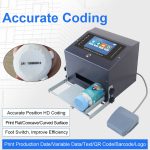
| Online TIJ | $899 to $2,499 | Conveyor mounted, single to six heads, high resolution |
| PIJ piezo | around $1,229 (dual head) | Wider, higher-resolution marks |
| CIJ continuous | Quoted per configuration | High speed, 400 m/min class |
| Fiber laser | Quoted per configuration | Permanent metal marks, 20W to 100W |
The spread inside a band comes from options, not the base machine. A handheld coder at the low end runs a smaller screen and a domestic cartridge, while the high end adds a larger screen and an imported ink system. An online TIJ moves from a single 12.7 mm head up to six spliced heads for a 152.4 mm print height, which is the single largest step up in cost. A machine like the S20-6 Online inkjet printer sits at the top of that band because it carries six heads on one controller.
What Drives the Price
The inkjet printer price you pay tracks a few variables more than anything else. First is print height and head count: a wider mark needs more spliced heads, and each head adds cost. Second is line speed, since a machine rated for 120 m/min needs a faster controller and better triggering than a 15 m/min unit. Third is ink type, where food-grade and imported formulations cost more than domestic options. Fourth is the technology itself: TIJ runs off replaceable cartridges, while CIJ runs an ink, solvent, and make-up system with a pump and filter, and a fiber laser adds a galvanometer and optics.
Integration is the quiet variable. A standalone coder that mounts next to a line costs less than a system paired with a pagination conveyor, a rewinding module, or closed-loop vision inspection. Ask for the machine price and the installed price as two separate numbers so you can compare suppliers fairly. A wider mark on a fast line is not a single-line item; it is a chain of heads, controller, bracketry, and triggering that each add cost in proportion.
For buyers new to coding, the safest way to avoid overpaying is to resist buying on the headline number alone. A machine that is cheap to buy but slow, or limited to one ink, or missing the bracket you need, becomes expensive quickly. Match the machine to the line speed and the code size first, then let price filter the shortlist. Two machines at the same print height and speed can still differ by hundreds of dollars on screen, ink, and build, so ask what the difference buys before you choose the cheaper one.
Total Cost of Ownership
An honest inkjet printer price conversation includes what happens after the invoice. Cartridge TIJ machines are inexpensive to buy but carry a recurring cartridge cost that scales with volume. CIJ machines cost more up front and use ink, solvent, and make-up, but run continuously on long shifts. A fiber laser costs the most to buy and the least to run, because it marks metal without consumables. Piezo units such as the P70 Online inkjet printer land in the middle, with a moderate machine price and ink costs that depend on coverage.
| Technology | Upfront cost | Running cost |
|---|---|---|
| TIJ cartridge | Lowest | Scales with volume |
| PIJ piezo | Moderate | Moderate, coverage dependent |
| CIJ continuous | Higher | Ink, solvent, and make-up |
| Fiber laser | Highest | Near zero, no consumables |
Before you commit, ask the supplier for a consumables table: what is used, how often, and what it costs at your expected volume. A machine that is $300 cheaper but 20 percent pricier to run can cost more within a year on a busy line. The ISO 9001 quality system behind the machine matters here too, because a supplier with stable manufacturing and a documented inkjet printing process tends to keep ink and head costs predictable over the life of the equipment.
Here is a simple way to frame the buying decision. Define your code first: the surface, the code size, and the line speed. Then ask three suppliers for the machine price, the installed price, and a consumables table at your volume. Compare the three numbers together, not just the first. A quote that omits installed cost or consumables is incomplete, and those gaps almost always show up after purchase. If a supplier will not give you a consumables table before the order, treat that as a signal, not a detail. That discipline keeps a busy line running without a surprise invoice.
Related Questions
- How much does a handheld inkjet printer cost?
- Handheld coders typically range from $99 to $359 depending on screen size, resolution, and ink system. Entry units start near $99 and premium units near $359.
- Why do CIJ printers cost more than TIJ?
- CIJ runs an ink, solvent, and make-up system with a pump and filter and reaches 400 m/min, so both the machine and its consumables cost more than a cartridge TIJ unit.
- What affects the price of an industrial inkjet printer?
- Print height, number of heads, line speed, ink type, and integration. Wider or faster lines push the price up, and each additional spliced head adds cost.
Recommended Product
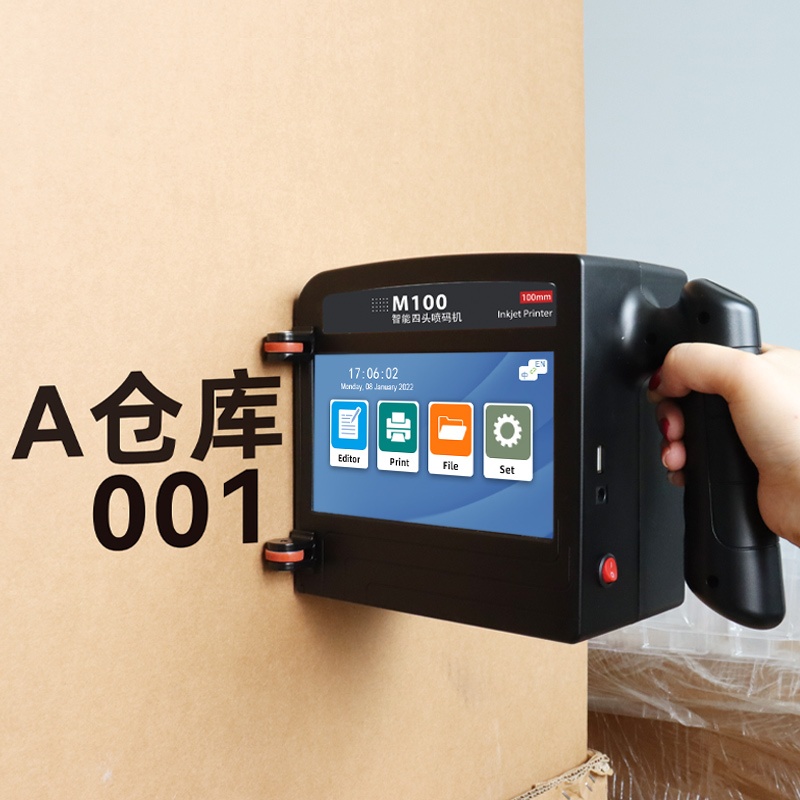
- 2-100 mm print height for large characters
- 600 dpi print accuracy
- 2500 mAh battery for full-shift runtime
Request a Quote
Get a configuration and a price in 24 hours. Call +86 17625427465, email kuangcy@126.com, or request a quote online. Send your line speed, surface, and code size and a SHICAI engineer replies with a specific number, no commitment required.