
Last Updated: 2026-09-07
A visible code tells a customer something; a hidden one tells you whether the product is genuine. An invisible ink cartridge prints marks that stay unseen under normal light and reveal under ultraviolet, which makes it a brand-protection tool rather than a coding one. Four facts explain how it is used.
The Short Answer
Four facts cover the category:
One: the ink is usually fluorescent, invisible or nearly invisible under ambient light and bright under ultraviolet. Two: the common use is anti-counterfeit marking, batch authentication, and tamper evidence rather than consumer-facing information. Three: verification needs a UV lamp, which is cheap, portable, and hard for a counterfeiter to fake without knowing the marking exists. Four: it pairs with visible codes rather than replacing them, since regulators and customers still need a readable date or lot number.
| Use | What the mark does |
|---|---|
| Anti-counterfeit | Proves authenticity to an inspector |
| Channel control | Identifies which distributor received stock |
| Tamper evidence | Reveals repackaging or relabeling |
| Internal tracking | Marks parts without changing appearance |
The strategic value is obscurity: a mark nobody knows to look for is much harder to copy than one printed in plain sight.
What to Know in Practice
Substrate matters more than with visible inks. Fluorescent marks read differently on white board, dark plastic, and glossy film, and some surfaces fluoresce on their own, which washes out the contrast. Test on the actual packaging under the lamp your inspectors will carry.
Document the verification procedure. A hidden mark only works if your team, your distributors, and any enforcement partner know it exists, where to look, and what lamp to use. An undocumented security feature is a feature nobody can check.
About SHICAI
SHICAI builds industrial coding and marking equipment across inkjet and laser lines, for production and warehouse use. Machines ship with genuine components and tested consumables, and service and spares are arranged for export markets. The technical team answers directly rather than through a reseller chain.
Related Questions
- Is invisible ink permanent?
- Fluorescent inks bond like other industrial inks, so permanence depends on the formulation and the substrate. Verify after handling and storage rather than at the printer.
- Can any inkjet printer use invisible ink?
- No, the printer must be compatible with the formulation, and cartridges are usually specific to the machine family. Ask the supplier which models are rated for fluorescent ink.
- Do counterfeits copy invisible marks?
- Rarely, because copying requires knowing the mark exists and its wavelength. That is exactly why the feature is used, and why documenting verification internally matters.
A Model Worth Looking At
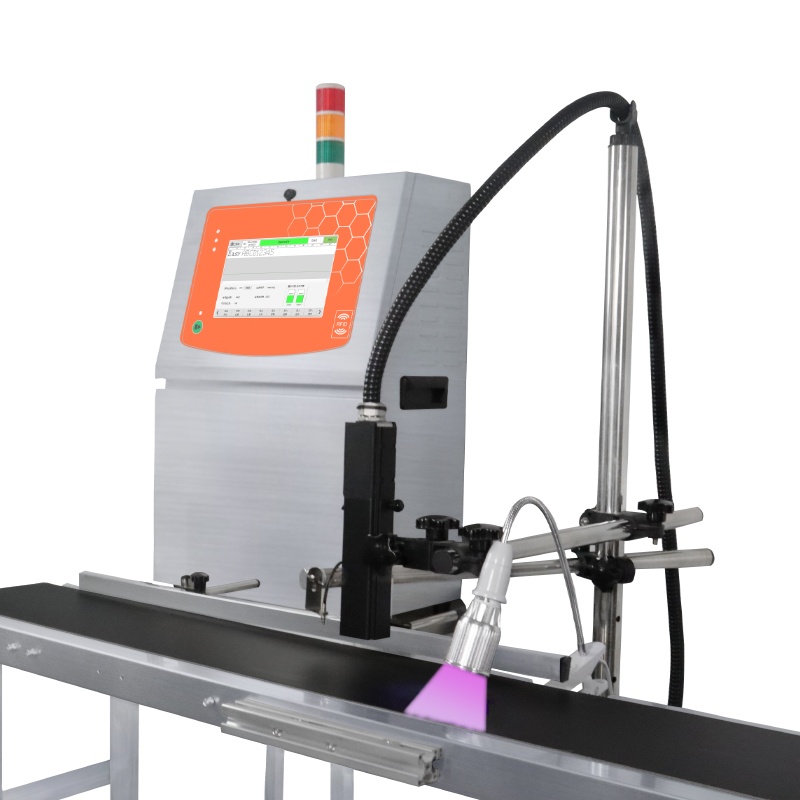
Anti counterfeiting small character inkjet printer is built for this kind of work:
- Prints text, date, pattern, dynamic barcode and QR code
- 2-20mm print height
- Marks carton, plastic, metal, wood and pipe
Click the image to see the product page.
Learn more about ultraviolet light and ISO 9001 quality management.
Next Steps
- Read related FAQ guides on coding and marking basics.
- See the anti-counterfeiting inkjet printer for covert marking options.
- Get a free sample print on your material. No commitment, reply within 24 hours.
Need help choosing the right printer?
Talk to our engineers for a free production-line assessment and quotation.
Request a Quote