Last Updated: 2026-09-08
A faint serial on a machined part is not a reprint; it is a scrapped component and a failed audit. SHICAI is a laser marking machine supplier that builds fiber, CO2, and UV systems in house and ships them to production lines overseas, so a buyer deals with one accountable partner for source selection, fixturing, spares, and support instead of assembling three vendors. This page sets out what to verify before you commit, and what the range behind the quote actually covers.
Why SHICAI
A laser marking machine supplier earns an order on four things at once: the right wavelength for your material, a source rated for production rather than occasional use, evidence on your actual parts, and support that reaches your region when a line stops. SHICAI builds across the three wavelengths that cover industrial marking, fiber for metals and hard plastics, CO2 for organics, glass, and clear film, and UV for heat-sensitive plastics and electronics. That range matters because the wrong wavelength does not produce a weak mark, it produces no mark at all.
Output options run from 20W to 100W on the fiber side, which is the span that separates a machine able to anneal a fine serial on stainless from one able to engrave deep into a tooling insert. A supplier who asks what you are marking before quoting a wattage is doing the job properly; one who quotes a single standard configuration to every enquiry is selling stock rather than solving a marking problem.
The second reason buyers consolidate here is portfolio breadth. Most plants do not mark only metal. A line that codes cartons, prints dates on packaging, and etches serials into components needs several technologies, and buying them from one supplier keeps consumables, spares, training, and technical answers in one place. SHICAI builds continuous inkjet, thermal inkjet, piezo, large-character, handheld, and laser systems, which is why a single supplier conversation can cover a whole plant rather than one station.
Choosing a laser marking machine factory rather than a trading intermediary changes what happens after the sale. Factory-direct supply means the people who built the machine are the people answering the technical question, and it removes the markup layers that inflate a quote without adding capability.
What to Verify Before You Commit
Five checks separate a supplier who can deliver from one who can only quote. Run all five against your own parts before money moves:
| Check | What good looks like |
|---|---|
| Wavelength fit | Supplier asks for your material before recommending fiber, CO2, or UV |
| Source rating | Stated rated life and output options, not just a wattage number |
| Sample evidence | Free marking on your actual part, with results you can measure |
| Export support | Named spares channel and response route to your region |
| Quality system | Certificate scope shown on request, not claimed in passing |
Print this table and take it into the supplier conversation. A supplier who answers all five with specifics is worth a serious evaluation. One who repeats brochure language, especially on sample evidence and spares, is telling you something useful about what happens after installation.
Sample marking is the check that resolves the others. Alloy, coating, and surface finish change the result more than any specification sheet suggests, and a supplier confident in the process will run your parts without being pushed.
Product Range
Four anchors show what a single supplier should be able to cover for a plant that marks metal and codes packaging:
- G-20 Fiber laser inkjet printer: fiber laser output options from 20W to 100W, permanent marks on metal without consumables, and an air-cooled design that suits plant-floor installation.
- Small character inkjet printer (CIJ): prints up to 400 m/min, handling multilingual characters, variable QR codes, barcodes, dates, and serial numbers.
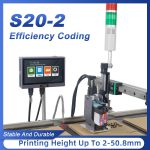
- S1000 small character inkjet printer: 2-20mm print height, 3-30mm throw distance, and a 10.1-inch industrial touchscreen.
- M100 Handheld inkjet printer: 2-100 mm print height for large characters, 600 dpi accuracy, and a 2500 mAh battery for full-shift runtime.
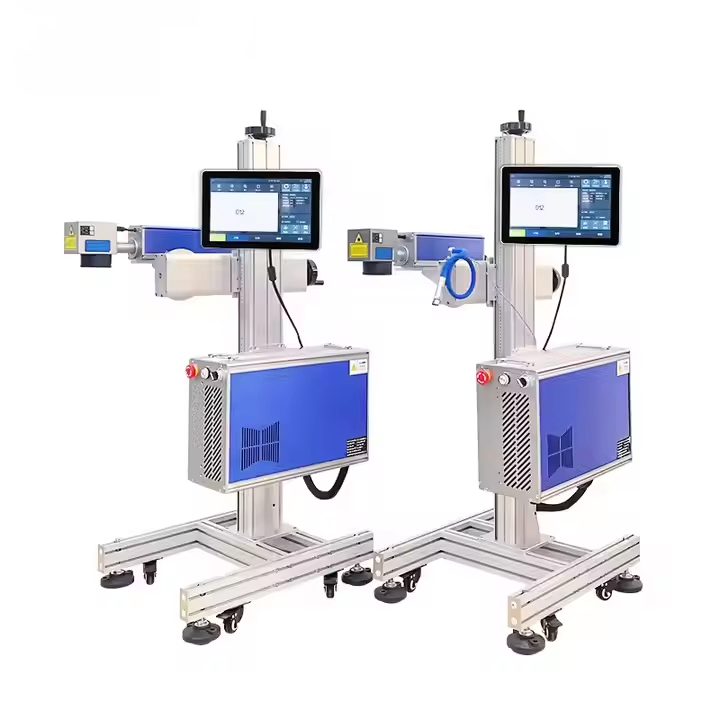
G-20 Fiber laser inkjet printer
- Fiber laser output options from 20W to 100W
- Permanent marks on metal without consumables
- Air-cooled design
Beyond these anchors, the range covers date and batch coding, QR and barcode marking, egg coding, large-character case coding, pagination and conveyor systems, and anti-counterfeiting marking. A supplier holding that range can specify the right tool for each station on your floor instead of steering every requirement toward the one machine they stock.
Quality and Compliance
Every unit ships tested against a documented quality system, and the portfolio carries the certification industrial buyers expect, including ISO 9001 quality management. Ask for the certificate scope rather than accepting the claim: scope tells you which activities are covered, and that is the detail an auditor will ask about.
Traceability runs through the marking itself. A serial or DataMatrix code is only useful if it stays readable after coating, cleaning, and years of service, which is why laser marking is specified for components that outlive their packaging. Verification should happen the way the part will live: mark a sample, run it through your coating or wash cycle, then read it under the lighting your inspectors use.
Export support is where many purchases go wrong and it is easy to check in advance. Ask which spares ship to your region, on what lead time, and through which channel. A named answer with a stated lead time is a supplier who has done this before; a general reassurance is not.
For buyers who need their own branding or a custom configuration, OEM and ODM arrangements are scoped per project, with artwork, field size, and integration defined up front and sample marking run before any commitment. The first production run should never be the first time the machine touches your material.
Related Questions
- How do I verify a laser marking machine supplier before paying?
- Ask for free sample marking on your actual parts, the source rated life and output options, the certificate scope, and the spares channel to your region. Quick specific answers are the signal; brochure repetition is the warning.
- Which wavelength should my supplier recommend?
- Fiber for metals and hard engineering plastics, CO2 for wood, paper, glass, and clear film, UV for heat-sensitive plastics and electronics. A supplier who asks for your material before answering is the one to keep talking to.
- Does factory-direct supply cost less?
- Usually, because intermediary markup layers are removed. The larger difference is support: the people who built the machine answer the technical question, and spares come from the same channel.
Request a Quote
Send your material, code size, and line speed for a configuration and a price. Call +86 17625427465, email kuangcy@126.com, or request a quote online. Free sample marking on your parts, a SHICAI engineer replies within 24 hours, and no commitment is required.