Published 2026-09-13 · By the SHICAI technical team · Cost guide
Last Updated: 2026-09-13
A batch coding machine price is set by build level before anything else. A single-head online coder, a two-head frame, a four-head build and a six-head splicing unit sit in four different bands, and every one of them is quoted per configuration. Mounting, integration and fluid choice move the figure inside the band.
What Sets a Batch Coding Machine Price
The build level is decided by the tallest code the line has to print, not by the size of the business. Each level adds heads to a common controller, so the marking technology does not change as the band rises. The table sets out what each level buys and where the published band for the batch coding range sits:
| Build level | Print height | What it adds | Planning band |
|---|---|---|---|
| Single head | 2-25.4 mm | One coder, one controller, product-level codes | from $679 |
| Two heads | 2-50.8 mm | Double the height without a second station | from $899 |
| Four heads | 2-50.8 mm with 12.7 mm heads | Barcode output and a protective industrial body | from $1,499 |
| Six heads, spliced | 2-152.4 mm | The widest mark in the family for large carton faces | up to $2,499 |
Read the band column as a planning guide rather than a quotation. The entry figure is a single-head build with a standard mount and one ink colour; the top figure is a six-head splicing configuration. A two-head frame costs roughly a third more than the single-head coder in the same family, because the second head brings its own print path, bracket and cabling rather than sharing one. Three things follow from the table: a batch coding machine price is quoted per configuration, the band moves with the head count rather than with the brand, and the fluid is priced as a separate line.
Batch Coders in Each Band
Three machines from the range cover the bands above, and all of them share one controller family and one fluid list, so a move up the bands is a change of frame rather than a change of platform:
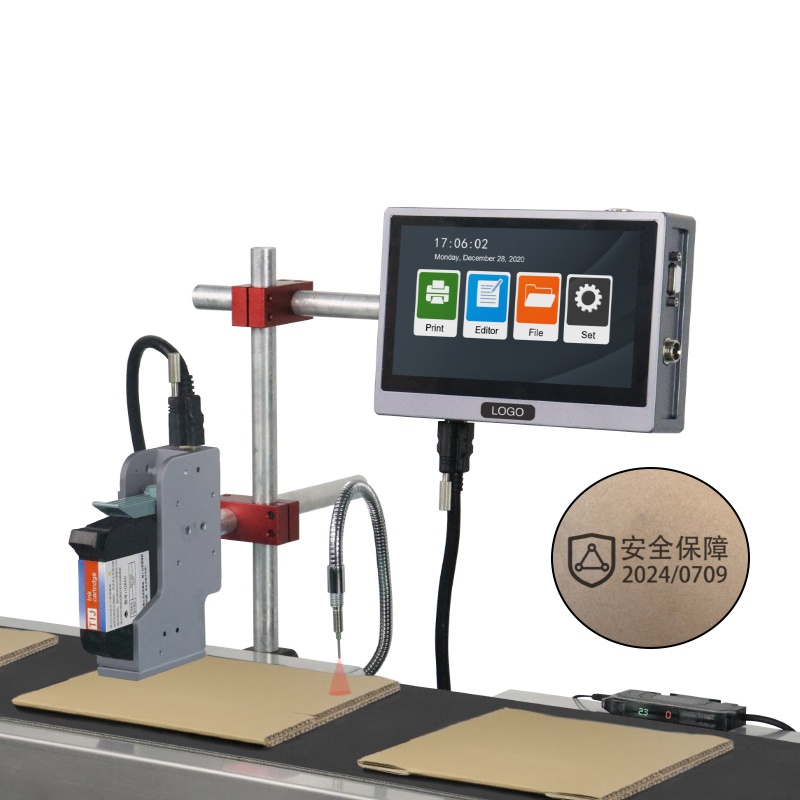
K20 online inkjet printer
is the single-head build at the entry of the range, for product-level batch and date codes:
- Prints up to 120m/min
- 600dpi HD print accuracy
- 2-25.4mm print height
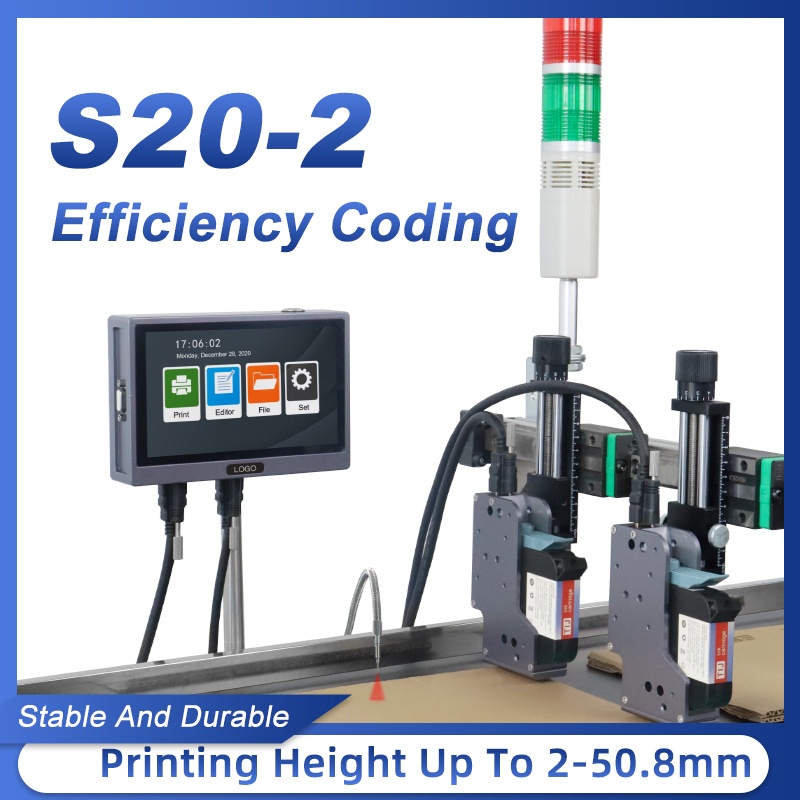
S20-2 online inkjet printer (standalone)
is the two-head frame with 50.8 mm of print height from two 25.4 mm heads:
- Prints up to 120m/min
- 600dpi HD print accuracy
- 2-50.8mm print height
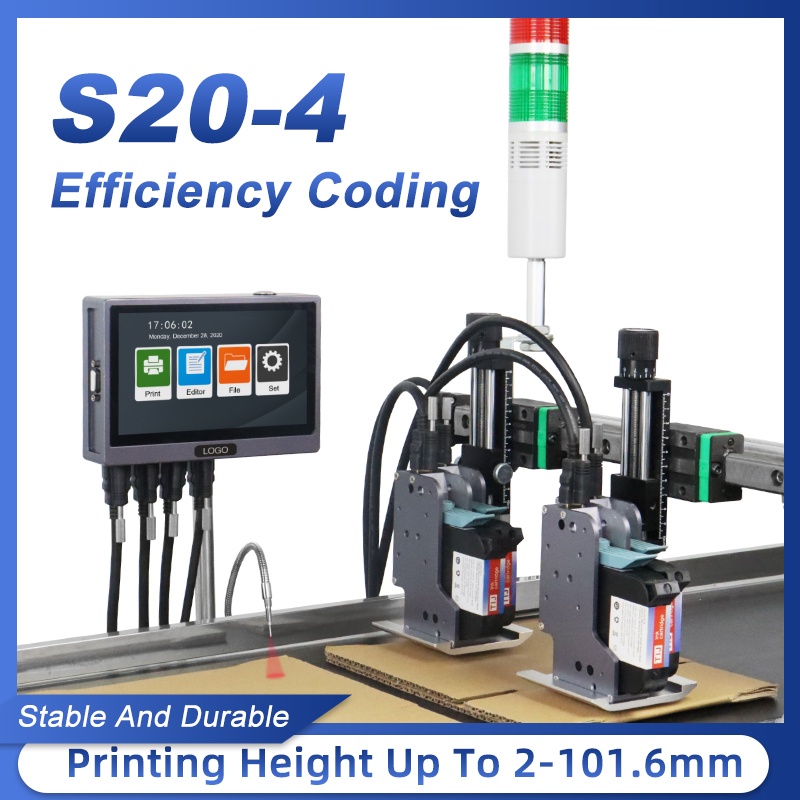
S20-6 online inkjet printer (splicing)
is the six-head splicing build for the widest carton faces, at 152.4 mm of print height:
- Prints up to 120 m/min
- 2-152.4 mm print height with six spliced heads
- Weighs only 3.5 kg per unit
The droplet mechanism inside all three is the one described in the public reference on inkjet printing, and the quality system behind them is documented to ISO 9001 quality management on request. Cabinets, brackets and print paths are the parts that differ; the marking principle does not.
What Moves the Price Inside a Band
Six variables account for most of the spread inside a level, and four of them are visible in the quotation:
- Head count and print height. Each head is a separate print path, so height is bought in steps rather than in millimetres.
- Integration. A conveyor bracket, a sensor or encoder trigger and a reject output are quoted separately from the coder itself.
- Controller and screen. A 7-inch touchscreen controller and the industrial-grade enclosure fitted to the four-head frame are priced with the build.
- Fluid choice. A fast-drying or food-grade fluid costs more than a standard one, and the difference repeats on every reorder.
- Scanning output. Barcode and QR printing arrives with the four-head build, so a scannable code is a band decision rather than an option.
- Body and mounting hardware. An aviation aluminium or industrial stainless steel body is quoted with the frame, not retrofitted.
Two of those deserve a second look. A coder specified without the trigger, bracket and reject wiring is not a cheaper machine, it is an unfinished project, and the missing parts usually cost more once the line is already standing. Fluid is the other: the cheapest fluid on the quotation is only cheaper if it suits the substrate, because a formulation that smears on film is repurchased rather than used.
Running Costs to Add Before You Compare Quotes
The purchase figure is the smaller half of the cost of coding. Three items decide the five-year picture, and none of them appears on a headline quotation:
- Fluid consumption. It scales with code size, coverage and volume. A large code on a wide carton face uses several times the fluid of a small date code on a label, whatever the machine costs.
- Print paths and spares. Cartridge-based machines replace the print path rather than repairing it, which is fast and predictable; keep a spare on the shelf so a shift does not end early.
- Uptime. An hour of stopped packing normally costs more than a year of fluid, which is why the reject path and the spares window belong in the same conversation as the price.
It follows that the right comparison is not two headline figures but two five-year numbers: the build, the fluid it will drink, the parts it will consume, and the support behind it. A machine that costs a little more and stays running is the cheaper one, and the arithmetic is usually not close.
Comparing Two Quotations Line by Line
Most quotations that look different are not comparable, because each supplier is answering a different question. Put both documents beside each other and check six lines: the number of heads and the resulting print height, the mounting and trigger hardware, the reject or alarm output, the fluid type and its pack size, the spare parts included, and the lead time with the export terms. Where a line is missing from one quote, ask for it in writing before comparing the totals. If the code has to be read by a scanner rather than an operator, confirm that barcode or QR output is included in the build rather than added afterwards, and see what a batch code printing machine is used for if the application itself is still open.
Cost Questions
- How much does a batch coding machine cost?
- It depends on the build level. A single-head online coder sits at the entry of the range, a two-head frame costs roughly a third more, and a six-head splicing build reaches the top of the published band because each head carries its own print head, bracket and cabling.
- Why is a batch coder quoted per configuration instead of listed?
- Because head count, print height, mounting and fluid all move the figure, and two plants marking the same product can need different builds. A single list price would be misleading for both of them.
- Which part of a batch coding machine drives the long-run cost?
- Consumables and uptime, not the purchase price. Fluid consumption scales with code size and coverage, print paths are replaced rather than repaired on cartridge-based machines, and an hour of stopped packing usually costs more than a year of fluid.
Related reading: how to verify a date coding machine manufacturer and the coding machine price guide for the wider bands.
Request a Quote
Send the code content, the print height and your line speed to kuangcy@126.com or +86 17625427465. You get a configuration and a quotation within 24 hours, with the heads and fluid priced as separate lines so you can see what each one adds.