Published 2026-09-14 · By the SHICAI technical team · Cost planning guide
Last Updated: 2026-09-14
A date coder price is set by the platform before any discount is discussed. A cartridge hand unit, a desktop machine, a single-head online coder and a multi-head online build sit in four separate bands, and ink is always priced as its own line. The table below shows where each band starts and what moves the figure inside it.
Five Build Levels, Five Bands
The level follows from how the code reaches the product rather than from the size of the operation. Hand marking suits low volume and awkward shapes, a desktop machine suits bench work, and an online head suits anything moving on a conveyor. Each band below is a planning figure drawn from the range, so read it as the start of a conversation rather than as a quotation:
| Build level | Typical platform | What it adds | Planning band |
|---|---|---|---|
| Cartridge hand unit, entry | Single 25.4 mm cartridge, 2.4 to 4.3-inch screen | Bench, pallet and maintenance marking by hand | from $99 |
| Cartridge hand unit, wide | One or two 25.4 mm cartridges | Adjustable height up to 48 mm and faster hand marking | from $229 |
| Desktop | 5-inch touchscreen, 2-12.7 mm head | Fixed bench printing with a 10 cm print length | from $549 |
| Online, single head | 12.7 mm or 25.4 mm head on a bracket | Conveyor mounting, sensor trigger, 120 m/min lines | from $579 |
| Online, multi-head | Two to six spliced heads | 50.8 mm to 152.4 mm of print height in one pass | from $899 to $2,499 |
| Ink cartridges | 25.4 mm (1-inch) nozzle, black or colour | The consumable line that repeats for the life of the machine | from $69 |
Treat the planning column as an opening figure for the conversation. The entry point is a single cartridge unit, and the top of the range is a six-head online build with 152.4 mm of print height. Three things follow: a date coder price is quoted per configuration, the height you need decides the band long before the brand does, and ink never appears in the headline figure even though it is bought for as long as the machine runs.
Date Coders in Each Band
Three products cover the bands above, and all three take the same cartridge family and the same ink range, so climbing a band means a larger frame rather than a new system:
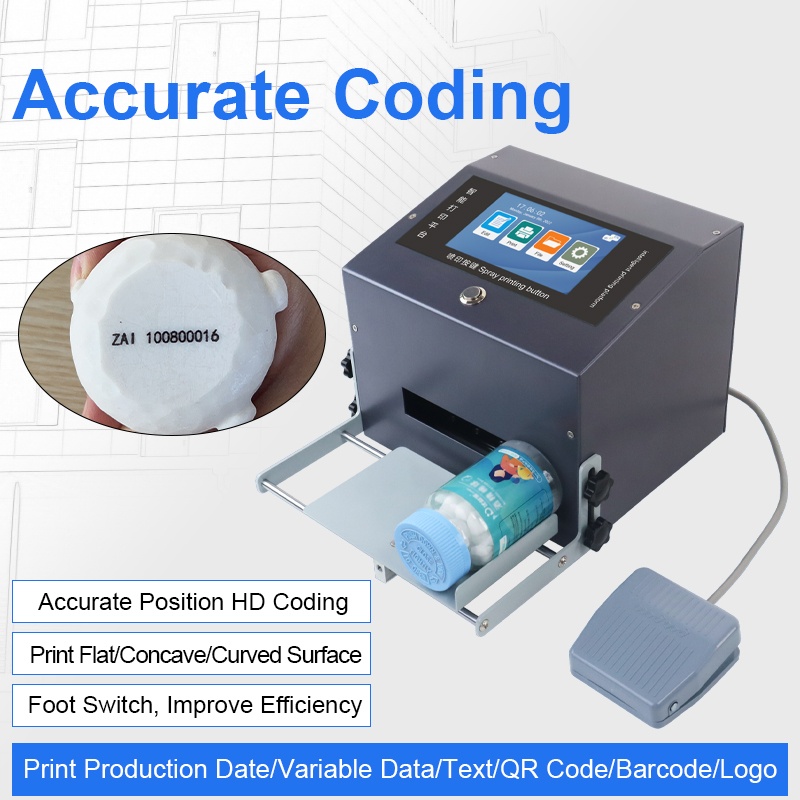
G12 Desktop inkjet printer
is the desktop unit for bench work, with a 10 cm print length and a 5-inch touchscreen for fixed date codes:
- 2-12.7mm print height
- 2-5mm throw distance
- Available in 7 ink colors
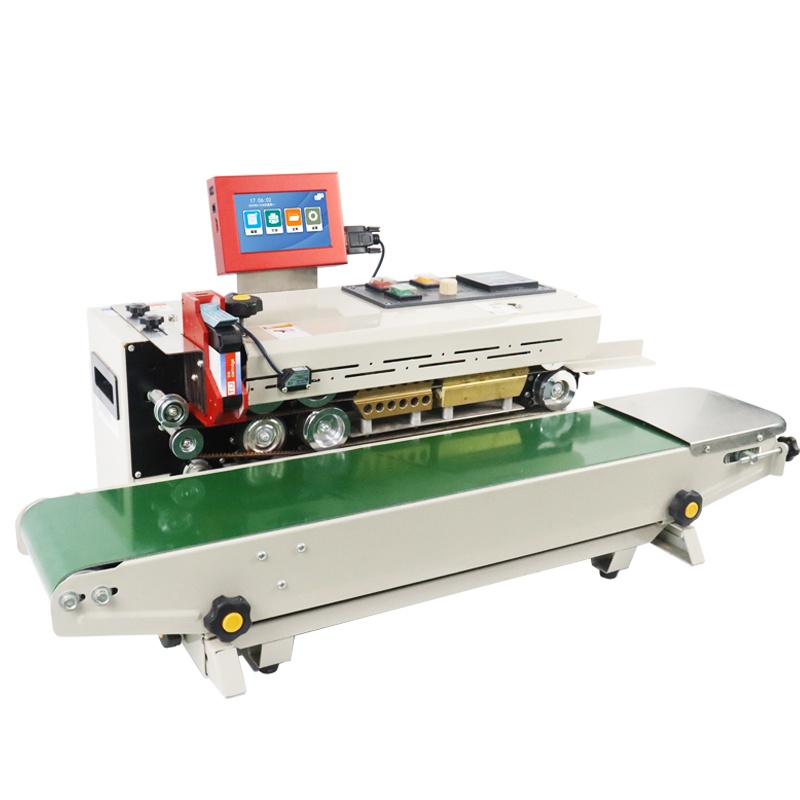
T110-K Sealing inkjet printer
seals and codes in one pass on PE bags, aluminium foil and plastic film, which removes a separate station from the line:
- Available in 7 ink colors
- Marks carton, plastic, metal, wood and pipe
- USB/Bluetooth connectivity
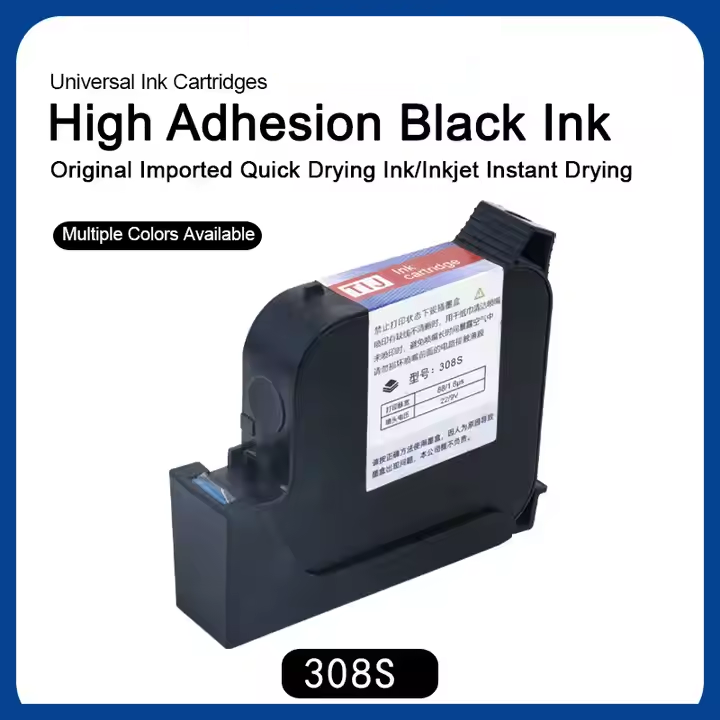
308S Inkjet printer ink cartridges
is the 25.4 mm (1-inch) cartridge the cartridge machines run on, in black and four colours:
- 600DPI print accuracy
- 2-6m throw distance
- Ink dries in 2-10s
All three apply ink by drop-on-demand, the process set out in the external reference on inkjet printing, and the plant behind them supplies ISO 9001 quality management evidence whenever a buyer asks. What changes between the bands is the frame, the bracket and the cartridge, never the way the ink reaches the substrate.
What Moves a Date Coder Price Inside a Band
Six things explain most of the gap between two quotations for the same band, and four of them show up on paper before any figure does:
- Print height and head count. Height is bought in steps, because each head adds its own print path: 25.4 mm from one cartridge, 50.8 mm from two, 152.4 mm from six spliced heads.
- Cartridge grade. The same unit is priced with a domestic IUT cartridge or an imported one, and that gap comes back with each ink order.
- Shell and screen. A plastic body with a 4.3-inch screen sits below an aluminium body with a 7-inch screen, and the gap is hardware rather than performance.
- Cartridge format. A 25.4 mm (1-inch) nozzle covers the widest spread of substrates, while a 12.7 mm head suits small print on smooth film.
- Mounting and trigger. The bracket, the sensor or encoder that fires the head, and the signal that flags a bad print are each priced on their own line.
- Line integration. A paging conveyor or a rewinding unit turns a hand-fed job into an inline one, and both are priced with the build.
A machine quoted without its trigger and bracket is not cheaper, only incomplete, and those parts cost more to add on site than they would have on the paper. Cartridge grade behaves the same way: ink that will not key to the film gets ordered again rather than used up.
Cartridges, Ink and the Five-Year Number
The invoice is the smaller part of what coding costs. Three lines shape the five-year view, and not one of them is printed in a headline quotation:
- Cartridge consumption. It scales with coverage and volume. A wide date code on a carton face draws several times the ink of a small lot number on a label.
- Print path replacement. On cartridge machines the head travels with the cartridge, so a worn path is replaced rather than repaired, which is quick and predictable but has to be budgeted.
- Uptime. A stalled shift often costs more than the cartridges a machine burns in a year, so the spare on the shelf and the spares window deserve as much attention as the purchase figure.
The comparison worth making is therefore not two headline figures but two five-year totals: the build, the cartridges it burns, the spares it needs and the response time behind them.
Comparing Two Date Coder Quotations
Two documents often differ because the sellers were asked different questions rather than because one is cheaper. Set them side by side and compare six things: the print height, the cartridge format and grade, the bracket and trigger gear, the spares bundled in, the ink price per cartridge, and the delivery date with the shipping terms. Anything absent from one document should be requested in writing before the totals are read side by side. Where the job itself is not yet settled, the checklist for verifying a date coding machine manufacturer is worth reading first, and the coding machine price guide covers the bands outside this family, while what a batch code printing machine does answers the question behind most date code specifications.
Cost Questions
- How much does a date coder cost?
- It depends on the platform rather than the brand. A cartridge hand unit with a domestic ink cartridge sits at the entry of the range, an online single-head coder starts in the middle band, and a six-head spliced build reaches the top, because every head carries its own print path and bracket.
- Why is a date coder priced per configuration instead of listed?
- Because the print height, the cartridge grade and the mounting your line needs all shift the number, and two sites coding an identical product can still end up with different builds. A single list figure would mislead at least one of them.
- Which part of the running cost grows fastest?
- Cartridges, once volume rises. Ink use scales with coverage and code size rather than with machine price, so the reorder price and the pack size belong beside the machine quotation instead of in a separate file.
Related reading: the date coding machine manufacturer checklist and codes and cost bands across the range.
Request a Quotation
Send the mark you need, the height it has to fit and the volume per shift to kuangcy@126.com or +86 17625427465. The reply names the platform that fits, the cartridge grade quoted and the mounting required, each on its own line so the total can be held beside any other quotation.