Published 2026-09-14 · By the SHICAI technical team · Factory guide
Last Updated: 2026-09-14
A handheld inkjet printer factory is only worth the name if the print head, the ink and the bracket behind the mark come from the same place. Anyone who has waited a fortnight for a cartridge knows why: a coder that cannot be resupplied stops a shift. This page sets out six checks that separate a factory from a trader, and the machines each check applies to.
What a Handheld Inkjet Printer Factory Owns
Six checks cover the ground on this page: who builds the head and the cartridge, which ink the factory holds, whether the bracket and trigger come from the same source, what a wholesale price includes, how long spares are held, and how a delivered unit is traced.
The build starts at the print head and the cartridge interface. A hand-held coder is four parts inside a shell that weighs between 0.6 kg and 2.5 kg: the head, a 42 ml cartridge, the battery and the controller. Print height across the range runs from 2 mm on the smallest unit to 100 mm on the widest, at 300 to 600 dpi, so a factory holds heads and cartridges for several mark sizes.
Ink is the second thing it owns. Food-grade, water-based, oil-based and UV formulations behave differently on eggshell, film, carton and metal, and the wrong one spoils a run as thoroughly as a failed head. Seven ink colours are held, and a buyer who needs a food-contact code should see the formulation named on the quotation, not promised in conversation.
Support is the third. A hand-held unit is carried to the pallet, the pipe run or the drum, so the bracket, the spare battery and the recharge cycle matter as much as print quality. Ask who holds those parts and how a delivered machine is traced back to its build record. A factory names the part and the record; a trader names a price and hopes the question stops there.
The Handheld Range, Machine by Machine
Four units cover most hand-marking work on a factory floor, and they share one cartridge family, so adding a second machine buys a different print height rather than a different system:
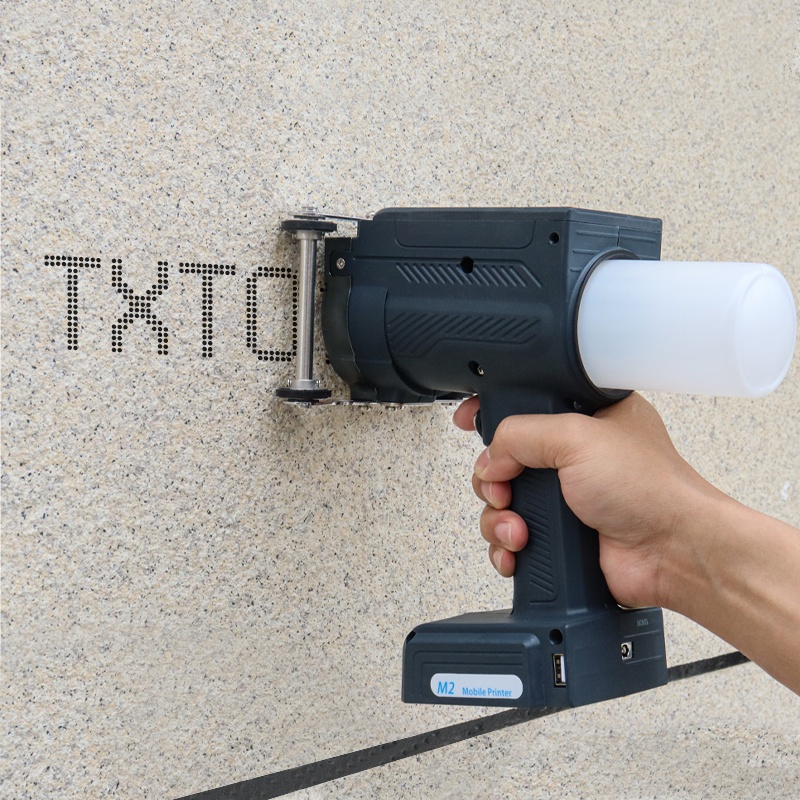
AL16 Large character inkjet printer
is the large character unit for 25-60 mm codes on drums, pallets and pipe, and it carries its own air pump for ink supply:
- 25-60mm print height
- Weighs only 1.6 kg
- Built-in air pump ink supply
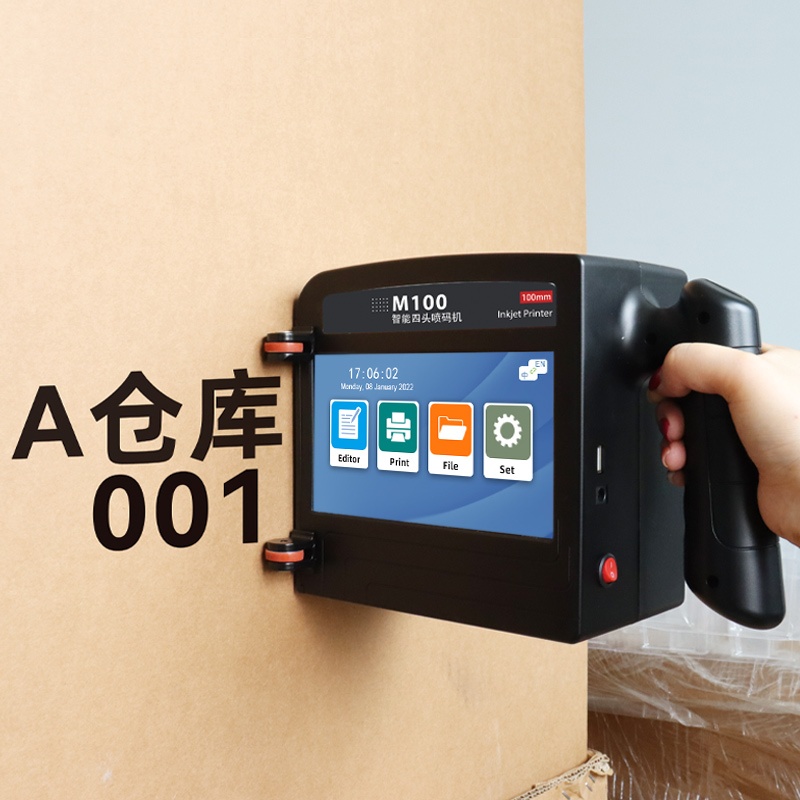
M100 Handheld inkjet printer
reaches the widest mark in the family at 100 mm, with a 7-inch screen and a battery sized for a full shift:
- 2-100 mm print height for large characters
- 600 dpi print accuracy
- 2500 mAh battery for full-shift runtime
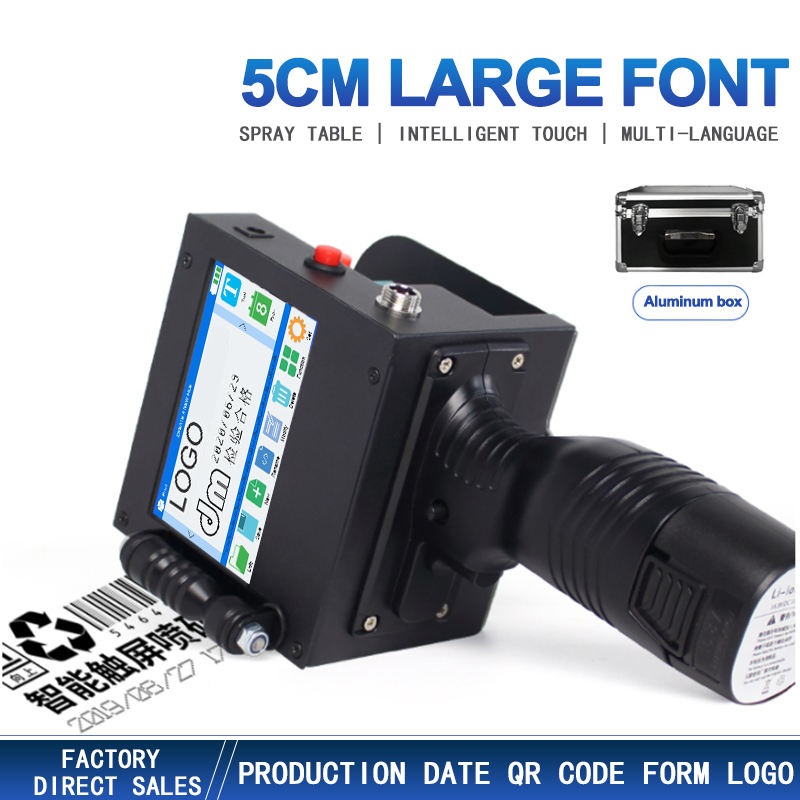
Y50 Handheld inkjet printer
sits in the middle of the range for adjustable height and faster hand marking across cartons and film:
- Prints up to 50m/min
- 5-48mm Adjustable print height
- 4.3 Inch Touch Screen
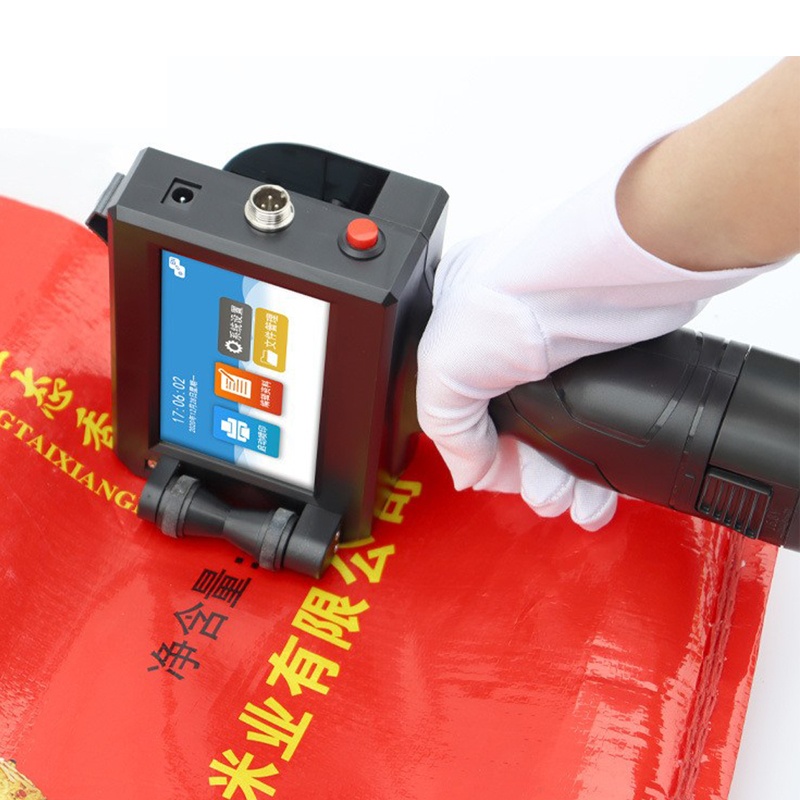
Y3 Handheld inkjet printer
is the everyday unit for cartons, film and metal parts, and prints a serial number or a QR code as easily as a date:
- 2-25.4mm print height
- 4.3-inch Touch Screen
- Prints text, QR code, GS1, serial number and logo
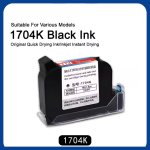
Marks taller than 100 mm, or jobs that run continuously on a conveyor, belong to a different class of equipment, and the handheld coder guide explains where hand marking stops being the right answer. Cartridges for the family come with a 25.4 mm (1-inch) nozzle in black and four colours.
Handheld Inkjet Printer Wholesale: What the Terms Should Say
Once the machine is chosen, the commercial detail decides the real cost. A seller quoting handheld inkjet printer wholesale prices should separate four lines: the unit, its cartridges, the battery and charger, and any bracket or case. One headline figure hides the missing line, and that line is usually the one that stops work.
Ink reorders matter more than the first order. A plant marking fifty cartons a day and one marking five hundred buy the same machine and burn cartridges ten times as fast, so the reorder price and pack size belong in the comparison. The bands for the range, and the running picture behind them, are laid out in the coding machine price guide.
Lead time is the last term to put in writing. A standard unit and one configured with a custom bracket do not leave the building on the same day, and a verbal estimate is not a delivery date.
Print Tests, Certification and Traceability
Paperwork is the easy part: ISO 9001 quality management evidence goes out with any quotation on request, and the process inside these machines is the drop-on-demand method covered by the reference on inkjet printing. What cannot be bought later is the record. Every unit leaves with a serial that ties it to a build sheet, the test print and the parts that went into it, so a fault three months in is checked against what was shipped.
Two questions are worth settling before the container is booked, and both concern ink rather than hardware: does the formulation chosen comply with the food-contact limits your market sets, and does the paperwork travel with the goods or follow later. Ask for both in writing rather than verbally.
Questions Buyers Ask
- How do I tell a handheld inkjet printer factory from a trading company?
- Ask which print head and which cartridge format the model uses, what the factory marks on your own substrate, and how a delivered unit is traced back to its build record. A factory answers all three with part numbers; a trading company answers with a catalogue page.
- What is a realistic starting order for handheld inkjet printer wholesale?
- One unit, so the mark is tested on the real line before any volume commitment. Beyond that the terms turn on cartridge trays rather than machine count, because a plant with one coder still consumes ink every month.
- Can the machine mark my product before I place an order?
- Yes, and it settles more than a specification sheet does. Send the substrate, the code and the height; the marked sample comes back with the settings noted so the result can be repeated on your own bench.
Talk to the Factory
Put the substrate, the mark height and the daily volume in front of an engineer: kuangcy@126.com or +86 17625427465. A sample comes back marked on your own material with the settings written down, and the quotation lists the unit, the cartridges and the bracket as separate lines.