Last Updated: 2026-09-17
In the TIJ vs CIJ comparison, the right choice depends on line speed, print height and whether the mark must survive condensation or solvent wipe. TIJ wins on resolution and quiet operation; CIJ wins on speed and throw distance. This guide gives you the decision in one table.
Comparison Matrix
The TIJ vs CIJ matrix below covers five dimensions that decide most coding line setups. Read it alongside your own line speed and substrate list, because the right answer changes with both.
| Dimension | TIJ | CIJ |
|---|---|---|
| Print method | Thermal drop-on-demand | Continuous ink stream with electrostatic deflection |
| Line speed | Up to 120 m/min | Up to 400 m/min |
| Print height | 2 to 152.4 mm with spliced heads | 2 to 20 mm |
| Throw distance | Short, contact or near-contact | 3 to 30 mm |
| Resolution | Up to 600 dpi | Up to 600 dpi |
How Each Technology Works
TIJ uses a heated nozzle to push a droplet onto the substrate only when a dot is needed. The mechanism is quiet, the head is light, and the resolution is high. The S20-6 splices up to six heads on one controller to reach 152.4 mm of print height, and each module weighs 3.5 kg. TIJ suits label rewinders, carton coders and any line where the substrate passes close to the head and the code needs sharp edges at small font sizes.
CIJ pumps a continuous stream of ink through a nozzle, charges each droplet and deflects it either onto the substrate or into a gutter for recirculation. The throw distance of 3 to 30 mm lets the head sit back from wet, moving or irregular surfaces, which is why CIJ dominates beverage and pharmaceutical lines. The anti-counterfeiting CIJ prints text, date, pattern, dynamic barcode and QR code at line speeds up to 400 m/min, and the 2 to 20 mm print height covers batch, date and traceability marks on cans, bottles and cartons.
The maintenance profiles differ as well. TIJ cartridges are sealed units that snap in and out, so the operator changes one without tools. CIJ requires a pump, a filter and a solvent reservoir, and the recirculation loop needs a weekly flush to keep the nozzle clear. On a three-shift line, the CIJ flush is a scheduled task; on a single-shift label rewinder, the TIJ cartridge change is a two-minute job between runs.
When to Choose
Work through these four, in order:
- Line speed above 120 m/min: CIJ is the only option that keeps up.
- Substrate closer than 5 mm to the head: TIJ gives sharper marks at that distance.
- Irregular or wet surface needing a longer throw: CIJ prints from 30 mm away.
- Print height above 20 mm with high resolution: TIJ with spliced heads reaches 152.4 mm.
Most plants need one of each. A label rewinding line at 60 m/min with paper labels is TIJ territory; a beverage line at 300 m/min with condensation on the can is CIJ territory. The TIJ vs CIJ decision is rarely about quality, because both technologies reach 600 dpi; it is about which line the machine sits on.
Two Machines
One from each camp, chosen to show where each technology fits:
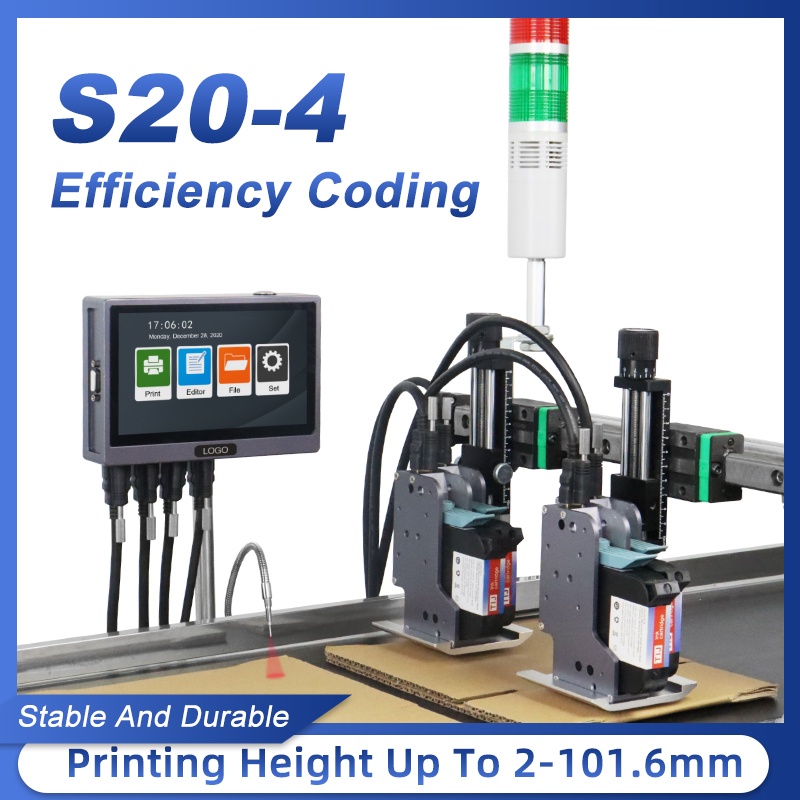
S20-6 online inkjet printer (splicing)
- Prints up to 120 m/min
- 2-152.4 mm print height with six spliced heads
- Weighs only 3.5 kg per unit
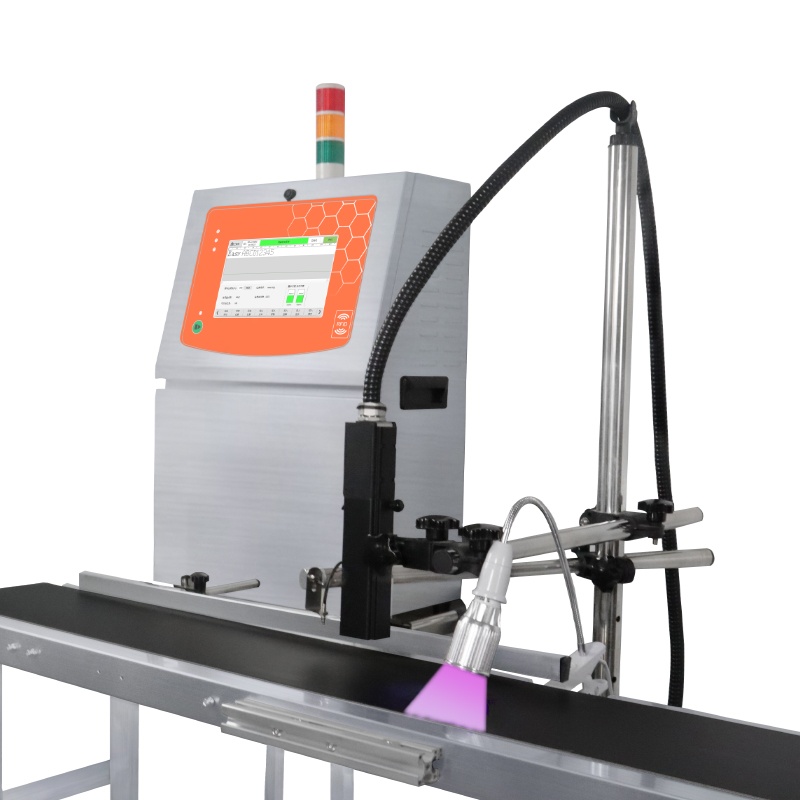
Anti counterfeiting small character inkjet printer
- 2-20mm print height
- 3-30mm throw distance
- Prints text, date, pattern, dynamic barcode and QR code
The S20-6 is the TIJ pick for wide carton faces and label rewinders. The anti-counterfeiting CIJ is the pick for high-speed lines where the head sits back from a wet surface.
Quality and Compliance
The droplet mechanism behind both is the one described in the public reference on inkjet printing, and the quality system behind the build is documented to ISO 9001 quality management on request. Ask any supplier whether the ink complies with food-contact limits and whether the documentation travels with the goods.
Questions Buyers Ask
- Does the TIJ vs CIJ choice affect running cost?
- Yes. CIJ recirculates the stream, so solvent evaporates over a shift and make-up fluid tops it up. TIJ only fires the drops that form the mark, so ink use tracks the code density directly.
- Can TIJ print on silver foil?
- Yes, with the right ink formulation. The throw distance is short, so the head sits close, but the substrate range includes paper, stickers, PVC film, tape and silver foil.
- Which technology is quieter?
- TIJ. The thermal mechanism has no pump and no recirculation loop, so the head runs silently. CIJ has a pump and a charging electrode, which adds a low hum on the line.
Next Steps
- Send the substrate, the line speed and the code content to +86 17625427465 or kuangcy@126.com. We mark your part on the real material and recommend the technology that fits the line.
- For the full cost picture, read the coding machine price guide.
- To compare suppliers before shortlisting, use the marking machine verification checklist.