Last Updated: 2026-09-21
An alternative to Hitachi is judged on installed cost, not list price: the coder, the mount, the encoder, the first ink set and the service terms are what you actually pay. Three of those five items sit outside the machine quotation, which is why two offers can look identical on paper and behave nothing alike on the line.
What the Switch Has to Cover
Continuous inkjet is one technology with one fluid train, and a switch inside that family is a change of supplier rather than a change of method. The printhead and nozzle assembly set the character quality, the ink and make-up pair set the drying behaviour on your surface, and the controller holds the code logic and the line interface. A replacement frame has to satisfy all three, and only one of them is visible in a photograph.
That is the useful starting point for any buyer weighing an alternative to Hitachi: nothing about the coding standard changes, so the whole decision moves to how the fluid train behaves on your product and how quickly the supplier answers when it does not.
Four Checks Before You Switch
| Check | What you look at | Why it moves the decision |
|---|---|---|
| Fluid train match | Ink class, make-up consumption, filter and seal intervals | Print quality is set here, and so is the running cost that arrives every month |
| Sample run on your pack | Your substrate, your line speed, your code string | A demonstration board hides adhesion, dry time and contrast problems on real surfaces |
| Spares structure | Consumable list, wear parts, lead time in writing | A coder that stops for a sensor stops the line, so lead time is a production figure |
| Integration and service | Encoder and sensor wiring, enclosure rating, engineer cover | These are quoted separately and are where two similar totals hide different scope |
Two Sourcing Models
Broadly, a buyer can stay with a global brand served through a distribution channel, or move to a factory that sells its own coding machines direct. Neither model is automatically the right answer, and the differences are structural rather than technical.
Under the channel model, the machine reaches you through at least one commercial layer, spares arrive through the same route, and the same engineer may cover several unrelated product lines. Under the factory-direct model, specification, spares and support come from the plant that builds the frame, which shortens the parts chain but places the burden of due diligence squarely on the buyer. The practical consequence is that a channel offer tends to be easier to administer, while a direct offer tends to be easier to configure to a specific pack. Buyers who value a familiar invoicing route stay with the channel; buyers with an unusual substrate or a tight changeover window usually gain more from the direct route.
Which Route Fits Your Line
Three situations decide it. If the line already runs a second coder of the same family and the operators know it, a change of brand is the cheapest change you can make, because training cost stays near zero. If the pack is unusual, curved, chilled or lightly filled, the sample run matters more than the badge on the enclosure, and a factory that will mark your own goods before quoting has the advantage. If uptime is the binding constraint, ask both routes for the wear parts list and lead time in writing, because that single document separates an offer that can be kept from one that cannot.
Two CIJ Frames for the Switch
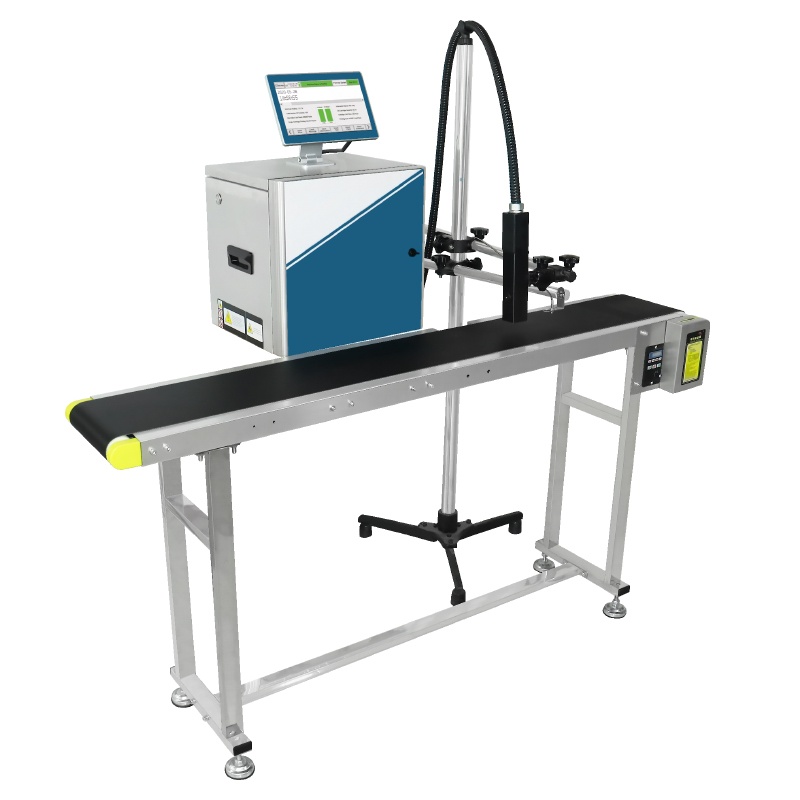
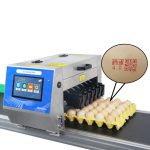
S1000 small character inkjet printer
the high-speed frame:
- Prints up to 400 Meters Per Minute
- 2-20mm print height
- 10.1-Inch Industrial Touchscreen
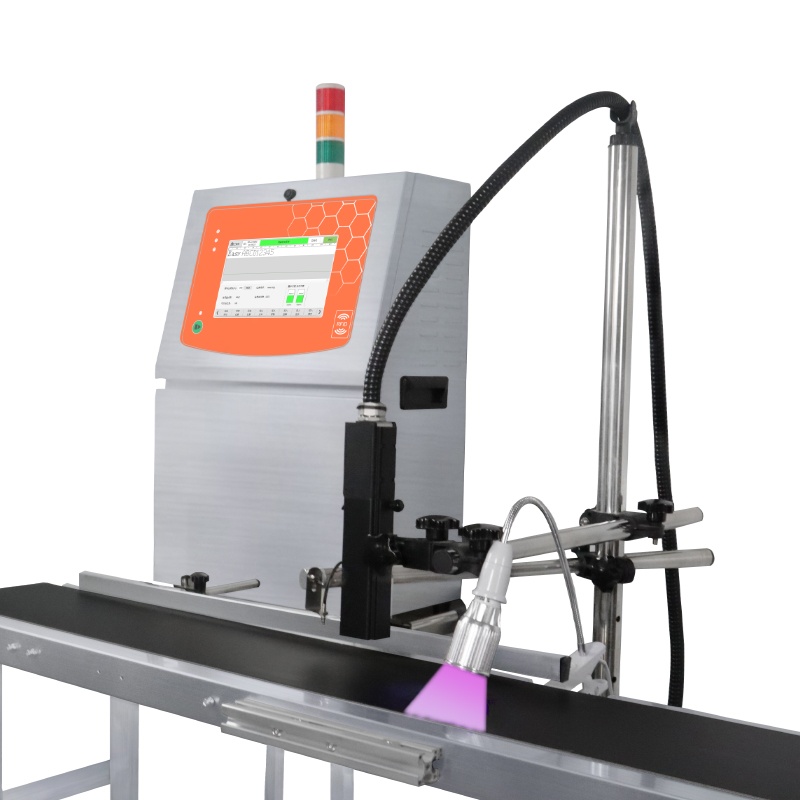
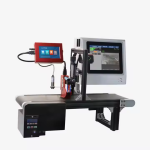
Anti counterfeiting small character inkjet printer
the traceability frame:
- 2-20mm print height
- 3-30mm throw distance
- Low 150W rated power
Both are built in the same plant and supported from the same spares list, so a line can start with one and add the other without a second supply chain. Quality management follows ISO 9001, and the technology itself is documented in the standard reference on continuous inkjet printing.
Buyer Questions on the Switch
- What changes on the line when you switch supplier?
- Very little if the machine stays in the continuous inkjet family. The coding standard, the code string and the line interface carry over; what changes is who supplies the ink, the spares and the service response, and that is the part worth checking before the order.
- Is a factory-direct coder harder to support?
- Not inherently, but the due diligence shifts. Ask for the consumable list, the wear parts and the lead time in writing, and confirm who attends the line if a printhead seal fails. A supplier that answers those three clearly is supportable; one that answers only the first is not.
- Should the sample run happen before or after the quotation?
- Before. Marking your own substrate at your own line speed is the only test that reveals adhesion, dry time and contrast, and a supplier confident in the fluid train will offer it without a charge. A demonstration board cannot substitute, because it is chosen to print well.