Published 2026-09-13 · By the SHICAI technical team · Buyer guide
Last Updated: 2026-09-13
An industrial printer that cannot be integrated, supported or repaired quickly becomes a line stoppage on a delivery week. An industrial printer manufacturer is accountable for all three, because the specification, the spares and the engineer who set the line up come from one place. This page sets out what to verify before an order is placed, and which machines cover which job.
What an Industrial Printer Manufacturer Owns
Application range comes first. Few lines mark one thing: cartons, labels, film, cable jackets, pipe and metal parts can all arrive on the same site, and the machine has to be specified per substrate rather than per catalogue page. That is why the range matters more than any single model. In the current line-up print height runs 2-25.4 mm on the online TIJ class, 2-20 mm on the small character continuous class and 25-60 mm on the large character handheld, at line speeds up to 120 m/min and 400 m/min respectively.
Integration is the second responsibility. A coder mounted beside a conveyor needs a trigger from a sensor or an encoder, a mounting gap measured in millimetres, and somewhere for a failed code to go. Those are engineering conversations, and they move slowly when every answer is relayed through a third party.
Spares and support are the third. Ask which parts are held, how a delivered machine is identified in the seller’s records, and who answers when a print head fails in week nine of a contract. A manufacturer can name the part, the record and the engineer. A trading company can name a price.
The Machine Range
Four machines cover most industrial printing decisions. The differences between them are practical: how tall the code is, how fast the line runs, and what the mark has to survive.
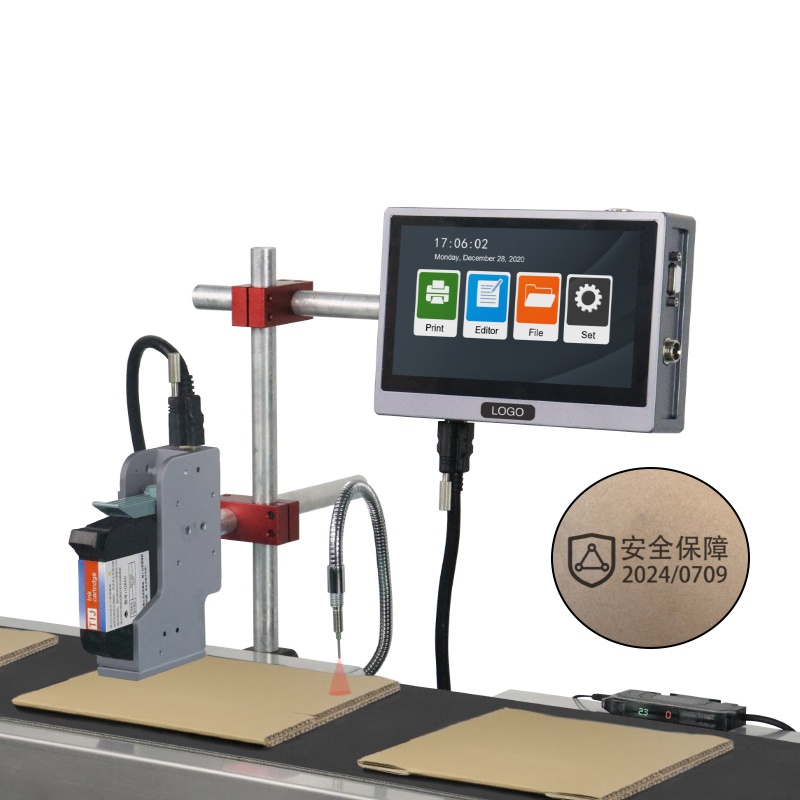
K20 online inkjet printer
is the single-head online coder for product-level codes on cartons, film and labels:
- Prints up to 120m/min
- 600dpi HD print accuracy
- 2-25.4mm print height
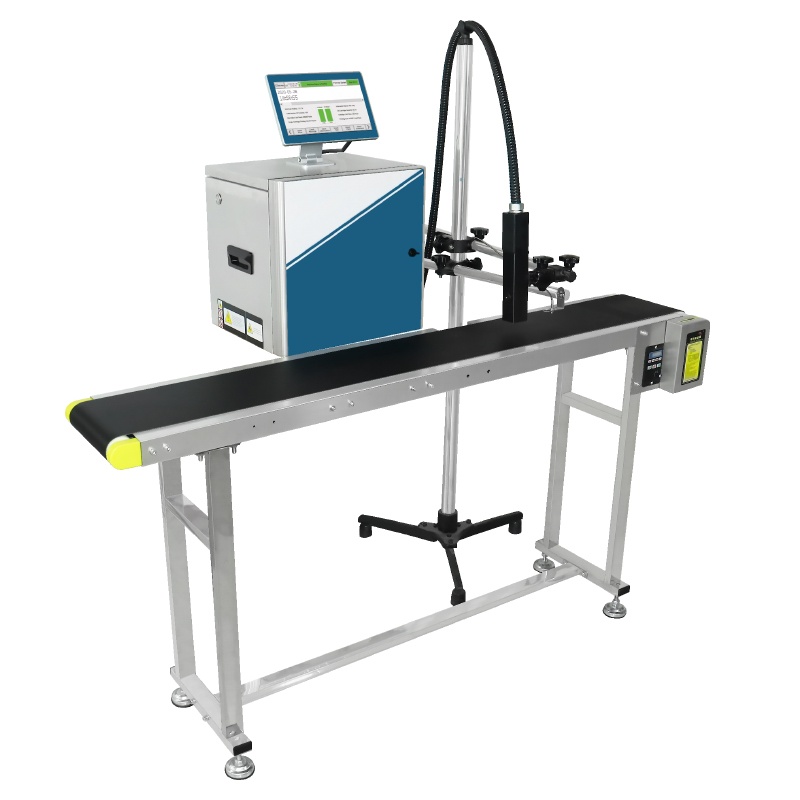
S1000 small character inkjet printer
is the small character continuous inkjet machine for the fastest lines, with a 10.1-inch industrial touchscreen:
- Prints up to 400 Meters Per Minute
- 3-30mm throw distance
- 2-20mm print height
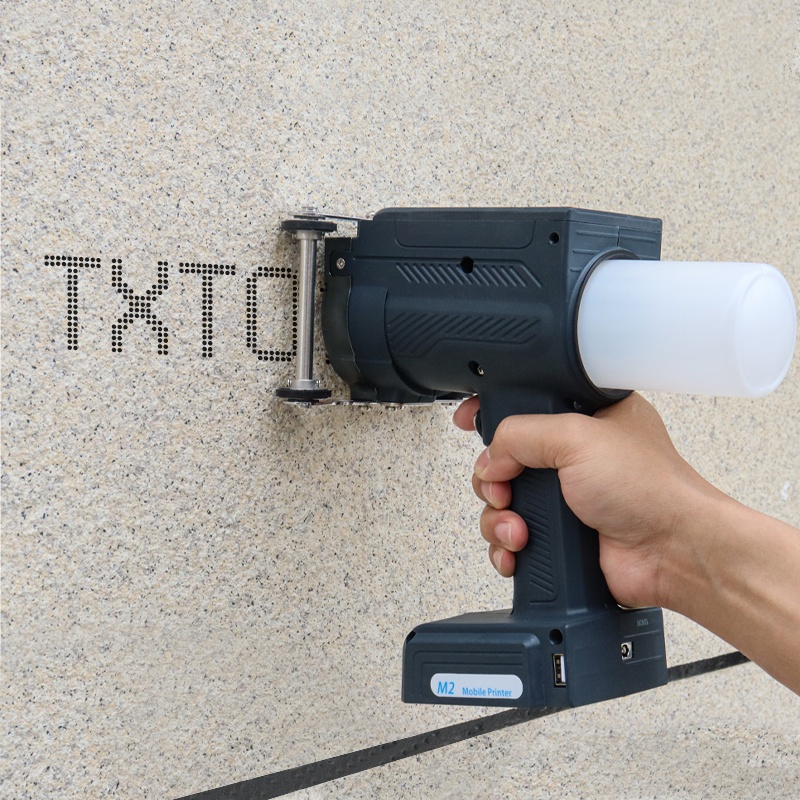
AL16 Large character inkjet printer
is the large character handheld for 25-60 mm codes on pallets, drums and pipe:
- 25-60mm print height
- Weighs only 1.6 kg
- USB, Wireless, Network Port connectivity
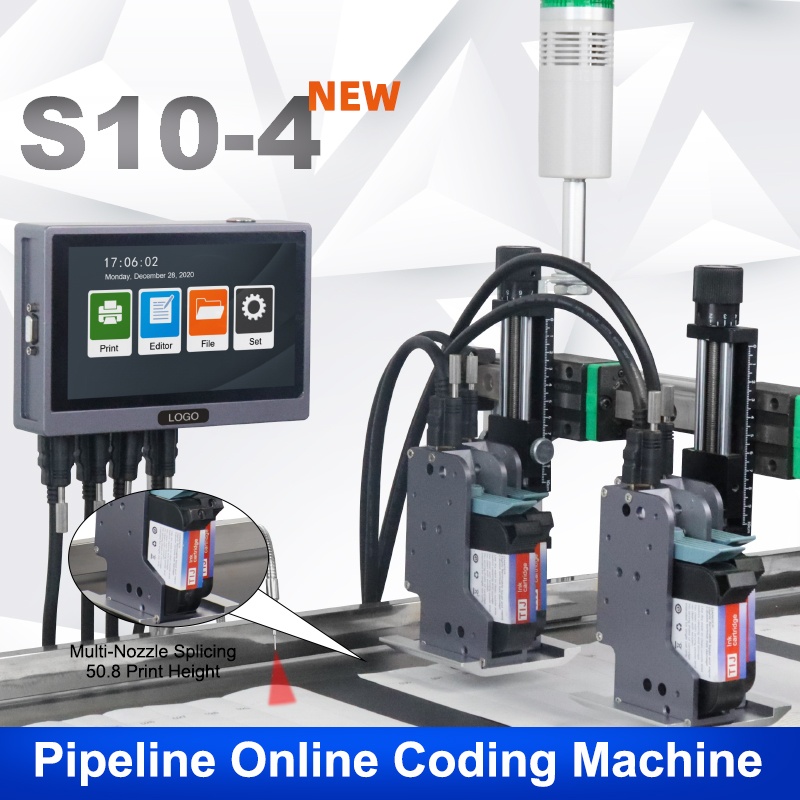
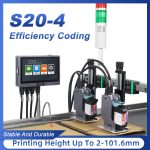
S10-4 online inkjet printer (standalone)
is the four-head online frame with a protective industrial body and barcode output:
- 2-50.8mm print height
- Prints Chinese, English, date, QR code and barcode
- Marks metal, plastic, pipe, foam and carton
Smaller volumes are served by the G12 desktop coder for bench work and the M20 handheld for pallets and maintenance marking, both covered in the handheld coder guide. Where a code is taller than 60 mm or the line runs above the speeds listed here, the honest answer is a different class of machine rather than a larger version of these, and the technical team will say so rather than quote one.
Working with an Industrial Printer Supplier
Once the factory question is settled, the commercial detail decides how the project runs. Ask an industrial printer supplier to put four things in writing before quotations are compared: the exact configuration being quoted, what the integration includes, the spares window for that model, and who prepares the export documents. Those four decide the real cost far more than the headline figure.
Price is quoted per configuration, because the same frame moves in cost with head count, print height, fluid choice, mounting and integration. For the bands and the long-run consumable picture, read the coding machine price guide rather than comparing headline figures from suppliers who are quoting different things.
Compliance and Records
Certification is a starting point, not an answer. Buyers ask for ISO 9001 quality management evidence before signing and it is supplied on request, but the more useful question is what happens when a code fails. Every machine is recorded against its serial number, so the build, the test prints and the parts fitted to it can be traced rather than guessed. The inkjet mechanism itself follows the standard described in the public reference on inkjet printing, which keeps consumables and service practice consistent across the range instead of changing with each model.
For export buyers, two details are worth settling early: whether the fluid selected meets the food-contact rules of your market, and who prepares the customs paperwork. Both are documented per order rather than assumed.
Buyer Questions
- How do I tell an industrial printer manufacturer from a trading company?
- Ask three questions: which models come off your own line, how is a delivered unit identified in your records, and how long are spares held for that model. A manufacturer answers all three with specifics rather than a catalogue.
- Can a printer manufacturer mark my own product before I order?
- Yes, and it is the only test that settles the question. Send the substrate, the code content and the line speed; the sample comes back marked, with the settings recorded so the result can be repeated on your line. It costs nothing.
- What decides the lead time on an industrial printer?
- Configuration, mainly. Head count, mounting and fluid are built to order, so a standard frame ships sooner than a modified one. Ask for the lead time in writing beside the quotation, and treat a verbal estimate as an estimate.
Request a Quote
Email kuangcy@126.com or call +86 17625427465 with the product, the code and the line speed. An engineer replies within 24 hours with a configuration and a quotation, sample prints on your own material are free, and nothing is ordered until you approve the result.