Last Updated: 2026-09-08
A fiber marker is quoted per configuration rather than listed at a fixed figure, because wattage, field size, and automation each move the number. The laser marking machine price you pay tracks those three variables plus source rating, and the running cost is close to zero. Here is what drives the figure and how to compare quotes fairly.
Price Ranges by Machine Class
Industrial marking equipment splits into classes, and each sits in its own band. Use the ranges below as a planning guide rather than a quote. The figures come from published configuration prices; laser systems are configured per application, so they are quoted rather than banded:
| Machine class | Typical range | What you get |
|---|---|---|
| Fiber laser marker | Quoted per configuration | Permanent metal marks, 20W to 100W output options |
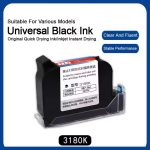
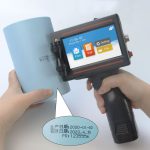
| Handheld inkjet coder | $99 to $1,599 | Portable marking, single head up to four spliced heads |
| Online TIJ coder | $579 to $2,299 | Conveyor mounted, single head up to six spliced heads |
| Desktop inkjet coder | around $549 | Benchtop marking for short runs and samples |
| Egg coding system | $679 to $3,099 | Single head up to six-head grading-line arrays |
The spread inside each band comes from options rather than the base machine. A handheld coder at the low end carries a smaller screen and a domestic consumable; at the top of the band it runs four spliced heads and a 7-inch screen. Online TIJ systems move from a single 12.7 mm head at $579 to six spliced heads covering 76.2 mm at $2,299, and that head count is the single largest step in cost.
Laser systems do not band the same way, which is why the honest answer to a laser marking machine price question is a configuration conversation. The same frame can carry a 20W source for fine annealed marks on stainless or a 100W source for deep engraving into tooling, and the optics, field size, and fixturing change with the choice. A supplier who quotes one number without asking what you are marking is quoting a machine, not a solution.
What Drives the Price
Six variables move a laser quote more than anything else. First is output power: the span from 20W to 100W covers fine surface annealing through deep engraving, and power costs money in both the source and the cooling it needs. Second is field size, since a larger marking area needs bigger optics and a more rigid frame. Third is source rating, where a longer rated life costs more up front and less over the machine’s working years.
Fourth is automation. A manual load-and-mark station is the entry point; a rotary axis for cylindrical parts, a conveyor for continuous flow, or a vision system for verification each add cost, and each removes labour or scrap that may justify it. Fifth is fume extraction and enclosure, which are not optional in most plants for safety and lens cleanliness. Sixth is software and data integration: serialisation, database connection, and grade verification matter in regulated industries and add to the price.
Integration is the quiet variable in every class. A standalone marker costs less than the same machine paired with a conveyor, a paging module, or closed-loop inspection. Ask for the machine price and the installed price as two separate numbers so you can compare suppliers fairly, and ask what the installed figure includes: bracketry, guarding, extraction, and commissioning are where quotes diverge.
The safest way to avoid overpaying is to define the mark before requesting numbers. Material, code content, code size, required contrast, and daily volume together determine power, field size, and automation. Without those, any two quotes you compare are describing different machines.
Total Cost of Ownership
A laser marking machine price conversation is incomplete without the running cost, and that is where laser changes the arithmetic. A fiber marker has no consumables in the marking process: there is no fluid to buy, no head to replace on a schedule, and no make-up system to maintain. The recurring costs are electricity, occasional optics, and eventually the source itself, which is commonly rated for a very long service life.
| Technology | Upfront cost | Running cost |
|---|---|---|
| Fiber laser | Highest | Near zero, no consumables |
| Handheld inkjet | Lowest | Consumables scale with volume |
| Online TIJ inkjet | Moderate | Replaceable consumables per code |
| CIJ continuous inkjet | Higher | Fluids, filters, scheduled service |
The crossover point is volume and mark permanence. At low volume on packaging, an inkjet coder is cheaper to buy and cheaper overall. At high volume, or wherever the mark must survive coating, solvents, cleaning, and years of service, the laser’s higher entry price is recovered by the absence of consumables and by scrap that never happens.
Before you commit, ask any supplier for a consumables table at your expected volume: what is used, how often, and what it costs per thousand codes. A machine that is cheaper to buy but costlier to run can overtake the alternative inside a year on a busy line. If a supplier will not provide that table before the order, treat it as a signal rather than a detail. The ISO 9001 quality system behind the machine matters here too, because stable manufacturing keeps optics, spares, and service pricing predictable across the life of the equipment.
Laser or Inkjet for Your Line
The two families solve different problems, and the price comparison only makes sense once the mark requirement is fixed. Laser marking bonds a permanent code into metal and many plastics with no consumables, which suits components, tooling, and anything that must stay readable for years. Inkjet coding prints dates, batches, and variable data onto packaging at line speed, which suits fast-moving consumer goods and short-life products.
Most plants run both, and that is the honest answer for a mixed operation. Components get a permanent serial from a fiber marker; cartons and labels get variable data from an inkjet coder. Buying one machine to do both jobs usually means compromising on the job that matters more. The inkjet printer manufacturer guide covers the coding side of that decision, including how to verify a supplier who builds both families.
Two anchors show the two ends of the range in practice. The G-20 Fiber laser inkjet printer carries output options from 20W to 100W and marks metal permanently without consumables, which is the profile that justifies a higher entry price. On the coding side, the S1000 small character inkjet printer prints up to 400 meters per minute with a 2-20mm print height, which is the profile that keeps packaging lines moving at low cost per code.
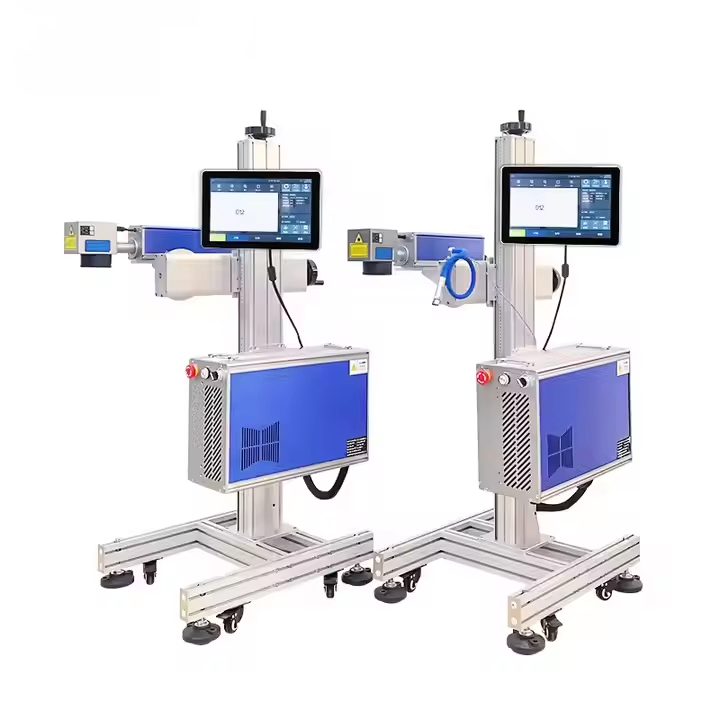
G-20 Fiber laser inkjet printer
- Fiber laser output options from 20W to 100W
- Permanent marks on metal without consumables
- Air-cooled design
Here is a simple way to frame the decision. Define the mark first: material, content, size, contrast, and daily volume. Then request the machine price, the installed price, and a consumables table at your volume from each supplier, and compare the three numbers together rather than the first one alone. A quote that omits installed cost or consumables is incomplete, and those gaps almost always surface after purchase.
Related Questions
- How much does a laser marking machine cost?
- Laser systems are quoted per configuration because output power, field size, automation, and source rating each move the number. Send your material, code size, and daily volume for a specific figure rather than comparing list prices.
- Why is laser more expensive up front but cheaper to run?
- The source, optics, and frame cost more than an inkjet coder, and there are no consumables in the marking process. Over years of production the absence of fluids and replacement heads usually overtakes the entry price difference.
- What affects the price of an industrial inkjet coder?
- Print height, head count, line speed, consumable type, and integration. Online TIJ systems run from $579 for a single head to $2,299 for six spliced heads, and handheld units from $99 to $1,599.
Request a Quote
Send your material, code size, and daily volume for a configuration and a price within 24 hours. Call +86 17625427465, email kuangcy@126.com, or request a quote online. Free sample marking on your parts, no commitment required.