
Last Updated: 2026-11-12
A recall notice that cannot name the affected pallets becomes a full withdrawal. A lot code printer puts the link between a case and a production window onto the case itself, and the rule behind the number decides how useful that link turns out to be.
Where a Lot Code Printer Sits in the Chain
Traceability starts at the point a batch is created, which is usually the mixer, the filler or the packing station. The code has to be applied before the cases are palletised, or the pallet becomes the smallest unit anyone can find.
That timing is a layout question rather than a printer question. A lot code printer placed after the stretch wrapper is a printer that arrives too late to be useful.
Designing the Numbering Rule
A workable rule encodes the date, the line and a sequence, in that order. Date first means a recall search narrows by day before it looks at anything else.
Keep the rule short enough to read and long enough to be unique. Nine or ten characters covers most plants, and every extra character adds a misread risk without adding traceability. The wider idea is set out under serial number.
Lot Code Against Serial Number
A lot code groups units, so one scan answers for a whole run. A serial number identifies one unit, which is what a warranty or a medical device claim needs.
The cost difference is not the printer, it is the system behind it. A serialised line needs a database that answers per unit, so a plant moves to serials when the claim process demands it, not before. Export documentation follows ISO 9001 either way.
What Breaks a Trace
Unreadable codes break it first. A code applied at an angle, or printed across a crease, fails at the scanner and the link is lost exactly when it is needed.
Missing records break it second. A code that exists on the case but not in the production log answers nothing, so the print step and the record step have to happen together.
A Head That Keeps Up With the Line
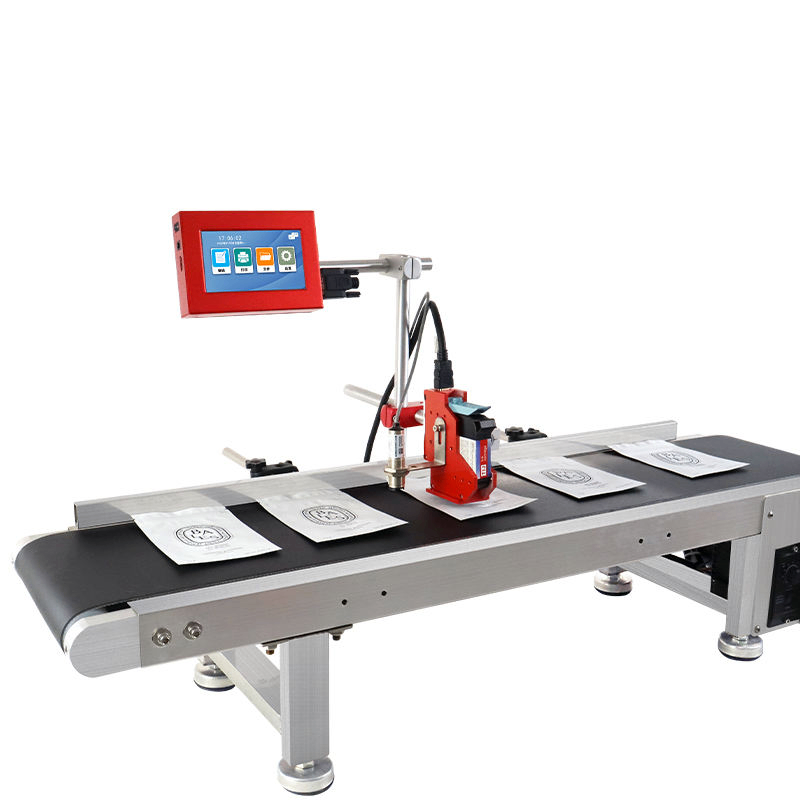
T110Online inkjet printer
a short throw head for a case line at moderate speed:
- 600DPI HD print accuracy
- 2-12.7mm print height
- 4.3-inch Touch Screen
- 2-5mm throw distance
- Available in 7 ink colors
A lot code lives or dies on readability at the scanner. Six hundred dots per inch at a twelve millimetre height keeps a ten character string clean enough for a fixed reader to pick up on the first pass.
Related Questions
- How long should a lot code be
- Nine to ten characters suits most plants. Date, line and sequence covers a recall without a database lookup at the pallet.
- Can it count without an operator
- Yes, within a run. The sequence increments per print, so the operator sets the start and the unit does the rest.
- Is a QR code better than text here
- Where a scanner is part of the process, yes. Where a clerk reads the case by eye, plain text survives a bad print better.
Send the Rule and the Line Speed
Send the numbering rule you have to work to and the speed at the print position. We check the string against the head, then return a layout at the height that keeps a lot code printer readable at the far end of the conveyor.
Next Steps
- Mounting rules that protect a code: five rules for a tight line.
- When a lot code is needed: the short answer.
- Start at the contact page, on +86 17625427465 or kuangcy@126.com. We reply within 24 hours.
Need help choosing the right printer?
Talk to our engineers for a free production-line assessment and quotation.
Request a Quote