
Last Updated: 2026-11-09
An alternative to Shanghai Dixon is only proved when the old job files still run. Five data handover checks settle a swap that looks identical on the bench: file format, variable fields, serial rules, the clock and the audit trail.
Why the Data Decides an Alternative to Shanghai Dixon
A coder swap is argued about print quality, and that is the easy half. The hard half is the file that makes the mark: a layout with variable fields, a serial rule and a clock that must agree with the plant record.
A machine that marks well but needs every layout redrawn has moved the cost from the capital budget to the engineering diary, which is always full.
So the first test of any replacement is dull and decisive: can it open the job you run, with the same fields, on the same schedule.
Five Data Handover Checks
| Check | What to ask for | What it prevents |
|---|---|---|
| File format | Which native formats it imports | Every layout redrawn by hand |
| Variable fields | How many per job, and their sources | A date typed in rather than generated |
| Serial rules | Prefix, reset and rollover behaviour | A serial that restarts at the wrong shift |
| Clock | Time source and daylight handling | A date that jumps an hour twice a year |
| Audit trail | Whether changes are logged | No answer in a retailer audit |
The third row is where a plant loses a day. A rule that resets at midnight is simple until a night shift crosses it, and a cabinet that resets on power-up will repeat a number already shipped.
The fifth row is discovered late. A retailer asking which date code ran on a pallet expects a record, and a machine keeping no log leaves the answer with whoever was on shift.
Fields, Serials and the Clock Nobody Checks
Most production layouts are simpler than the software allows: a fixed line, a date, a lot and a serial stepping by one. What breaks in a migration is the binding, not the marking, because a field that pulled from a plant system may have to be typed in.
Ask how each variable is fed: generated in the cabinet, read from a file, or pushed over a network. A machine that speaks the plant protocol takes the same push the old one took, and that saves the integration work.
The clock is the quiet one. A cabinet drifting a minute a month produces a date right in January and wrong in June, and a daylight change applied by hand is forgotten on the morning it matters.
The symbol side is documented under barcode, and a build for export should follow the ISO 9001 quality management route. Neither will convert your layout, so one real job file beats a feature list.
How We Move a Layout Across
We ask for one file from the line, not a sample image, and run it before the order is confirmed. If a field must be rebuilt, we say so then rather than in the commissioning week.
What recurs in our export orders is the serial. Plants describe the rule in conversation and it turns out to have an exception nobody wrote down, so week one produces a duplicate and week two a new procedure.
The Unit We Ship for a System Swap
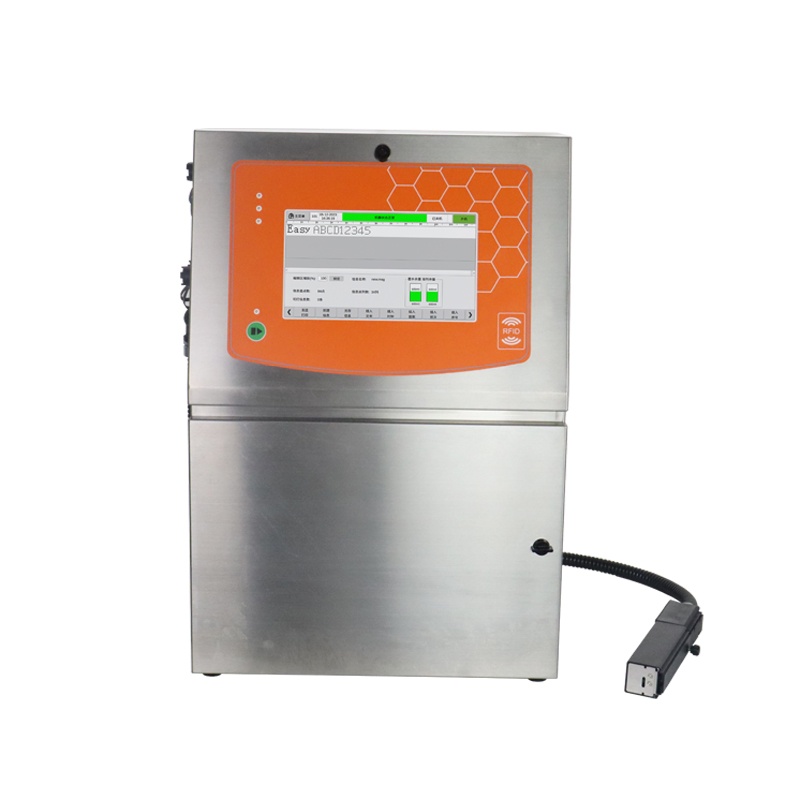
Small character inkjet printer
the build for a plant that already pushes its codes over a network:
- Prints up to 400 m/min
- Prints multilingual characters, variable QR codes, barcodes, dates and serial numbers
- USB/RS232/TCP/IP Network Interface connectivity
The three interfaces are why this unit suits a migration. A plant can start on USB with a copied file, move to RS232 when the line controller is ready, and reach TCP/IP without changing the cabinet.
Send One Job File, Not a Feature List
- Can the old layout be imported
- Often yes, and the only honest answer comes from running your file rather than reading a spec.
- Does the serial reset automatically
- It does when the rule is written down first, including the night-shift exception.
- Is every change logged
- Only if the log is switched on at commissioning, so put it in the acceptance test.
Send one job file, the serial rule in writing and how the date reaches the machine today. We will run it and return the field map, so the alternative to Shanghai Dixon you install is one that reads your existing data rather than one that needs it rebuilt.
Next Steps
- What the first week after a swap really tests: five commissioning checks.
- Start at the contact page, on +86 17625427465 or kuangcy@126.com. We reply within 24 hours.