Last Updated: 2026-09-17
One faded code on a carton can trigger a recall at the distribution center. A continuous inkjet printer factory that builds and tests its own CIJ systems prevents that gap. Five vet checks that separate a production-ready build from a brochure.
Overview
Continuous inkjet printing charges a steady stream of ink droplets and deflects the ones needed to form characters, sending the rest to a gutter for recirculation. The printhead never touches the product, so it marks at speed without stopping the conveyor. That non-contact distance is what makes CIJ the default for high-volume carton, bottle, and pipe coding lines.
A CIJ printer industrial line runs all day, so the factory behind it has to back the printhead, the ink, and the solvent as a matched set. When the head, ink, and make-up fluid come from different vendors, the recirculation loop clogs and the nozzle drifts, which is where most downtime starts. A factory that builds all three under one roof can tune the viscosity and the charge together.
But what does a vetting check list look like for a CIJ factory? The five below are what we run.
Applications
CIJ coding covers three high-volume jobs on production lines. Carton coding prints date, batch, and shift codes on corrugated outer cases at belt speed. Plastic container marking runs on bottles, caps, and jerry cans where the surface curves and the ink has to bond without flame treatment. Pipe and metal component coding carries specification and traceability text on round or flat profiles that see outdoor exposure.
Anti-counterfeiting work goes further. The printhead has to lay down dynamic barcodes and QR codes that stay scannable after distribution handling, and the ink has to resist transfer to the adjacent surface in the shrink-wrap tunnel. A factory that only tests on flat carton cannot confirm that performance on plastic or metal.
So which factory specs actually decide the result? The vet list below comes from our own line testing.
5 Vet Checks Before You Buy
Five checks we run before a CIJ system leaves the factory floor. Run them against any continuous inkjet printer factory you are evaluating.
| Check | What to Verify | Why It Matters |
|---|---|---|
| Print height range | 2-20mm covers single-line dates to multi-line QR codes | Too narrow and you need two heads for mixed content |
| Throw distance | 3-30mm gap for uneven or curved surfaces | Contact or near-contact printing smears on carton flaps |
| Power consumption | 150W rated power for low operating cost | High-draw units trip breakers on shared lines |
| Content range | Text, date, pattern, dynamic barcode and QR code | Date-only systems block serialization and traceability |
| Substrate reach | Carton, plastic, metal, wood, pipe | A factory testing only carton is a supply risk |
About SHICAI
SHICAI builds the printhead, the ink, and the solvent as one system and tests every CIJ unit on real carton and pipe before it ships. The factory follows ISO 9001 quality management processes, and the deflection and recirculation design is the same mechanism described in the public reference on inkjet printing. Buyers can send their own carton or container for a trial print, and the test result travels with the machine. Spares and support are organized for export markets.
The product below is the build we recommend for anti-counterfeiting and general carton lines.
Recommended Product
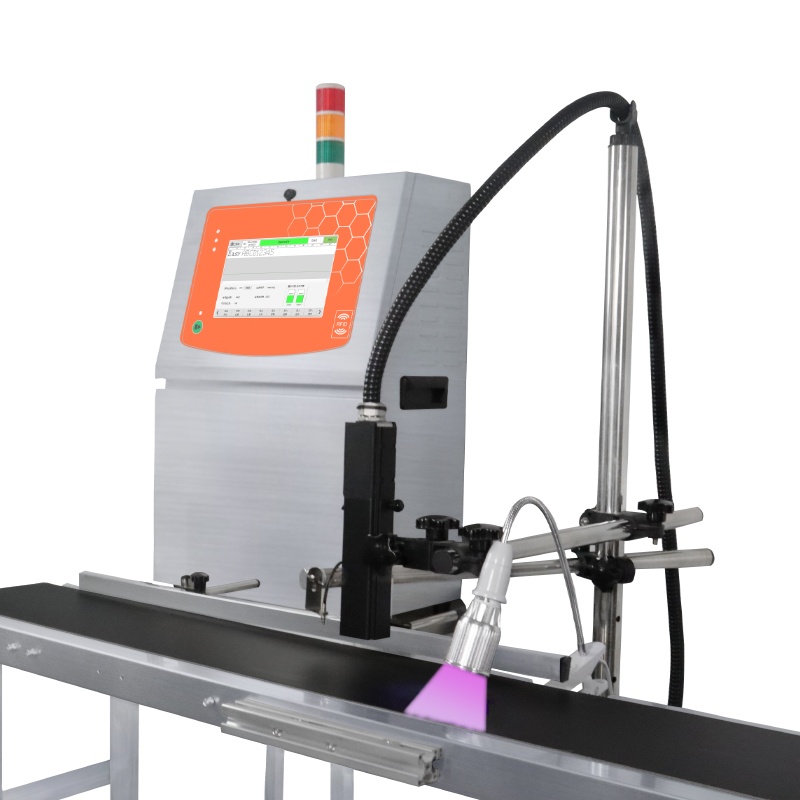
Anti counterfeiting small character inkjet printer
Prints text, date, pattern, dynamic barcode and QR code on carton, plastic, metal, wood and pipe.
- 2-20mm print height
- 3-30mm throw distance
- Low 150W rated power
Open the Anti counterfeiting small character inkjet printer page →
Questions
- What does a continuous inkjet printer factory build?
- A factory that designs and assembles the printhead, ink system, and control electronics as a matched set, then tests the unit on real substrates before shipment. The printhead, ink, and make-up fluid come from the same engineering team.
- What makes a CIJ printer industrial grade?
- An industrial CIJ printer runs at conveyor speed without contacting the product, marks a range of substrates from carton to metal, and recirculates ink through a sealed loop to keep the nozzle clear during long shifts.
Next Steps
- Open the Anti counterfeiting small character inkjet printer product page for full specs.
- Read our guide on 2026 marking machine pricing for budget planning.
- Send your carton or container and code content for a free sample print. We reply within 24 hours, no commitment required.