Last Updated: 2026-10-23
The continuous inkjet vs drop on demand decision is usually argued on print quality, and quality is the one axis where the two rarely differ enough to matter. What separates them is what happens between products: a continuous head keeps a stream running, a drop on demand head stops and waits.
Continuous Inkjet vs Drop on Demand: Two Ways to Fire
Everything that follows comes from that one difference. A continuous head breaks a pressurised jet into drops and deflects the unwanted ones into a gutter, so the stream never stops; a drop on demand head fires only when a pixel is needed. A stream that never stops needs ink that cannot dry in place, while a head that starts and stops can use whatever chemistry the surface allows.
Where Continuous and Drop on Demand Split
| Topic | Continuous build | Drop on demand build |
|---|---|---|
| Between products | Stream keeps running into the gutter | Head idles, no ink used |
| Ink chemistry | Solvent plus make-up fluid | Water-based, solvent or food grade |
| Print height in one pass | 2 to 20 mm on the small character build | Up to 71.8 mm on the wide piezo build |
| Speed | Up to 400 m/min | 1 to 100 m/min on the wide head |
| First mark after a stop | Purge and stabilise the stream | Purge the nozzles and print |
Read the second row carefully. A plant with no extraction and no solvent store is choosing a different maintenance regime as well as a different machine.
Runtime, Solvent and the Cost That Hides
A continuous head wins on long runs. Twelve hours of product at high speed is the case it was designed for, and make-up fluid per shift becomes a routine budget line. Where the line runs short batches with long gaps, the same design turns into a liability: the stream must be shut down, flushed and restarted, and each restart costs fluid and time.
A drop on demand head is happier with interruption. It can hold a job across a lunch break and stay idle for a week without a recovery procedure. The costs move to the cartridge or the ink bottle, and away from solvent handling and compressed air.
The Width You Cannot Add Later
Height is the second structural difference, and it is the one buyers regret. A small character continuous head prints a date, a batch and a short code inside a 20 mm band. A wide piezo head reaches 71.8 mm in one pass, which is what a logo above a date, or a block read from a distance, actually requires.
If a wide block is plausible within two years, that requirement should be priced at the start. A narrow head does not become wide, and the second machine sits beside the first rather than replacing it.
A Test That Fits in One Shift
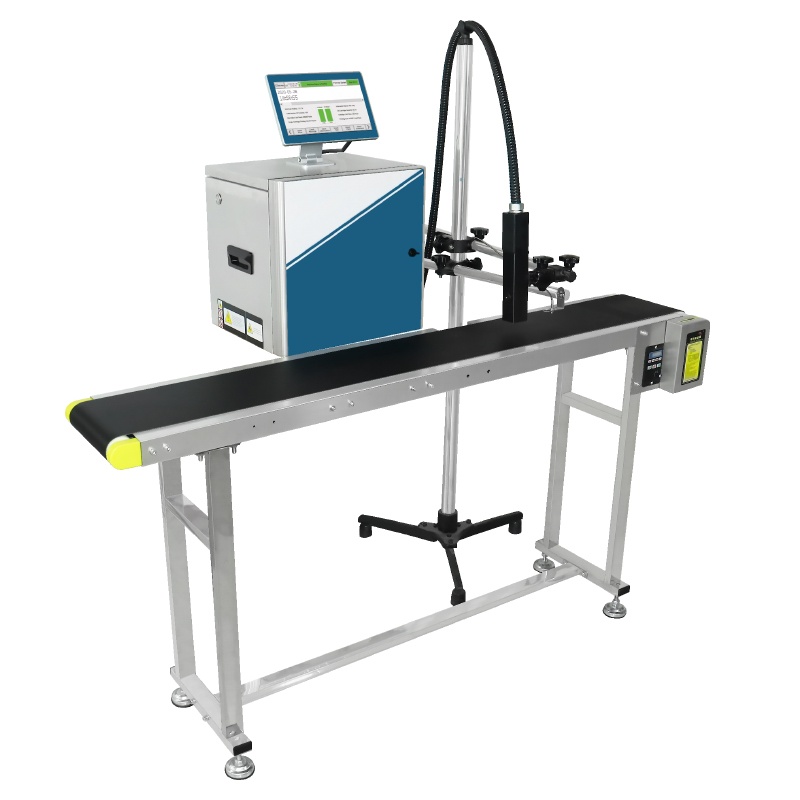
S1000 small character inkjet printer
the continuous side, built for line speed:
- Prints up to 400 Meters Per Minute
- 2-20mm print height
- 10.1-Inch Industrial Touchscreen
- 3-30mm throw distance
- Low 120W rated power
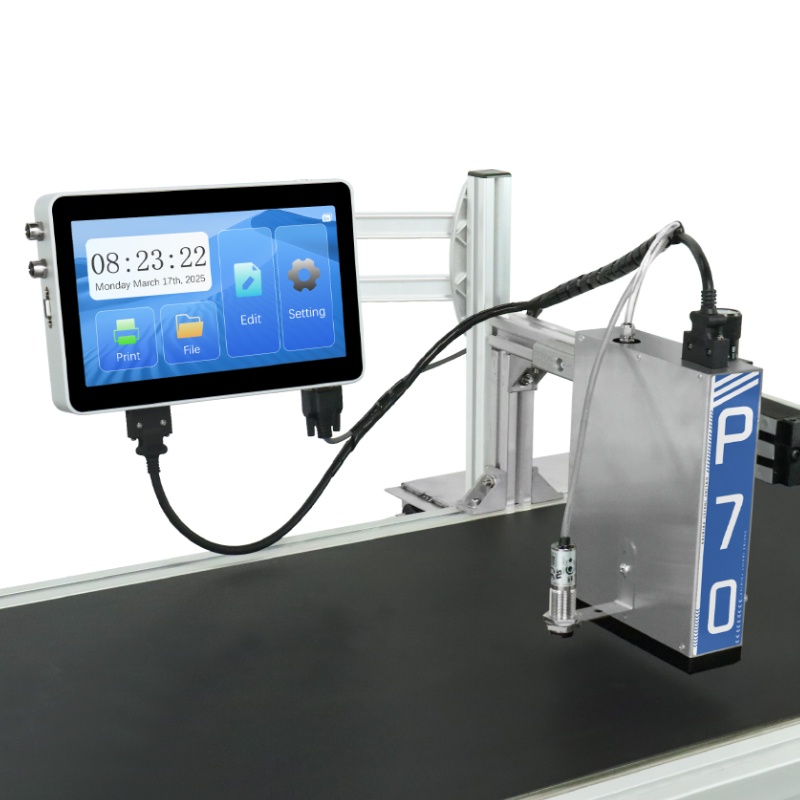
P70 Online inkjet printer
the drop on demand side, wide and stoppable:
- Print speed 1-100m/min
- 180dpi print accuracy
- 3-71.8mm print height
- 10 Inch Capacitive Touch Screen
- 2-15mm throw distance
Run both on your own product for one shift and record three things: the number of stops, the fluid consumed at each restart, and the first good mark after each stop. The continuous unit is quoted at 699 USD as a single head in the current list; the small character build is priced per configuration. Both follow the route described in the ISO 9001 quality management standard.
Selection Questions
- Which family suits a line that runs three shifts without stopping
- The continuous build, because a stream that never stops does not pay a restart cost per batch.
- Which one handles food packaging without solvent
- The drop on demand build, which can use a declared water-based or food-grade ink and needs no make-up fluid.
- Can both run on the same conveyor
- Yes, at different positions, and it is common where a wide block and a small character code are both required.
Send the Duty Cycle, Not the Brochure
Tell us the hours the line runs, the longest stop in a normal day and the widest block you expect within two years. We will answer the continuous inkjet vs drop on demand question against that duty rather than against a datasheet peak.
Next Steps
- Send the duty cycle and the widest message. We return a marked sample from each family and the restart cost per stop.
- Start at the contact page, on +86 17625427465 or kuangcy@126.com. We reply within 24 hours.