An egg inkjet printer earns its place in a packinghouse by doing one job well: it puts a traceable mark on individual eggs as they move along the grading line — farm code, date, grade, or brand. Egg coders use food-safe ink and a contact or low-pressure print that respects the curved, delicate shell. If you are in the market for one, the short answer is that most mid-size shops can buy a capable unit at or below $3099 for a base configuration, and the rest of this guide covers what to compare before you buy.
egg inkjet printer in 2026: what it really costs
Pricing depends on configuration, but SHICAI keeps a base unit at or below $3099 — a level most production lines can absorb without a separate capital request. The figure moves with the source, power rating, marking area, and automation, and volume buyers usually land lower. For the current quotation and export terms, contact our team — we price to your specification rather than to a list.
What to look for in an egg coder
Four specs decide whether an egg coder earns its keep. Food-safe ink is non-negotiable — the formulation must meet the food-safety expectations of your export market and dry fast on the shell without smudging. Curved-surface handling decides mark quality: the print head or rollers must follow the egg’s shape across the size range your grader handles. Speed and integration must match the grading line — codes should keep up with the conveyor without slowing it. Cleaning and hygiene matter in a packinghouse: easy wash-down and simple printhead care keep the line food-safe and running.
Keeping an egg coder running
Routine care is mostly prevention. Keep the print head and rollers clean — egg dust and shell fragments are the main enemies of a clean mark. Follow the food-safety cleaning routine the builder specifies, and use wash-down-safe materials around the line. Check ink freshness and expiry, because food-grade inks have a working life. A packinghouse coder that is easy to clean stays running through the season.
Where to buy an egg coder without regret
The cheapest invoice is rarely the cheapest machine. Experienced buyers watch what never shows up on a spec sheet: food-grade printheads and ink systems, spare parts and support six months after purchase, and whether the machine adapts to your line. Many buyers ask suppliers to confirm ISO 9001 quality management certification before signing. The real difference is service reach and how honestly a builder scopes your application before you pay, not the logo on the cabinet.
Where SHICAI fits
SHICAI builds industrial coding and marking equipment in China and builds egg-coding systems for packinghouses and grading lines. Factories in packaging, electronics, and automotive supply chains keep them on the floor because the machines hold calibration through long runs, support and spares are organized for overseas customers, and pricing reflects factory-direct sourcing. If you want a marker that keeps running and a supplier who answers when something drifts, that is the case SHICAI makes.
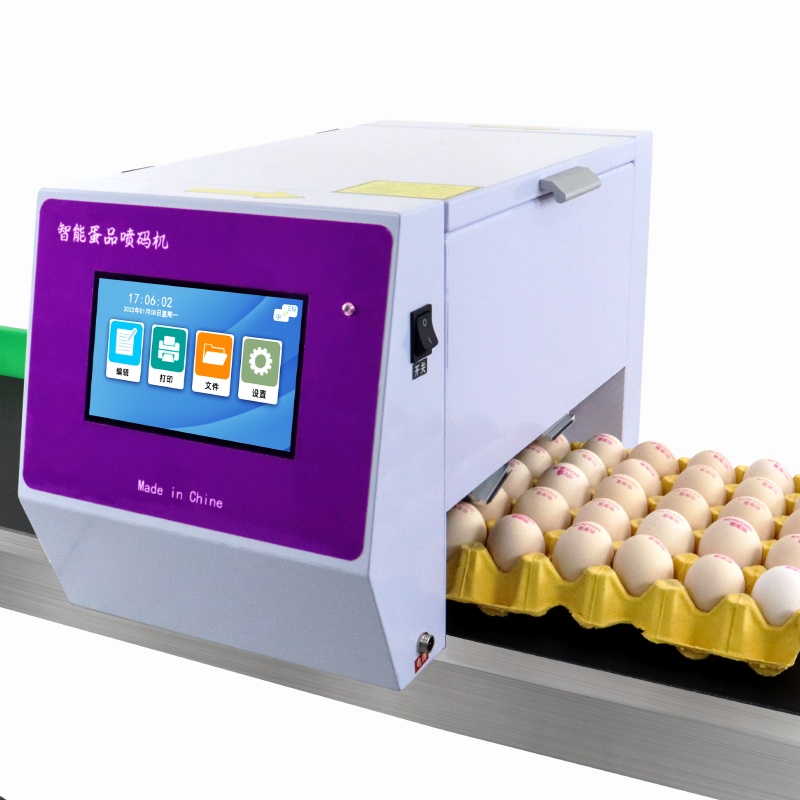
One model worth a look: Six head egg inkjet printer
If you want to see how SHICAI handles this application in practice, the Six head egg inkjet printer is one of the models built for it — engineered for steady production runs, with the calibration stability and overseas support we touched on above. It is a concrete example of the build approach described here. Every Six head unit ships with a 12-month warranty, a spare printhead stock, and remote setup guidance from the factory team.
Frequently asked questions
- What does an egg coder from SHICAI cost?
- A base egg coder from SHICAI is priced at or below $3099; the exact figure depends on configuration and volume, so ask the team for the latest quotation.
- Should I buy from an egg coder supplier or a local reseller?
- Both have their place. Buying from the supplier often lowers cost and speeds support, but a good local reseller earns their margin with on-site service.
- Is egg coding ink safe for food contact?
- Egg coding inks are formulated for indirect food contact and meet the food-safety expectations of major export markets; your packer can confirm the specific certificate for your region.