Published 2026-09-01 · Last Updated: 2026-09-01 · By the SHICAI technical team · Industrial marking & coding equipment guide
Choosing the right laser marking machine manufacturer matters more than picking a model off a catalog. The builder controls source quality, firmware reliability, spare-part availability, and the support that keeps your line running. This guide covers what to check before you commit to any supplier.
How to evaluate a laser marking machine manufacturer
The manufacturer earns trust through transparency, not spec sheets alone. Ask how long they have been building laser systems, which industries they serve, and whether they export to your region regularly. A builder with proven export history understands customs documentation, voltage matching, and after-sales logistics. For a technical overview of how these systems work, see laser engraving technology on Wikipedia.
The real filter is whether the manufacturer scopes your application before quoting. A serious builder asks for sample materials, tests them, and sends you photos before you pay. Builders who skip it often ship machines that underperform on the line. Four spec areas separate real builders from assemblers.
Specs that separate builders from assemblers
Four areas reveal whether you are dealing with a manufacturer or an assembler bolting parts together. The laser source is the heart: a rated industrial fiber source typically runs 100,000 hours or more, so ask for the brand and rated life, not just wattage. Power should match your parts: 20 watts suits light marking, 30 to 50 watts covers most metal and plastic work.
Marking area and galvo head quality decide flexibility as jobs change. Software matters more than buyers expect: a clean driver, common file imports, and batch controls turn a capable machine into a productive one. A real manufacturer develops or customizes the software, while assemblers ship whatever the controller vendor provides. Once specs check out, verification before signing is the next gate.
Verification checklist before you sign
Before committing to any supplier, run through these six checks and keep the answers in writing.
| Check | What to ask | Passing sign |
|---|---|---|
| Certification | Is ISO 9001 quality management certification current? | Certificate in date, not expired |
| Sample marks | Can they mark your actual material? | Samples legible under your inspection conditions |
| References | Three overseas references in your industry? | Named contacts that actually respond |
| Spare parts | Price and shipping time for lenses, windows, sources? | Quoted within one working day |
| Warranty | Coverage scope and claim handling abroad? | Written terms covering your region |
| Lead time | Delivery schedule confirmed in writing? | 10–15 working days for standard fiber models |
A builder that passes all six earns a closer look; how SHICAI measures up is next.
Where SHICAI fits
SHICAI builds industrial coding and marking equipment in China and runs a full laser line: fiber, CO₂, and UV systems for continuous production. As a manufacturer, SHICAI organizes spares, documentation, and remote support for overseas customers. Factories in packaging, electronics, and automotive supply chains keep these machines on the floor because they hold calibration through long runs.
If you want a marker that keeps running and a supplier who answers when something drifts, that is the case SHICAI makes. One model below shows the approach in practice, and the maintenance picture follows it.
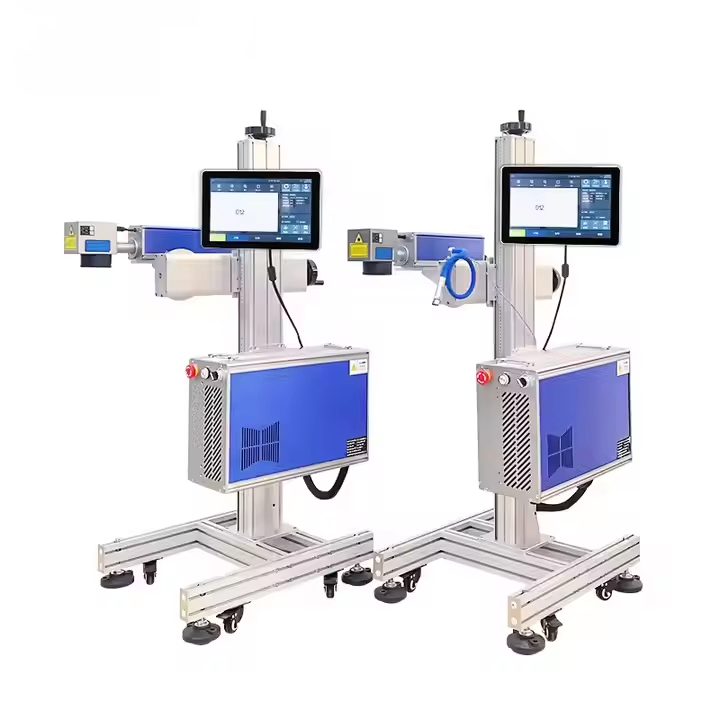
One model worth a look: G-20 Fiber laser inkjet printer
If you want to see how SHICAI handles this application in practice, the G-20 Fiber laser inkjet printer is built for steady production runs with calibration stability and overseas support.
Keeping a laser marker running
Routine care is mostly prevention: keep the lens and protective window clean, check focus weekly on daily-running machines, and keep spare lenses on the shelf. Stable power and ventilation prevent most intermittent faults. Ask for service intervals and parts lists before you buy. The questions buyers ask most at this stage are collected below.
Frequently asked questions
- How do I verify a laser marking machine manufacturer?
- Ask for ISO 9001 certification, request sample marks on your material, check export history, and confirm spare-parts availability for your region before placing an order.
- What is the typical lead time from a manufacturer?
- Most manufacturers ship standard fiber models within 10 to 15 working days; custom configurations take longer. Confirm the timeline in writing before you pay.
- How long does a fiber laser source last?
- A rated industrial fiber source is commonly specified for 100,000 hours or more, which works out to years of two-shift operation.
Next Steps
- See the G-20 Fiber laser inkjet printer for full specs and pricing.
- Read related solution guides for other coding and marking applications.
- Get a free sample mark on your material. No commitment, reply within 24 hours.