Last Updated: 2026-09-29
An alternative to Citronix for large character coding is judged on four demonstrations, not on a brochure: one-pass height on your pack, a stand-off that holds as the line bounces, an ink grade that survives the handling that follows, and a consumable route you can resupply. Height comes first because it is the one thing no software can change.
What Large Character Work Asks of a Supplier
Big marks are unforgiving of assumptions. Coverage is built by splicing print heads, so the height in millimeters decides the head count before anything else is specified. A taller mark also needs the head farther from the product, which widens how much conveyor movement the placement can absorb, and it lays down more ink, which lengthens the time before the pack can be stacked or wrapped.
Those three consequences arrive together, which is why a supplier who quotes from a model number rather than a measured block is guessing about two of them.
Four Proofs on Your Own Pack
| Proof | What it settles | SHICAI build that carries it |
|---|---|---|
| One-pass height | Whether the block fits without a second pass | S20-2 two-head frame prints 2-50.8mm; six-head S20-6 reaches 152.4 mm |
| Placement at speed | Whether codes land in position at your throughput | Online frames rated Prints up to 120m/min with a 2-5mm working gap |
| Adhesion on your surface | Whether the mark survives handling | Seven ink colors with grades chosen per substrate, confirmed on a sample |
| Reach of support | Whether a fault is a fix or a wait | Factory-direct wear-item list with written dispatch times, remote diagnostics where the line allows |
Ask for the first three inside a single sample run. The fourth is a document, and it is the one most often absent from a quotation.
Head Count Sets the Ceiling
Where the block has to exceed a single frame, height is bought with heads rather than settings. A four-head build covers 101.6 mm and a six-head build 152.4 mm, and both share the control platform of the smaller frames, so a line that starts narrow and later widens is a head change rather than a replacement. Where the product cannot be conveyed at all, the piezo-built P70 covers 3 to 71.8 mm with a 2 to 15 mm working gap, which suits irregular stock. The mechanics of droplet placement explain why that gap matters more as height grows.
Frames for This Duty
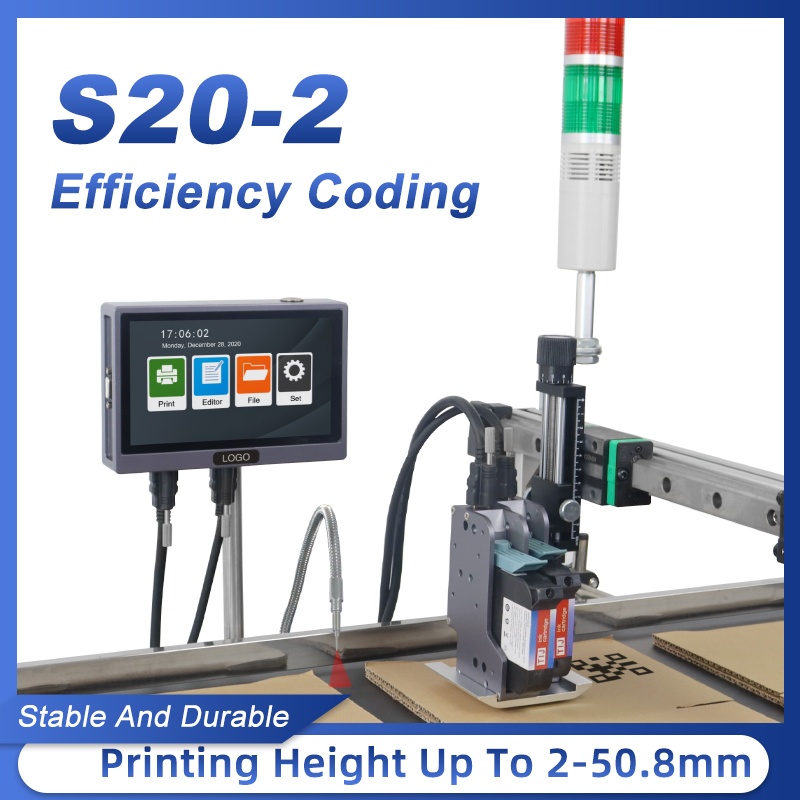
S20-2 online inkjet printer (splicing)
the entry to two-head coverage:
- Prints up to 120m/min
- 2-50.8mm print height
- Available in 7 ink colors
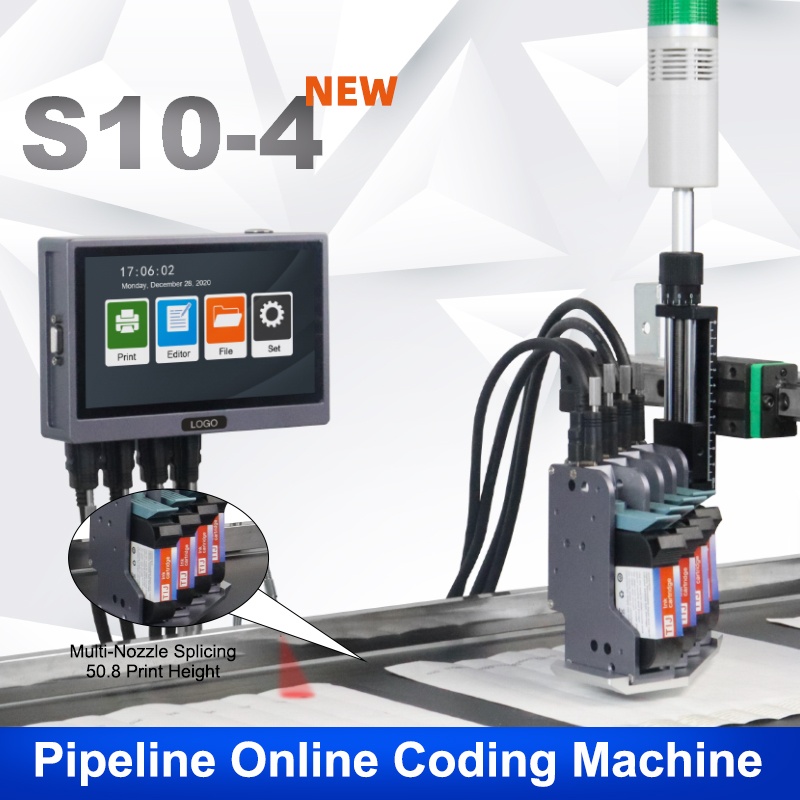
S10-4 online inkjet printer (splicing)
when the block also has to carry data:
- 2-50.8mm print height
- Prints Chinese, English, date, QR code and barcode
- Marks metal, plastic, pipe, foam and carton
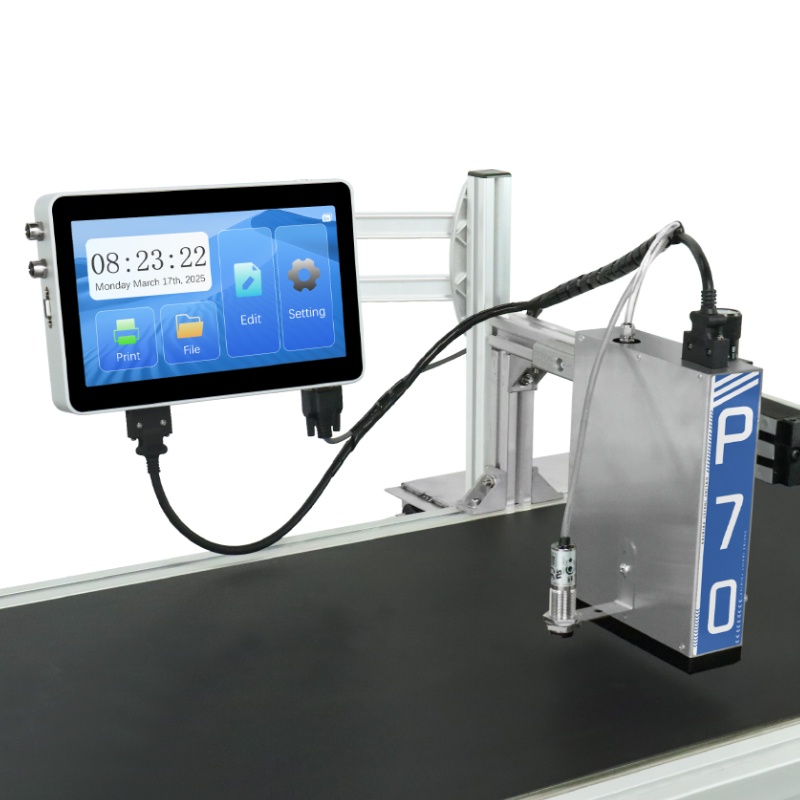
P70 Online inkjet printer
for product that cannot be conveyed:
- Print speed 1-100m/min
- 3-71.8mm print height
- 2-15mm throw distance
All three mount over an existing conveyor and fire from the sensor already on the line, so the change is a head, controller and ink supply rather than a rebuilt line. Builds run under ISO 9001 quality management, which is the record that lets a buyer compare two suppliers on the same dimensions. Both established suppliers and factory-direct builders serve this duty; what differs is how the machine reaches your floor and who answers when it stops, which is why the four proofs above are worth the time.
Switching questions
- What must an alternative to Citronix demonstrate first?
- The height you actually need, printed in one pass on your pack. Coverage comes from head count, so a two-head frame tops out at 50.8 mm and a six-head frame at 152.4 mm; no software setting closes that gap.
- Is nozzle-free the same as low maintenance?
- They are different claims. Nozzle-free means the head has no orifice to dry out after a stop. Low maintenance depends on the ink system, the cleaning routine and how far the head sits from the product. Ask which one is being offered and what it costs in consumables.
- Will a large character mark survive the handling?
- That is an ink question, not a head question. Porous corrugated takes a water-based grade quickly, while coated board, pipe and film hold the droplet on top and need a grade matched to them plus a drying window before the next handling step.
Where to start
Send the pack, the block height in millimeters and the throughput. We return the head count that covers it in one pass, the matching ink grade and a written wear-item list, and we say plainly if staying where you are is the better answer. Two earlier notes apply the same method: five checks before switching a large character coder and what the installed cost hides. Send the sheet through our contact page and we mark a sample panel on the surface you actually run, free of charge, then tell you what it costs in consumables before you commit to anything.