Last Updated: 2026-10-08
A handheld inkjet printer for metal answers the marks a fixed line cannot reach: a repair code on a pipe already in the yard, a heat number on a steel section loaded for dispatch, a serial on a casting too big for a conveyor. Portability is the point, and ink adhesion is the job to prove.
Why Metal Breaks the Rules a Carton Line Follows
Metal is not porous. Board drinks ink and holds it; steel, aluminium and galvanised sheet push it back, so a handheld inkjet printer for metal stands or fails on how the surface was prepared and how the drop was placed. That single fact reorders every decision downstream, from ink grade to print height to how hard the operator presses the unit against the part.
Three conditions make metal harder than most substrates. Mill scale and cutting oil left by machining stop an ink from wetting the surface, so a mark that looks clean at the bench can flake off a day later. A curved pipe or a boxed profile changes the head-to-surface gap mid-stroke, which is why throw distance matters more here than on a flat carton. And cold steel brought into a warm hall carries condensation, so a grade chosen in a dry test room may bead on site.
The routine behind a mark that lasts is standard surface preparation: degrease, dry, then mark, in that order. Skipping the first step is the most common reason a code that passed a bench test fails in the field.
None of that is a reason to avoid inkjet on metal. It is a reason to specify the mark against the surface it will actually sit on, rather than against a clean sample plate.
The Marks a Handheld Inkjet Printer for Metal Covers
A handheld unit earns its place wherever the part cannot come to a line, or where the batch is one or two pieces. Four jobs cover most of it.
- Repair and rework codes in the yard. A part already painted, assembled or stacked needs a fresh serial or a rework stamp, and bringing it back to a station costs more than the mark is worth. A large-character build such as the AL16 Large character inkjet printer handles these blocks on pallets and woven bags as easily as on plate.
- Heat numbers, batch codes and serials on heavy parts. Castings, forgings and machined housings are often too big or too heavy for a conveyor. The M100 Handheld inkjet printer covers large characters at 600 dpi, so a long traceability string still reads at arm’s length.
- Pipes, profiles and cable drums. Long stock has no flat reference edge, so the head follows the part instead of the other way round. Short strings work best, and a compact body that reaches into a rack matters more than raw resolution.
- Field service and rental fleets. A service engineer marking a replacement part on site needs a unit that runs a full shift on one charge and survives a toolbox, which is a durability question before it is a print question.
Common to all four is variable data. A fixed mark can be stamped or moulded; it is the serial, the date and the heat number that change per part, and that is exactly what an inkjet head is built to print from a stored job.
Handheld Inkjet versus Laser on Metal
Laser is the first technology most buyers think of on metal, and for a good reason: the mark it leaves is permanent and never rubs off. The trade is flexibility. A laser needs a fixture or a controlled stand-off, a clear line of sight and a safe enclosure, so it suits volume production of identical parts rather than one-off marks in a yard.
| Question | Handheld inkjet | Laser marking |
|---|---|---|
| Where the mark is made | On the part, wherever it sits | At a fixture or a stand |
| Setup per job | Load the string on the panel | Program a file and align the part |
| Best fit | Repair codes, field marks, low volume | Serial runs of identical parts |
| Durability of the mark | Depends on ink and surface prep | Permanent in the surface |
| Colour | Light or dark ink on contrast | Contrast from the metal itself |
The two are complements, not rivals. A plant that marks thousands of the same bracket usually runs a laser, and still keeps one MX3-G Handheld Inkjet Printer on the bench for the parts that never reach the stand.
The Builds that Cover Metal Work
Handheld units separate by print height and by weight, and on metal the split matters more than the model name. For a handheld inkjet printer for metal, the first question is how big the block must be, and the second is how long an operator has to hold the unit steady against a part that may not sit flat. Those two answers, not the badge on the shell, decide whether a portable inkjet printer is the right tool for the job.
- Compact shells for short codes on brackets and fittings, light enough to reach into a rack.
- Large-character units for shipping marks and pallet panels, where a block spans several centimeters at once.
- Mid-size builds that trade some weight for a bigger screen and more stored jobs, which helps when a yard marks several product families in a week.
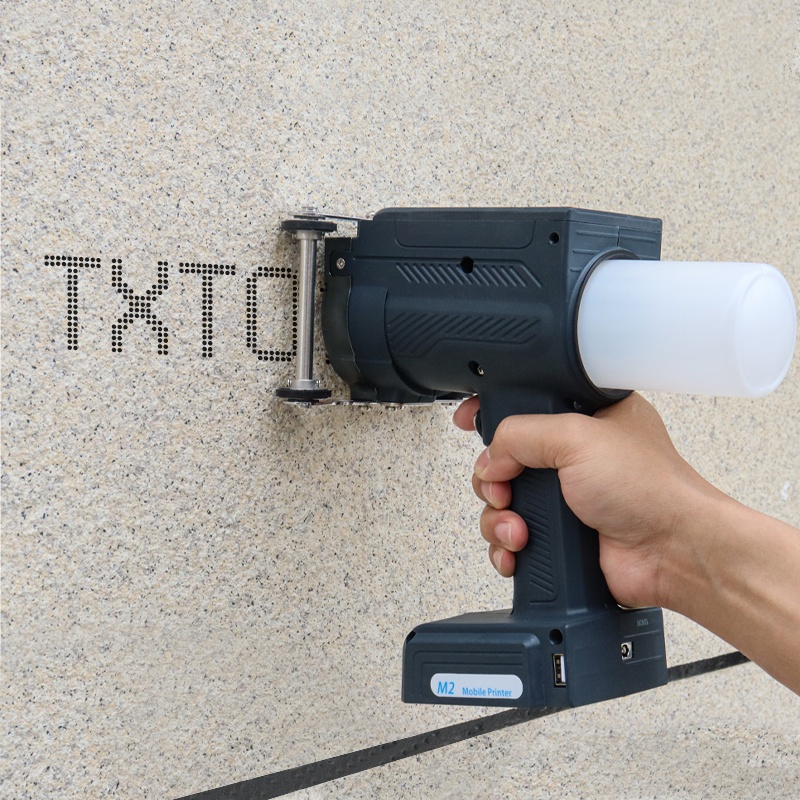
AL16 Large character inkjet printer
for shipping marks and blocks on heavy plate:
- 25-60mm print height
- Weighs only 1.6 kg
- Built-in air pump ink supply
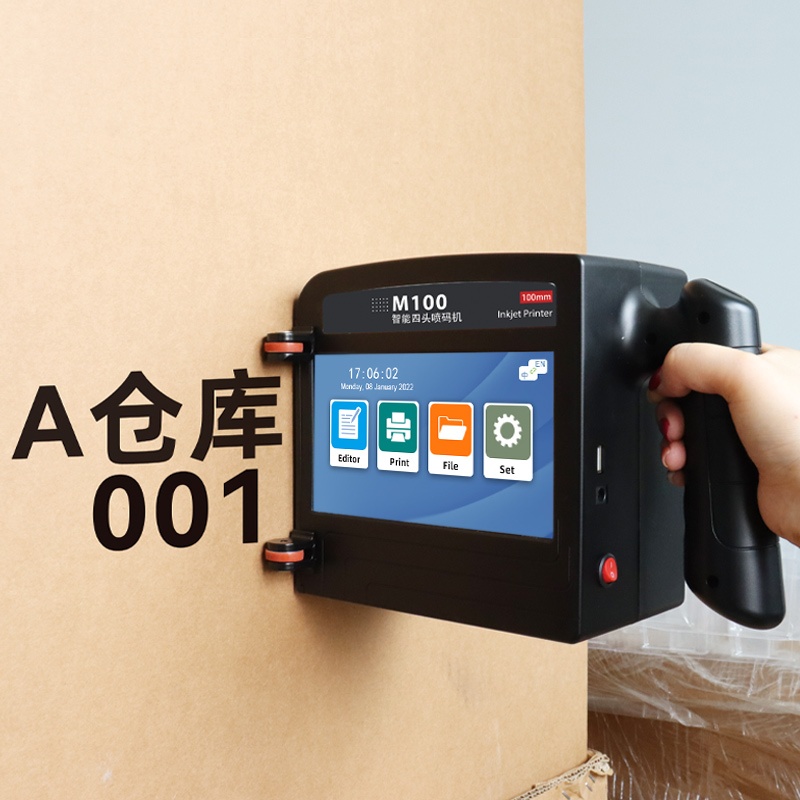
M100 Handheld inkjet printer
for long traceability strings at arm’s length:
- 2-100 mm print height for large characters
- 600 dpi print accuracy
- 2500 mAh battery for full-shift runtime
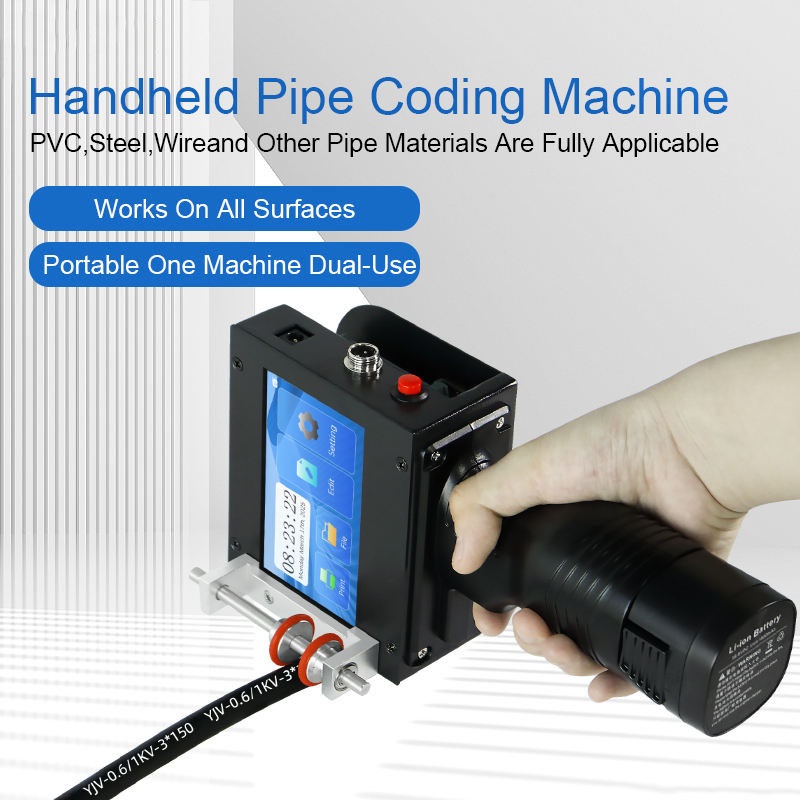
MX3-G Handheld Inkjet Printer
for mid-size work across several families:
- 600dpi print accuracy
- 2-12.7mm print height
- Available in 7 ink colors
A broader choice of mid-size and adjustable-height builds, such as the M10 Handheld Inkjet Printer, the M20 Handheld Inkjet Printer and the Y50 Handheld inkjet printer, covers the rest of the range. Each build is specified from the part rather than a catalogue, and a grade is approved against a real surface under ISO 9001 quality management before it ships.
Coding Questions for Metal Work
- Will an inkjet mark rub off a metal part?
- Not if the grade matches the surface. Degreased steel and a solvent or UV grade hold well; oily or scaled steel needs the surface wiped first, and the same ink will fail if it is not.
- Can one handheld unit mark metal and carton on the same day?
- Often yes. A multi-colour unit such as the MX3-G carries a different cartridge per substrate, so switching between a steel plate and a carton is a cartridge change and a stored job, not a second machine.
- How do I test a mark before a full order?
- Send or bring a sample of the actual finished part, scale and finish included. A mark checked on clean bench stock does not predict how the same grade behaves on a production surface.
Next Steps for a Metal Marking Job
- Read next: six checks to run on a handheld factory before you pay, and how a thermal inkjet print head forms each drop.
- See the builds: AL16 Large character inkjet printer for blocks, or the M100 Handheld inkjet printer for full-shift field work.
- Talk to the factory: send your finished part and code through our contact page. We answer within 24 hours with the grade and build that hold on your surface, no commitment.