Published 2026-09-14 · Last updated: 2026-09-14 · SHICAI technical team
A smudged date code can hold a whole pallet at the gate. An inkjet printer for bottles prints the date, batch or lot number onto the cap, label or shoulder while the bottle travels on the conveyor, without touching the glass, the plastic or the contents.
The Short Answer
A thermal inkjet head sits a few millimetres above the line, fires on a trigger signal, and the controller keeps the code length constant as the conveyor changes speed. Nothing presses on the bottle, so a light PET container cannot be crushed and a fresh label cannot be smeared.
The specification is set by the bottle rather than the printer: material, the flattest panel available, the drying time before packing, and whether the code has to survive a cold chain.
How the Print Reaches the Bottle
The head is mounted 2-5 mm from the surface, so a curved container needs a well-chosen print position. Caps and label panels hold that gap across the full character height; a shoulder falls away, so only a short code sits safely there.
Ink is the second variable. A fast-drying formulation suits a line that packs a second later; a water-based formulation is the usual starting point where the filler area must stay clean.
Five Checks Before You Specify
- Material and finish. Glass, PET, HDPE and coated labels behave differently; send two bottles so the test covers your surfaces.
- Print position and height. Decide cap or label panel, then measure the tallest mark, because height sets the head count.
- Line speed. Quote the fastest sustained speed and the code you need at that speed.
- Handling after printing. The seconds between the head and packing decide how fast the ink must dry.
- Life after filling. Condensation, chilling and a wet shelf attack a code; say what the bottle goes through.
| What to send us | Why it changes the answer |
|---|---|
| Two sample bottles | Proves the ink bonds to your surface |
| Code content and height | Sets head count and print position |
| Fastest line speed | Sets the practical speed ceiling |
| Packing step after printing | Sets the drying window for the ink |
About SHICAI
SHICAI builds coding equipment in China and supplies beverage and filling lines overseas that print on caps and labels every shift. Machines ship factory-direct with spares and support for export markets, and the build is confirmed against ISO 9001 quality management certification on request.
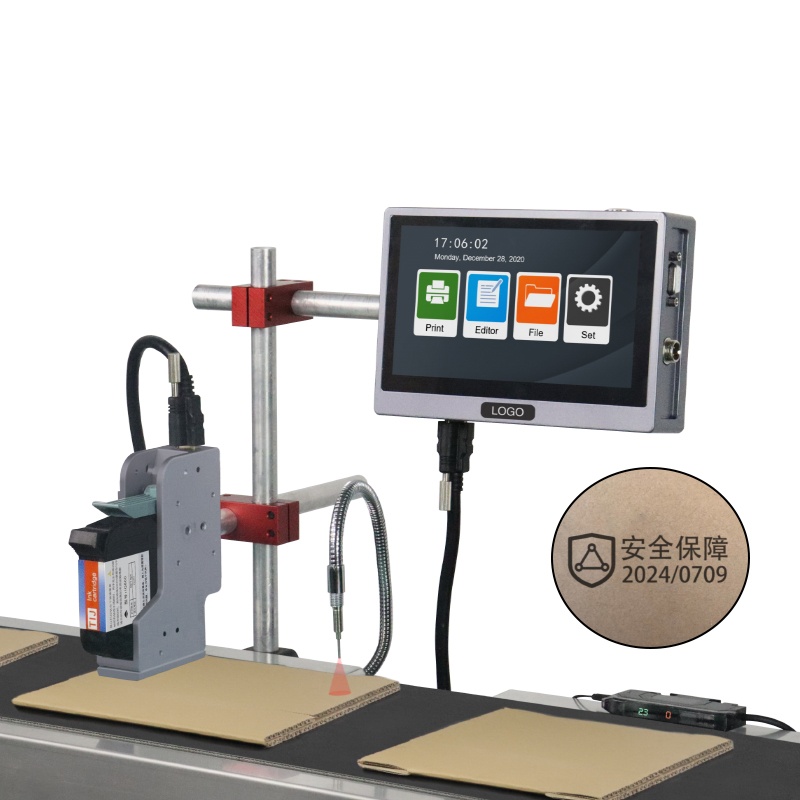
K20 online inkjet printer
A single-head frame for cap and label printing: 600dpi output at up to 120 m/min with a 2-25.4mm print height.
For the wider picture on variable data, see what a batch code printing machine is used for.
- Prints up to 120m/min
- 600dpi HD print accuracy
- 2-25.4mm print height
Related Questions
- Can an inkjet printer for bottles print on glass and PET?
- Yes, both take a thermal inkjet code when the right ink is matched to the surface, and glass usually needs a faster-drying formulation than PET. Send a sample bottle and we will print it before you order.
- Where on a bottle should the code be printed?
- Most lines print on the cap or the label panel, because both present a flatter surface to the head. The shoulder curves away from the nozzle, so it is used only where the code is short.
- Do bottle codes need to survive condensation and chilling?
- That depends on your supply chain, so say so when you specify. Ink choice decides whether a code survives a cold chain and a wet bottle, and it is the first question to settle.
Next Steps
- Read the coding machine price guide if you are still building a budget.
- Send two sample bottles, the code content and your fastest line speed to kuangcy@126.com or +86 17625427465. Sample printing is free, no commitment is needed, and we reply within 24 hours.
The physics behind the method is summarised on the public reference for inkjet printing.
Need help choosing the right printer?
Talk to our engineers for a free production-line assessment and quotation.
Request a Quote