Last Updated: 2026-10-16
A copied code costs more than a missing one, because it is believed. A 2D code printer earns its place on three things a copier cannot follow: the pattern inside the code, where it sits on the pack, and what the scanner does with it.
Why a QR Code Inkjet Printer Is Judged After the Scan
Printing the code is the easy half. A 2D code carries far more characters than a printed batch number: a serial number, a date and a production cell ride in the same small square.
Copying it is harder than it looks, and the reason is physical. A code laid down by an inkjet head places its dots a little differently on every pack, and a scanner set up to read that natural variation rejects a photocopy that reproduces every dot perfectly. A code printed small enough that the dot spacing carries information cannot be copied at all, as the background on how a QR code stores data sets out.
Three Places a Copied Code Hurts
Each asks for a different setting:
- Consumer goods. A case carrying a working serial number makes a grey-market return possible, and the brand pays at the counter.
- Spare parts and aftermarket. A cloned code turns a rejected part into a warrantable one.
- Promotional and warranty claims. Where a unique code unlocks a rebate, a duplicate is the fraud that shows up first.
Five Rules for a 2D Code Printer Build
Each is cheaper to settle on a sample than on a running pack.
| Rule | What to fix | Why it decides whether the code holds |
|---|---|---|
| Code size | 2 to 20 mm, set by the smallest pack you run | A dense code shrinks the dot pitch below what a basic scanner resolves |
| Throw distance | 3 to 30 mm from head to pack | A pack that flexes moves out of range and the code degrades |
| Contrast | Dark ink on light board, or the reverse, tested on the pack | A code with no contrast fails before anyone tries to copy it |
| Serial control | One code range per shift, recorded before the run starts | A duplicated range cannot be told from an original afterwards |
| Placement and power | A 150W unit that needs no separate cabinet | Where the head can stand decides which faces can be marked |
Settle those five and the code becomes something a brand owner can audit.
What SHICAI Proves on a Sample
The installations behind this page share one habit: a 2D code printer is tested on the real pack before the order is placed. A code that reads on a bench can fail on a coated carton, and the difference only surfaces under a scanner.
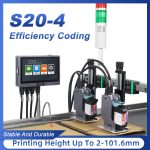
So the 2D code printer below is set against your pack. It holds a 2-20 mm print height across a 3-30 mm throw distance, prints text, dates, patterns, dynamic barcodes and QR codes, marks carton, plastic, metal, wood and pipe, and runs on a low 150W rated power. The pattern and the dynamic code are the anti-counterfeiting half of the job. A record kept for ISO 9001 quality management is what a brand owner points at when a claim is challenged, and that record only holds if the codes are unique.
Verification Questions
- Does a 2D code need a different scanner?
- Usually not. Most handheld and fixed scanners read a 2D code already; what changes is the setup, because a dense code needs a steadier read than one barcode line.
- Why print the code on the pack instead of a label?
- A label can be moved to another pack intact. A mark applied to the carton or drum stays with the item it was put on.
- Can the same code range be reused next month?
- Not if the code is meant to be traceable. Reserve a range per shift and record it, or a duplicate cannot be told from an original later.
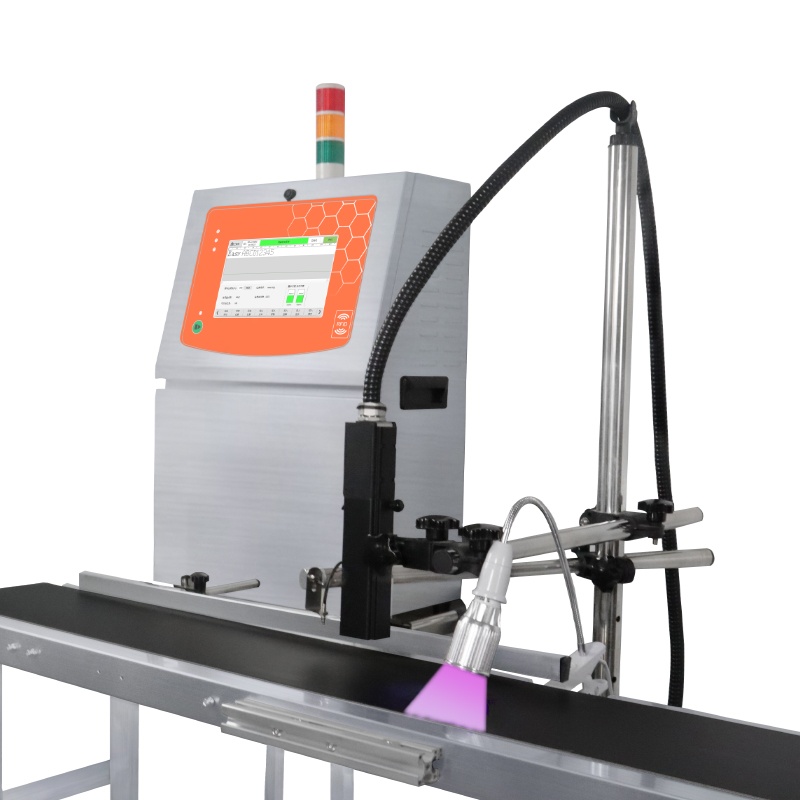
Anti counterfeiting small character inkjet printer
a printer for codes that have to be provable:
- 2-20mm print height
- 3-30mm throw distance
- Prints text, date, pattern, dynamic barcode and QR code
- Marks carton, plastic, metal, wood and pipe
Send One Pack for a Proof
- See the printer: Anti counterfeiting small character inkjet printer
- Read next: the unique-code checks from the QR side
- Talk to us: send one pack and the code you intend to use through our contact page. We return the scan result and a free quote.