Last Updated: 2026-09-29
A batch code nobody can read at two meters is a label problem in disguise. A handheld batch code printer is chosen from the block backwards: which fields have to appear, how tall they must stand, and whether one pass can carry all of it on your surface.
Why a Handheld Batch Code Printer Is Chosen From the Block
Height is the constraint that ends these conversations. A single pass of text at 12.7 mm is ordinary; the same pass at 25.4 mm needs a wider nozzle row, more ink, and a steadier hand. Ask a supplier for a machine before stating the block and the quotation that follows is a guess dressed as a specification.
Data is the second constraint. A batch block that has to change per pack is a different job from one printed from a saved template, and the difference sits in the controller rather than the head. How inkjet printing forms and places droplets is the reason height and rate trade against each other on a portable pass.
Where a Portable Batch Mark Is Used
Reuse is the common one. Crates and drums come back from a customer with a lot code that no longer matches what is inside them, and a fixed line cannot reach them. Then there is overflow stock marked after the fact, goods received short of the code a retailer now requires, and job lots produced between runs where an inline changeover would cost more than the printing.
Five Fields That Must Fit
| Field | Why it is in the block | Y3 capability |
|---|---|---|
| Lot or batch number | Isolates the affected production group | Prints text, QR code, GS1, serial number and logo |
| Production or best-before date | Anchors the group in time | 2-25.4mm print height |
| Line or shift | Narrows a fault to one crew | Available in 7 ink colors |
| Product code | Ties the trace to a saleable item | 4.3-inch Touch Screen |
| Working gap | Keeps placement on an uneven face | 2-5mm throw distance |
Lay the block out on graph paper first and measure what it needs, including the quiet space around any symbol and the distance the code is read at. Compare the result with a second shift on the same pack, because a block that fits on the bench often stops fitting once the ink has warmed and the operator has tired. That drawing, not a model number, is what a ISO 9001 quality management process should be asked to verify.
How SHICAI Approaches It
SHICAI builds portable and inline coding equipment for export markets. A handheld batch code printer is specified from a sample of your own pack: the fields are printed, measured at reading distance, then checked after the handling the pack will actually meet. Where the fields grow past a portable pass, the same block moves to an inline frame without being redesigned.
Batch block questions
- What goes in a batch block?
- Usually five things: the lot or batch number, the production date, the line or shift, the product code and, where shelf life applies, a best-before date. Anything less and a trace stops short of the group that caused the complaint.
- How tall does a handheld mark need to be?
- Taller than most people expect on shipped goods. A block read at a loading bay is not a block read at a bench, which is why 2 to 25.4 mm of height matters more than the number of fonts available.
- Can the same unit print codes and text?
- Yes. A portable head prints text, symbols and serials in one pass, so the human-readable line and the scannable data stay in one agreed layout instead of two operations that can disagree.
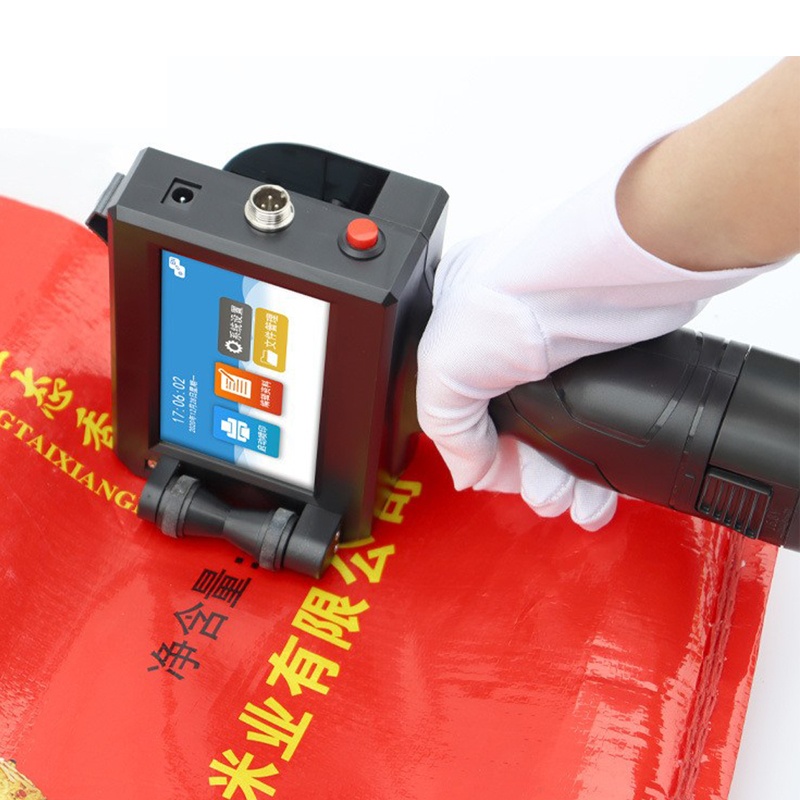
Y3 Handheld inkjet printer
the portable build for a full block:
- 2-25.4mm print height
- Prints text, QR code, GS1, serial number and logo
- Available in 7 ink colors
What to do next
- See the product: Y3 Handheld inkjet printer
- Read next: the five things a batch code must carry, and how an online coder differs.
- Talk to us: send the pack and the block through our contact page for a free print check, reply within 24 hours.