Last Updated: 2026-11-16
A code that repeats on every pack is a printed label, not a defence. A small character inkjet printer that changes the serial on each item, and drops a pattern behind it, is the cheapest layer of anti-counterfeiting a line can add.
Why a Static Code Cannot Be Anti-Counterfeit
A batch number and a date tell the buyer nothing they cannot copy. Once one carton has been photographed, the same eight characters can be printed on a thousand boxes by anyone with a cheap coder.
Anti-counterfeiting starts when the code differs on every item, and that is a data problem before a printing one. The coder prints what it is given, so the scheme exists upstream.
Rule 1: Change the Code on Every Item
A dynamic barcode or QR code carries a serial that increments per pack, which makes duplication a per-unit cost rather than a one-off. That is the whole economic argument, and it needs no database to work.
Check that the print head takes the serial from a file or a live feed. A coder that only counts internally restarts at one after a power cycle, and a repeated serial can undo the scheme on its own.
Rule 2: The Pattern Is a Second Layer
A pattern behind the readable code raises the cost of copying again, because a scanner and a phone camera see different things. It also covers the case where a counterfeiter copied the serial correctly.
Ask for a sample printed with the pattern at the size you intend to sell, then photograph it with a phone. If the pattern disappears at normal light, it carries no weight on the pack.
Rule 3: Print Speed Has to Keep Up With the Serial
A serial that arrives slower than the line beats the whole scheme. The controller has to fetch the next number while the previous pack is still moving, and that is a buffer question rather than a print resolution question.
Test at the real rate, not on the bench. Print two thousand numbers at line speed and check for gaps, repeats and skipped packs before acceptance.
Rule 4: Verification Has to Happen Somewhere
A code nobody checks is decoration. The verification step can be a handheld scanner at despatch, a camera on the line, or the customer with a phone, and each of those has a different failure mode.
Decide which one you promise before the machine ships, because the wording on the pack depends on it. Tamper evidence without a check is how brands end up explaining a recall.
Where the Small Character Inkjet Printer Stops
The printer marks the item. It does not host the serial database, it does not authenticate a code on the internet, and it does not decide whether a returned unit is genuine.
Those are your system or your partner software. Being clear about the boundary matters, because a supplier who promises the whole chain is describing software they do not write.
The Build We Quote for Variable-Data Work
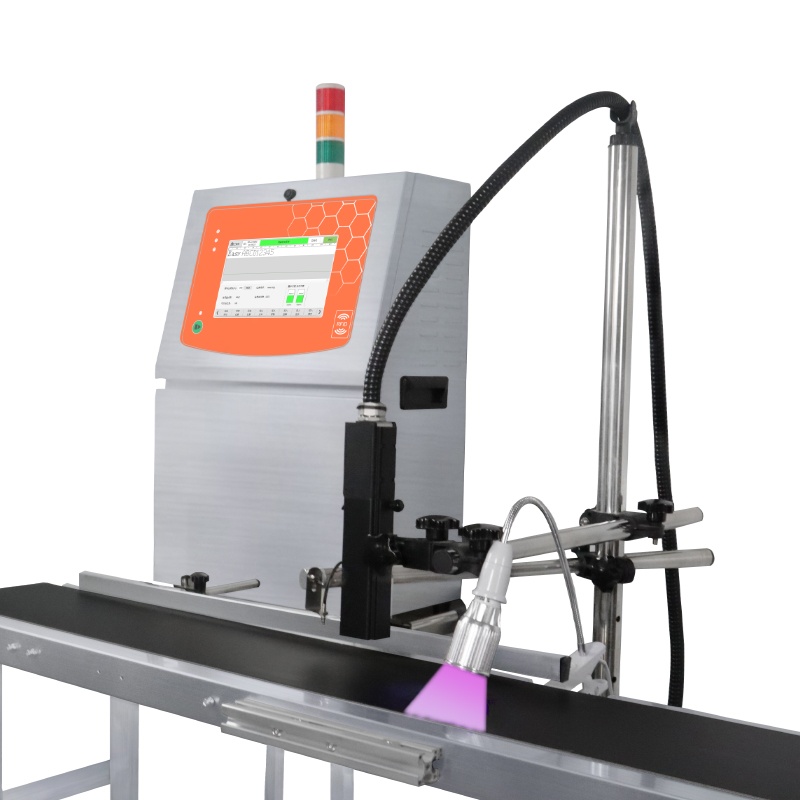
Anti counterfeiting small character inkjet printer
the build for a code that changes on every item:
- 2-20mm print height
- 3-30mm throw distance
- Prints text, date, pattern, dynamic barcode and QR code
- Marks carton, plastic, metal, wood and pipe
- Low 150W rated power
The twenty millimetre print height carries a two-line code with the pattern below it, which is what the four rules above ask for.
Send the Code Scheme, Not the Slogan
- Does the serial need a database to work
- No. A changing number raises the cost of copying on its own. A database adds authentication, and that is a separate system.
- Can the pattern be read by a phone
- Only if it was designed for that. Ask for a sample at final print size and test with the customer camera.
- What happens if a serial is skipped
- The sequence breaks and the pack becomes hard to defend. Test the buffer at line speed before acceptance rather than after.
Send the code scheme, the serial source and the line rate. We return the print window and the interface type, so the small character inkjet printer you order prints the scheme instead of printing around it.
For the readable side of the code, our note on four checks for unique code printing covers scan testing. The marking itself sits under QR code, and export builds are checked against ISO 9001.
Next Steps
- Choosing the CIJ build itself: buying without overpaying.
- Start at the contact page, on +86 17625427465 or kuangcy@126.com. We reply within 24 hours.