Last Updated: 2026-11-13
Six heads do not print twice as fast as three on the same belt. A multi-head inkjet printer multiplies width rather than speed, and most lines that buy too many heads end up using a fraction of the print area they paid for.
What a Multi-Head Inkjet Printer Multiplies
The unit of a head is 12.7 millimetres. Two heads give 25.4, four give 50.8, six give 76.2, and the arithmetic is exact enough to plan a carton layout around before the machine is ordered.
The question is never how many heads. It is how many millimetres the pack needs, and a carton carrying one date line wastes three of them at 50.8.
S10-2: 25.4 mm Across Two Heads
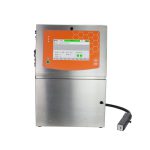
Two heads cover a date line and a batch code side by side, which is what most cartons carry. The standalone frame suits a line where the head is fitted once and left alone.
It prints Chinese, English, date and QR code in seven ink colours. Barcode is where it stops, so a pack needing a scannable code starts one model up rather than adding a second device.
S10-4: 50.8 mm, and Both Mountings
Four heads double the width to 50.8 millimetres and add the barcode the two-head build leaves out. That is the jump most buyers end up making, and it is one model rather than two separate decisions.
It ships standalone or spliced, and both print date, QR code and barcode on metal, plastic, pipe, foam and carton. The body is industrial grade aluminium or stainless steel, which matters on a wash-down line.
S10-6: 76.2 mm Across Six Heads
Six heads reach 76.2 millimetres, enough for a shipping mark block, not a code. The build is spliced only, so it assumes a frame long enough to carry three times the width of a single head.
Buy it for the panel, not for the speed. A line that prints one line of text and buys six heads has paid for four heads of white space that no operator will ever use.
Standalone Frame or Spliced Frame
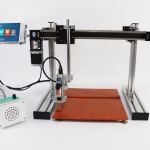
A standalone frame arrives assembled, with its own mounting point and sensor bracket. A spliced frame bolts onto an existing line and adds print width without moving the conveyor or rebuilding the guard.
The spliced route is cheaper when the line already exists. It is the wrong choice on a new line, because the frame is then designed around a coder nobody has chosen yet.
Head Count Against Belt Speed
A wide print window and a fast belt fight each other. Six heads at ninety metres a minute need a longer window than the same heads at thirty, and the trigger fires later to hold the code in place.
So quote line speed at the marking point with the head count, never after. A machine right at thirty goes thin at ninety, and the fix is resolution rather than another head.
The Unit Most Lines Land On
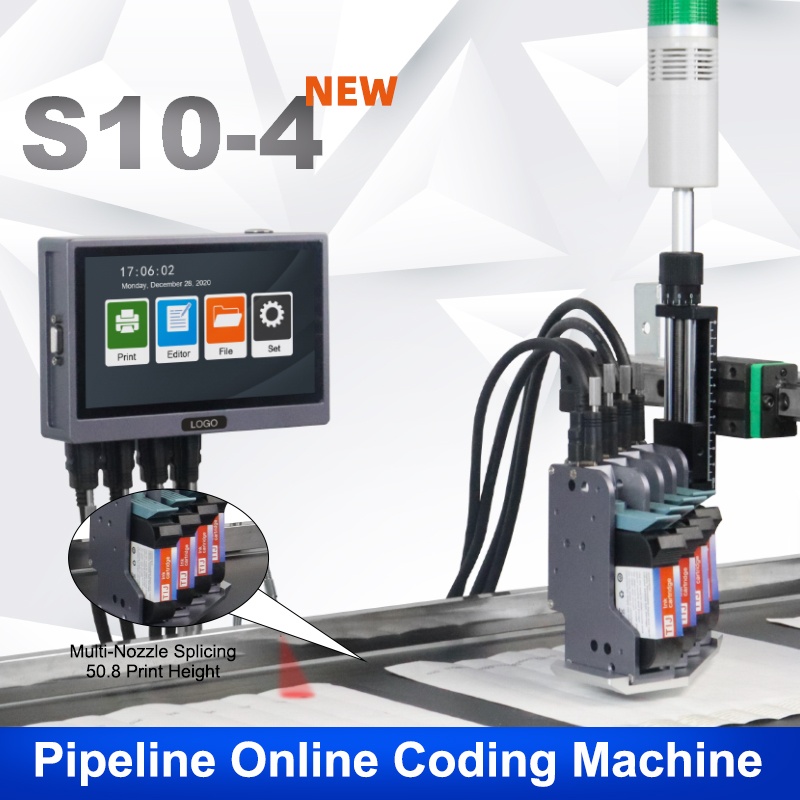
S10-4 online inkjet printer (splicing)
the four-head build we quote most often:
- 2-50.8mm print height
- 2-5mm throw distance
- Prints Chinese, English, date, QR code and barcode
- Marks metal, plastic, pipe, foam and carton
- Industrial Grade Standard Protective Body
Fifty point eight millimetres covers a date, a batch code and a barcode in one pass, the combination most export cartons ask for and why the four-head build outsells both neighbours.
Send the Pack Width, Not the Head Count
- How many heads do we need for a barcode
- Four. The two-head build prints date and QR code; barcode starts at the four-head model.
- Can heads be added later
- A spliced frame can take another module. A standalone frame cannot, so buying short on a standalone means buying the machine twice.
- Does a spliced frame need a new conveyor
- No. It bolts to the existing frame, which is why it suits a line that is already running.
Send the pack width, the code layout and line speed at the marking point. We return the head count and frame type in writing, so the multi-head inkjet printer you order is sized to the carton, not the catalogue.
For the splicing detail, our note on splicing a coder onto an existing line covers the joints. On the belt side, sizing a conveyor by speed explains why length is the wrong number. The coding side sits under barcode, and export builds follow ISO 9001.
Next Steps
- If the code is already failing: five checks before fitting a coder.
- Start at the contact page, on +86 17625427465 or kuangcy@126.com. We reply within 24 hours.